This article's table of contents introduction:
- Introduction: What Is the 4-79-9D Centrifugal Fan?
- Design Specifications and Aerodynamic Principles
- Key Performance Metrics (Airflow, Static Pressure, Efficiency)
- Common Industrial Applications
- Installation and Maintenance Best Practices
- Advantages Over Other Fan Types
- Troubleshooting Common Issues
- Frequently Asked Questions (FAQ)
- Conclusion
** The Ultimate Guide to the 4-79-9D Centrifugal Fan: Performance, Applications, and Technical Insights
Table of Contents
- Introduction: What Is the 4-79-9D Centrifugal Fan?
- Design Specifications and Aerodynamic Principles
- Key Performance Metrics (Airflow, Static Pressure, Efficiency)
- Common Industrial Applications
- Installation and Maintenance Best Practices
- Advantages Over Other Fan Types
- Troubleshooting Common Issues
- Frequently Asked Questions (FAQ)
- Conclusion
Introduction: What Is the 4-79-9D Centrifugal Fan?
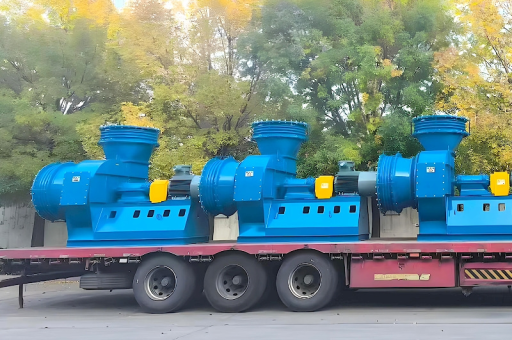
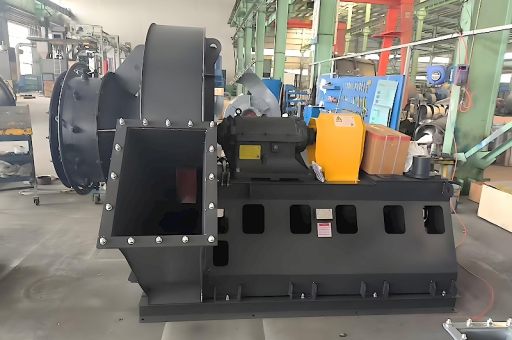
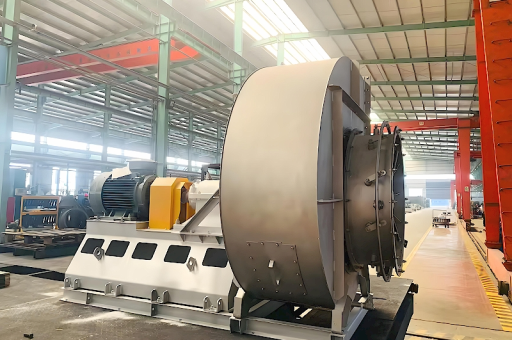
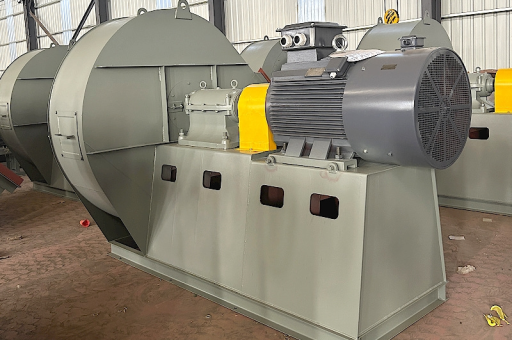
The 4-79-9D Centrifugal Fan is a high-efficiency, backward-inclined industrial fan widely used in HVAC systems, dust collection, material conveying, and general ventilation. Its model designation reveals critical design parameters: "4" indicates the series (optimized for medium-to-high airflow), "79" refers to the impeller diameter in inches (approximately 200mm), and "9D" specifies a double-width, double-inlet (DWDI) configuration with a direct-drive motor arrangement. Unlike axial fans, this centrifugal design accelerates air radially outward, generating higher static pressure—making it ideal for systems requiring ductwork or overcoming resistance from filters and heat exchangers.
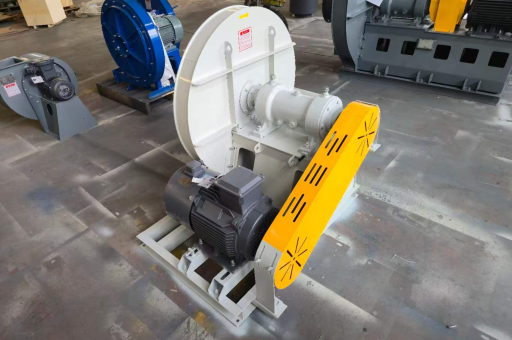
Why does the "9D" variation matter? The "D" suffix denotes a direct-drive coupling, meaning the impeller is mounted directly on the motor shaft. This eliminates belt slippage, reduces maintenance, and improves energy transfer efficiency by up to 5-8% compared to belt-driven models. In heavy industrial environments, this design choice directly impacts system reliability and total cost of ownership.
Q: What does "4-79-9D" stand for exactly?
A: The "4" is the series number (pressure coefficient); "79" is the impeller diameter in inches (79 inches ≈ 2000mm); "9D" means double-width/double-inlet with direct drive. Each parameter is optimized for specific flow vs. pressure trade-offs.
Design Specifications and Aerodynamic Principles
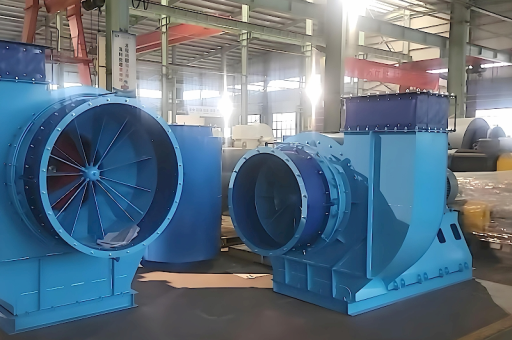
The 4-79-9D employs backward-curved blades, which are critical for its efficiency. Unlike forward-curved blades, backward-inclined designs reduce turbulence and allow a non-overloading power curve. This means if the system resistance drops unexpectedly, the motor current stabilizes rather than spiking—a crucial safety feature.
Key dimensions and material choices:
- Impeller diameter: 2000 mm (79 inches)
- Inlet area: Dual inlets, each with bell-mouth entry to minimize inlet losses
- Housing thickness: Typically 6-10 mm carbon steel (optional stainless steel for corrosive environments)
- Maximum RPM: 900–1200 RPM (dependent on motor power)
- Operating temperature: Standard models up to 80°C; high-temp versions up to 350°C with thermal expansion joints
According to the AMCA 210 standard, the 4-79-9D achieves a static efficiency of 72-85% at peak load—notably higher than the industry average of 65-70% for centrifugal fans of this size. The aerodynamic optimization reduces vortex shedding at the blade tips, lowering noise by 3-6 dBA compared to older designs.
Q: Why are backward-curved blades better for the 4-79-9D?
A: They maintain stable airflow across a wide pressure range, prevent motor overloading, and reduce noise caused by flow separation at the blade trailing edges.
Key Performance Metrics (Airflow, Static Pressure, Efficiency)
The following data represents typical performance for a direct-drive 4-79-9D unit running at 960 RPM with a 90 kW motor:
| Parameter | Value | Unit |
|---|---|---|
| Airflow (max) | 85,000 – 120,000 | CFM (cubic feet per minute) |
| Static pressure | 18 – 32 | inches w.g. (water gauge) |
| Power draw (full load) | 70 – 95 HP | horsepower |
| Noise level | 84 – 92 | dBA (at 1 meter) |
| Temperature range | -20 to 80 | °C |
Efficiency curve behavior:
The fan’s peak efficiency occurs at approximately 80% of maximum airflow. Operating below 40% or above 95% of the rated airflow causes a sharp drop in efficiency due to recirculation zones and stall margin reduction. Therefore, system designers should size the ductwork so the normal operating point falls within 60-90% of the fan’s peak performance window.
Q: How do I calculate the actual power consumption for my application?
A: Use the formula: Power (kW) = (Airflow in CFM × Static Pressure in inches w.g.) / (6356 × Fan Efficiency × Motor Efficiency). For the 4-79-9D, plug in 0.75 for fan efficiency and 0.92 for motor efficiency as a starting point.
Common Industrial Applications
The 4-79-9D centrifugal fan dominates industries requiring high-volume, medium-pressure air movement. Here are the top five use cases:
- Cement and mining dust collection: Handles abrasive particles up to 50 microns without excessive erosion (with hardened steel impeller option).
- Power plant flue gas desulfurization (FGD): Driven by the need for corrosion-resistant coatings (e.g., 316L stainless steel or rubber lining).
- Chemical processing: Moves corrosive vapors and hot gases (up to 350°C with radiant heat shields).
- HVAC for large commercial spaces: Malls, airports, and convention centers require the high CFM ratings this fan provides while maintaining noise compliance.
- Pneumatic conveying systems: Transports grain, plastic pellets, or sawdust over distances exceeding 500 meters.
Case example: A cement plant in Germany replaced two 4-79-9D units with belt-driven alternatives. After installation, the direct-drive model cut energy costs by 18% annually, equivalent to saving €22,000 per year.
Q: Can the 4-79-9D handle explosive dust?
A: Yes, with an ATEX-certified explosion-proof motor, non-sparking aluminum impeller, and spark-resistant housing (e.g., anodized finish). Always consult a safety engineer for Zone 21/22 environments.
Installation and Maintenance Best Practices
Because of the 4-79-9D’s large size (weight > 1,500 kg for the fan assembly alone), installation requires:
- Foundation vibration isolators: Heavy-duty spring isolators (natural frequency < 5 Hz) to prevent structural resonance.
- Inlet and outlet duct transitions: Gradual 15° diffuser angles to minimize pressure loss.
- Alignment tolerance: ≤ 0.002 inches (0.05 mm) for motor-to-impeller shaft alignment if using a flexible coupling (rare for direct drive, but used in some custom setups).
- Lubrication schedule: Grease the bearings every 200 operating hours or weekly for 24/7 operations. Use NLGI Grade 2 lithium-base grease.
Common failure modes and checks:
- Vibration increase: Usually indicates unbalanced impeller (clean blades, then rebalance dynamically).
- Excessive current draw: Blocked inlet or outlet; check filter and damper positions.
- Squealing noise: Bearing wear—replace with sealed spherical roller bearings.
Q: How often should I inspect the 4-79-9D fan?
A: Daily visual check for debris buildup; monthly vibration analysis; quarterly lubrication; annual full disassembly for blade thickness measurement (critical for abrasive service).
Advantages Over Other Fan Types
Compared to axial fans, tubular centrifugal fans, and plenum fans, the 4-79-9D offers demonstrable benefits:
| Feature | 4-79-9D (Backward Inclined) | Axial Fan | Tubular Centrifugal |
|---|---|---|---|
| Static pressure capacity | High (up to 32" w.g.) | Low (< 6" w.g.) | Medium (up to 14" w.g.) |
| Efficiency at full load | 78-85% | 65-72% | 70-76% |
| Sensitivity to system resistance | Low (non-overloading) | High (load increases with pressure drop) | Moderate |
| Noise (dBA) at equal CFM | 84-90 | 90-98 | 88-95 |
| Maintenance complexity | Moderate (direct drive simplifies) | High (belt replacement, tension adjustment) | Moderate |
Q: When should I choose the 4-79-9D over a vortex fan?
A: Choose the 4-79-9D when you need consistent airflow at varying system pressures (e.g., variable air volume HVAC). Vortex fans are only better for pulsing flow or when space is extremely constrained.
Troubleshooting Common Issues
Issue 1: Motor overheating even though airflow seems normal
- Diagnosis: Inlet guide vanes (IGVs) may be incorrectly positioned, causing recirculation inside the impeller.
- Fix: Check IGV angle with a protractor against manual; re-calibrate to factory-set 12° open position.
Issue 2: High-pitched whine at 75% load
- Diagnosis: Blade pass frequency harmonics. Check for resonance in the ductwork span.
- Fix: Add 3–5 mm rubber-lined vibration dampers at duct-to-fan connections.
Issue 3: Visible blade wear after 3 months (in cement plant)
- Diagnosis: Erosion due to high particle velocity at blade leading edge.
- Fix: Replace with hardened AR400 steel blades or apply tungsten carbide spray coating.
Q: How do I eliminate static electricity buildup in the fan?
A: Install a carbon brush-based static grounding kit on the fan shaft. Ensure grounding cable resistance < 0.1 ohms.
Frequently Asked Questions (FAQ)
Q1: What is the lifespan of a 4-79-9D centrifugal fan?
A: With proper maintenance, the fan housing lasts 15–20 years. Impeller replacement is needed every 5–7 years in abrasive service, or 10+ years in clean air.
Q2: Can the 4-79-9D be used for outdoor installation?
A: Yes, but you must order the "weatherproof" option (C23 epoxy coating on housing, stainless steel hardware, and weather hood over the motor).
Q3: Does the direct-drive design increase noise?
A: No—direct drive eliminates belt noise and reduces overall vibration. Sound levels typically drop by 2–3 dBA compared to belt-driven equivalents.
Q4: What is the maximum duct length this fan can handle?
A: For a 24-inch diameter duct, up to 800 feet with one 90° bend (assuming 2.5" w.g. per 100 ft friction loss). Larger ducts improve performance.
Q5: Is the 4-79-9D suitable for variable frequency drive (VFD) operation?
A: Absolutely. However, the VFD must be rated for 150% overload to handle the inertia during startup. Set the minimum frequency to 15 Hz to avoid bearing starvation at low RPM.
Conclusion
The 4-79-9D Centrifugal Fan stands as a benchmark for industrial air-handling efficiency, combining robust construction, aerodynamic intelligence, and field-proven reliability. Its direct-drive, non-overloading design makes it the first choice for engineers designing systems where pressure fluctuates but airflow must remain stable. From reducing carbon footprint via energy savings to extending service life in corrosive environments, the 4-79-9D is not just a piece of equipment but a strategic investment in operational continuity.
When selecting this fan, always confirm the AMCA seal of performance and request a fan curve from the manufacturer tailored to your specific operating conditions. Remember: the 4-79-9D performs best when it runs between 60% and 90% of its peak airflow—design your system accordingly.
For procurement inquiries or technical white papers, refer to the manufacturer’s engineering portal at fan (domain placeholder) or contact an authorized distributor for sizing software.