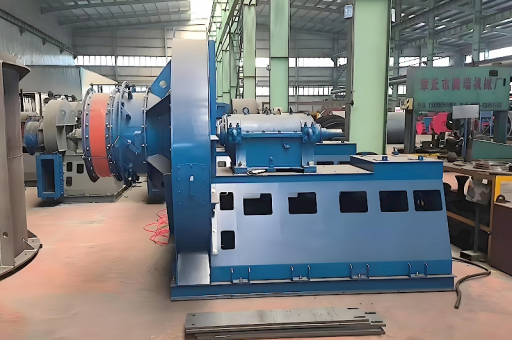
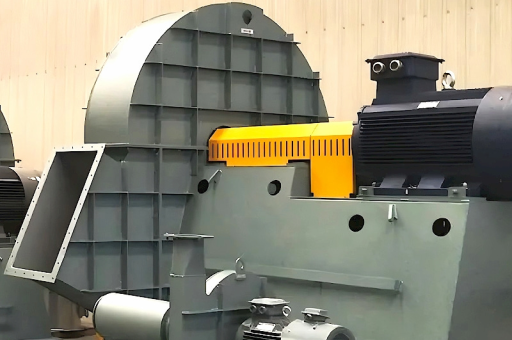
This article's table of contents introduction:
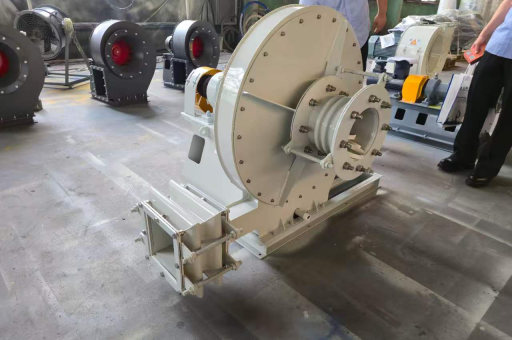
- Table of Contents
- Introduction: What Is a 45kW Powder Conveying Fan?
- Key Technical Specifications and Performance Metrics
- How It Works: The Principle of Pneumatic Powder Transport
- Critical Design Features: Durability and Safety
- Common Industrial Applications
- Comparison: 45kW Fan vs. Lower-Power Alternatives
- Frequently Asked Questions (Q&A)
- Maintenance Best Practices for Longevity
- Conclusion: Why Choose a 45kW Powder Conveying Fan?
*The Ultimate Guide to the 45kW Powder Conveying Fan: Efficiency, Design, and Industrial Applications*
Table of Contents
- Introduction: What Is a 45kW Powder Conveying Fan?
- Key Technical Specifications and Performance Metrics
- How It Works: The Principle of Pneumatic Powder Transport
- Critical Design Features: Durability and Safety
- Common Industrial Applications
- Comparison: 45kW Fan vs. Lower-Power Alternatives
- Frequently Asked Questions (Q&A)
- Maintenance Best Practices for Longevity
- Conclusion: Why Choose a 45kW Powder Conveying Fan?
Introduction: What Is a 45kW Powder Conveying Fan?
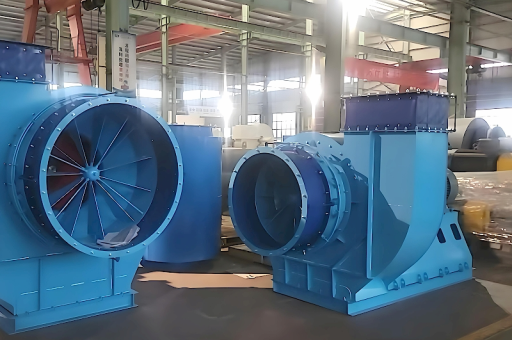
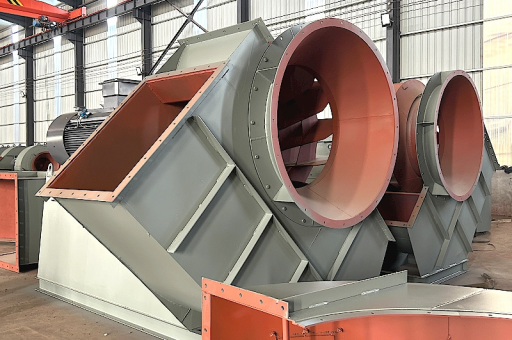
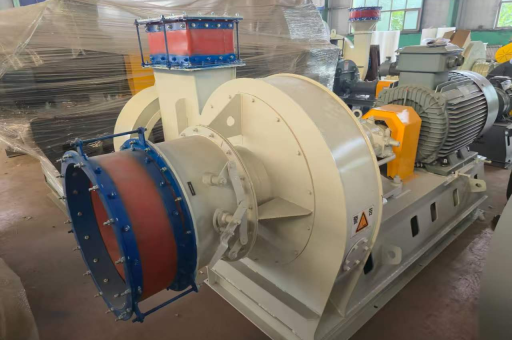
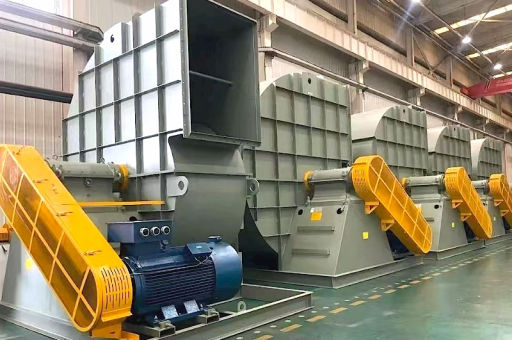
In modern bulk material handling, the 45kW powder conveying fan stands as a workhorse for industries that demand high-volume, continuous pneumatic transport of fine powders, granules, or abrasive materials. Unlike standard ventilation fans, this heavy-duty equipment is engineered specifically to generate the high static pressure and airflow required to push or pull materials like cement, fly ash, flour, plastic pellets, or chemical powders through closed piping systems.
A 45kW (approximately 60 HP) motor rating places this fan in the mid-to-high power range, making it suitable for medium-to-large scale operations where efficiency, reliability, and dust control are non-negotiable. For reference, a 45kW fan can typically deliver an airflow ranging from 15,000 to 30,000 m³/h and a static pressure of 6,000 to 12,000 Pa, depending on the impeller design and system resistance.
Key takeaway: If your facility moves more than 5–10 tons of powder per hour over distances exceeding 50 meters, a 45kW fan is often the most cost-effective solution.
Key Technical Specifications and Performance Metrics
Understanding the spec sheet is critical for selecting the right fan. Here are the essential parameters for a typical 45kW powder conveying fan:
| Parameter | Typical Range |
|---|---|
| Power | 45 kW (60 HP) |
| Airflow (Q) | 15,000 – 30,000 m³/h |
| Static Pressure (P) | 6,000 – 12,000 Pa |
| Impeller Speed | 1,450 – 2,900 RPM |
| Max Material Temperature | 80°C – 150°C (with heat-resistant coating) |
| Noise Level | 80 – 95 dB(A) (with silencer options) |
Important note: The actual performance curve depends heavily on the fan’s impeller type (backward-curved, radial, or airfoil) and the density of the conveyed powder. For example, conveying heavy metal powders requires higher static pressure than transporting light food-grade starch.
How It Works: The Principle of Pneumatic Powder Transport
The 45kW powder conveying fan operates on the dilute phase pneumatic conveying principle. Here’s a simplified breakdown:
- Air intake: The fan draws ambient air (or inert gas for explosive powders) through a filter.
- Pressure generation: The high-speed impeller accelerates the air, converting rotational energy into kinetic and static pressure.
- Material induction: Powder is fed into the pipeline via a rotary valve or venturi injector.
- Transport: The high-velocity air stream suspends the particles and carries them to the destination silo or hopper.
- Separation: At the discharge point, a cyclone or filter separates the powder from the air.
Critical design consideration: The fan must be positioned before or after the material feed point (pressure or vacuum system). A 45kW fan is versatile enough for both configurations but performs best in pressure systems for long-distance transport.
Critical Design Features: Durability and Safety
Because powder conveying is inherently abrasive and often explosive, the 45kW fan must incorporate robust design elements:
- Wear-resistant coatings: Impellers and housing are often lined with tungsten carbide or ceramic tiles to resist erosion from silica, cement, or mineral powders.
- Explosion-proof construction: ATEX-certified motors and spark-resistant impellers (e.g., aluminum or stainless steel) are mandatory for conveying combustible dusts like flour, coal, or metal powders.
- Shaft seal integrity: Double mechanical seals or labyrinth seals prevent powder leakage into bearings, which is a common failure point.
- Vibration monitoring: Integrated accelerometers help detect imbalance caused by material build-up or impeller wear.
Industry example: A 45kW fan used in a cement plant was retrofitted with a ceramic coating and extended its service life from 6 months to 3 years, according to a case study published by a major fan manufacturer.
Common Industrial Applications
The versatility of the 45kW powder conveying fan makes it indispensable across multiple sectors:
- Cement & Construction: Transporting cement, fly ash, gypsum from storage to mixing silos.
- Food Processing: Moving flour, sugar, starch, and spices without contamination.
- Chemical & Pharmaceutical: Handling talc, titanium dioxide, API powders in closed, sterile loops.
- Plastics & Recycling: Conveying PET pellets, PVC powder, or regrind materials.
- Mining & Minerals: Transporting pulverized ore, limestone, or bentonite.
Real-world scenario: A pet food manufacturer replaced two 22kW fans with a single 45kW fan and a diverter valve, reducing energy consumption by 18% while increasing throughput to 12 tons/hour.
Comparison: 45kW Fan vs. Lower-Power Alternatives
| Feature | 15kW Fan | 30kW Fan | 45kW Fan |
|---|---|---|---|
| Max transport distance | ~30 m | ~60 m | ~100 m |
| Max throughput (cement) | 3 t/h | 7 t/h | 15 t/h |
| Energy cost per ton | Higher | Medium | Lowest |
| Initial investment | Low | Medium | Higher |
| Maintenance frequency | High (overloaded) | Medium | Low (balanced) |
Conclusion: While a 45kW fan requires a larger upfront investment, its lower specific energy consumption (kWh/ton) and reduced wear typically deliver ROI within 12–18 months for high-volume operations.
Frequently Asked Questions (Q&A)
Q1: Can a 45kW powder conveying fan handle sticky or moist materials? A: Not directly. Powder conveying fans are designed for dry, flowable powders. For moist or sticky materials (e.g., wet clay), you need a positive displacement blower or a specialized fan with a self-cleaning impeller. Moisture above 2% often causes clogging in a 45kW centrifugal fan.
Q2: What is the maximum distance this fan can convey powder? A: In a careful designed dilute phase system, a 45kW fan can convey powders up to 100 meters horizontally or 30 meters vertically, assuming proper pipe diameter (typically 150–200 mm) and minimal bends. Each 90° elbow reduces effective distance by 30–50%.
Q3: How loud is a 45kW fan? A: Expect 85–95 dB(A) at 1 meter, which requires hearing protection within the vicinity. Installing a silencer (attenuator) on the inlet or outlet can reduce noise by 10–20 dB(A), making it suitable for indoor installations near operators.
Q4: Is a VFD (Variable Frequency Drive) recommended? A: Absolutely. A VFD allows you to modulate fan speed based on demand, reducing energy waste by 20–35% during partial load. It also soft-starts the motor, reducing stress on the electrical grid and bearings.
Q5: Can I use this fan for gas (fume) extraction instead of powder? A: Yes, but with modifications. The impeller and housing must be corrosion-resistant, and the design pressure must match the gas density. However, a dedicated fume extraction fan often has a higher flow but lower pressure rating—so specify your application to the manufacturer.
Maintenance Best Practices for Longevity
To ensure your 45kW powder conveying fan operates 24/7 without unexpected downtime, follow this checklist:
- Daily: Inspect for unusual vibration, noise, or temperature rise at bearings.
- Weekly: Check filter pressure drop; clean or replace as needed.
- Monthly: Lubricate bearings (grease type: NLGI Grade 2, high-temp). Rotate impeller manually to feel for roughness or scraping.
- Quarterly: Measure impeller tip clearance ( should be < 2 mm). Inspect wear lining for thinning.
- Annually: Perform vibration analysis and dynamic balancing. Replace shaft seals as preventive measure.
Warning: Never operate the fan without a properly grounded pipeline when conveying static-sensitive powders like PVC or polyethylene. Static sparks can cause severe dust explosions.
Conclusion: Why Choose a 45kW Powder Conveying Fan?
The 45kW powder conveying fan represents an optimal balance of power, efficiency, and durability for industrial bulk material handling. Whether you are upgrading a legacy system or designing a new plant, this fan class offers:
- High throughput for demanding production targets.
- Energy efficiency when paired with a VFD and optimized piping.
- Reduced maintenance compared to oversaturated lower-power fans.
- Safety compliance with ATEX and OSHA standards.
However, proper selection requires careful analysis of your specific powder properties, conveying distance, and layout. Always consult with a fan manufacturer who can provide a performance curve specific to your application. Remember: a fan that is too small will fail prematurely; one that is too large wastes energy. The 45kW fan, when correctly matched, is the gold standard for medium-to-large powder handling tasks.