This article's table of contents introduction:
- What the Specification Means
- Typical Applications for a 43,000 m³/h Fan
- Critical Selection Factors (What else you need to know)
- Key Design & Hardware Considerations
- Sizing Context (Example)
- Summary Checklist for Purchasing
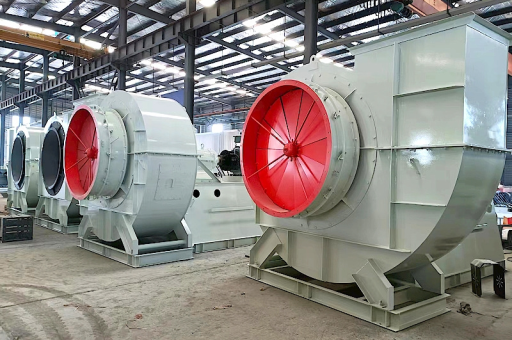
This is a specification for a large industrial exhaust fan, likely used with a baghouse, cartridge collector, or wet scrubber to control airborne particulates.
Here is a breakdown of what that specification means, typical applications, and key considerations for selection.
What the Specification Means
- 43000 m³/h (Cubic Meters per Hour): This is the Volumetric Flow Rate. It means the fan must move 43,000 cubic meters of air every hour.
- Conversion: This equals approximately 7 m³/min (CFM: roughly 25,300 CFM).
- Context: This is a large industrial fan. It is not for a small woodshop or a commercial kitchen; it is for a full-scale production facility or a central dust collection system for multiple machines.
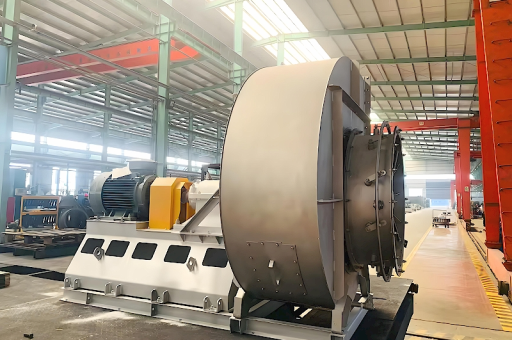
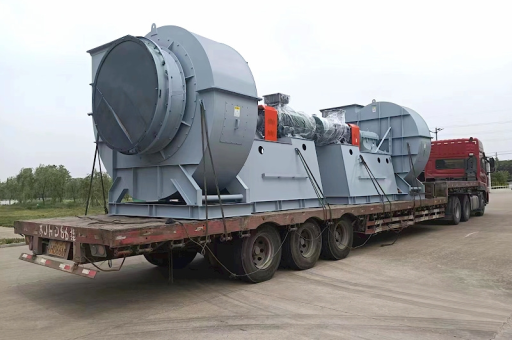
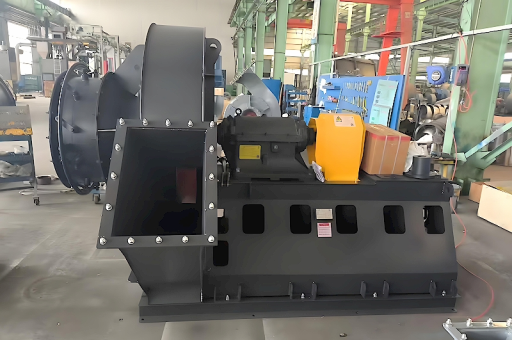
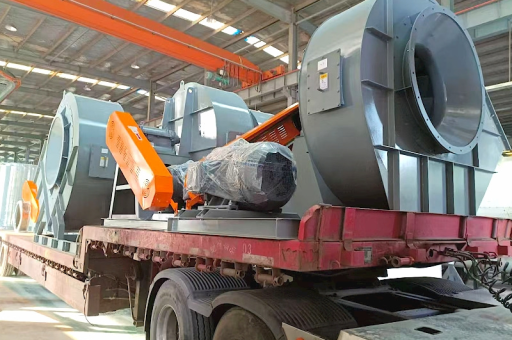
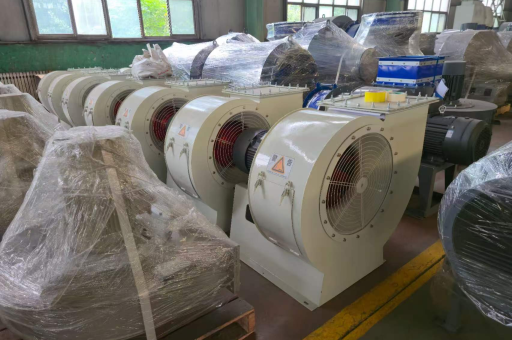
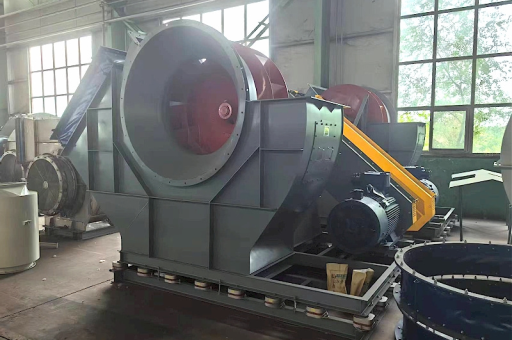
- Dust Collector Exhaust Fan: This specifies the type of fan. It is designed to handle air that contains dust, fumes, or light particulate. It will typically be a Centrifugal Fan (specifically a Radial Blade or Backward Inclined design) rather than an axial fan (like a wall fan), as centrifugal fans are better at overcoming the static pressure resistance of ductwork and filter media.
Typical Applications for a 43,000 m³/h Fan
This capacity is common in heavy industries where large volumes of air must be moved to capture dust at the source or to maintain negative pressure in a large enclosure. Examples include:
- Woodworking: Central extraction for large planers, sanders, and CNC routers in a millwork or panel processing plant.
- Food Processing: Dust collection for grain handling, flour mills, sugar processing, or spice grinding.
- Pharmaceuticals & Chemicals: Containing and filtering fine, often hazardous powders.
- Metalworking: Fume extraction from welding stations, plasma cutting tables, or grinding operations.
- Cement & Mining: Conveyor transfer points and crushing operations.
Critical Selection Factors (What else you need to know)
The flow rate (43,000 m³/h) is only half the equation. The fan's power and design depend heavily on the Static Pressure (SP) required.
You must know the Static Pressure (typically measured in Pa, kPa, or in. w.g. / inches of water gauge).
- Low Pressure (< 1.5 kPa / 6 in. w.g.): A simple, lighter-duty backward-inclined fan might suffice.
- Medium Pressure (1.5 - 3.0 kPa / 6-12 in. w.g.): Most common for a system with a baghouse and moderate ductwork. Requires a sturdier design.
- High Pressure (> 3.0 kPa / 12 in. w.g.): Needed for long duct runs, dense dust loads, or cartridge filters (which have a higher pressure drop). Requires a heavy-duty radial fan with a strong motor.
Key Design & Hardware Considerations
When ordering or specifying this fan, pay attention to these details:
A. Fan Type (Wheel Design)
- Backward Inclined / Backward Curved: More efficient, suitable for cleaner air or light dust. Good for general exhaust.
- Radial Blade (Paddle Wheel): Heavy-duty, handles sticky, heavy, or abrasive dust better. Less efficient but more rugged.
- Airfoil: Very efficient, but blades are hollow and susceptible to wear if dust is abrasive. Usually for clean air side of the system.
B. Construction Material
- Mild Steel (MS): Standard. May need a protective coating (e.g., epoxy) for corrosive dust.
- Stainless Steel (SS304 / SS316): Required for food, pharmaceuticals, or corrosive fumes.
C. Motor & Drive
- Power (kW): For 43,000 m³/h, expect a 22 kW to 55 kW (approx 30 HP to 75 HP) motor, depending on the static pressure.
- Rough estimate: At 2.5 kPa (10 in.w.g.), you need ~40 kW (55 HP).
- Drive Type:
- Direct Drive: Motor is mounted directly on the fan shaft. Good for constant speed.
- Belt Drive (Preferred): Allows you to change the speed (RPM) by changing pulleys. This is critical for adjusting airflow to match the actual system needs after installation.
- VFD (Variable Frequency Drive): Highly recommended for a fan this large. It allows for soft-start, energy savings, and precise airflow control.
D. Outlet Configuration
- Determine the best direction for the air to exit (e.g., Top Horizontal, Down Blast, etc.) to fit your ductwork.
Sizing Context (Example)
| Parameter | Estimated Value for 43000 m³/h |
|---|---|
| CFM Equivalent | ~25,300 CFM |
| Duct Size (Main Trunk) | ~ 1,000 mm to 1,200 mm (40 - 48 inch) diameter |
| Motor Power (est.) | 37 kW (50 HP) to 45 kW (60 HP) at 2.5 kPa |
| Fan Speed (RPM) | 900 - 1,200 RPM (for a medium pressure fan) |
| Typical Silencer Size | ~ 1,200 mm x 1,200 mm cross-section |
Summary Checklist for Purchasing
- Confirm: Airflow = 43,000 m³/h ✅
- Determine: Total Static Pressure (Duct friction + Filter pressure drop + System losses) = Pa.
- Select: Fan Type (Backward vs. Radial), Material (MS vs. SS), and Drive (Belt + VFD).
- Check: Local electrical supply (e.g., 380V/3ph/50Hz or 460V/3ph/60Hz).
- Noise: This fan will be loud. You will likely need an inlet silencer and/or a discharge silencer.
In short: A 43,000 m³/h dust collector fan is a major industrial asset. It is large, expensive (likely $10,000 - $25,000 USD for the fan alone), powerful, and requires professional engineering for the ductwork and electrical installation.