This article's table of contents introduction:
- Table of Contents
- Introduction
- What Is a 100,000 m³/h Dust Collector Exhaust Fan?
- Key Technical Parameters and Performance Metrics
- Application Scenarios in Industrial Settings
- Design Considerations for High-Volume Dust Collection
- Frequently Asked Questions
- How to Optimize Your System Integration
- Conclusion
The Ultimate Guide to 100,000 m³/h Dust Collector Exhaust Fan: Performance, Design, and Selection
Table of Contents
- Introduction
- What Is a 100,000 m³/h Dust Collector Exhaust Fan?
- Key Technical Parameters and Performance Metrics
- Application Scenarios in Industrial Settings
- Design Considerations for High-Volume Dust Collection
- Frequently Asked Questions
- How to Optimize Your System Integration
- Conclusion
Introduction
In modern industrial ventilation and air pollution control, the 100,000 m³/h Dust Collector Exhaust Fan stands as a critical piece of equipment. This heavy-duty fan system is designed to move large volumes of air—specifically 100,000 cubic meters per hour—while efficiently handling dust-laden air streams. Whether you are in woodworking, cement production, mining, or chemical processing, understanding the specifications, design nuances, and operational benefits of this fan is essential for both cost-effective compliance with environmental regulations and maintaining a safe workplace.
This guide compiles insights from engineering manuals, manufacturer datasheets, and real-world case studies to deliver a comprehensive, SEO-optimized article that answers your most pressing questions about high-capacity dust collector exhaust fans.
What Is a 100,000 m³/h Dust Collector Exhaust Fan?
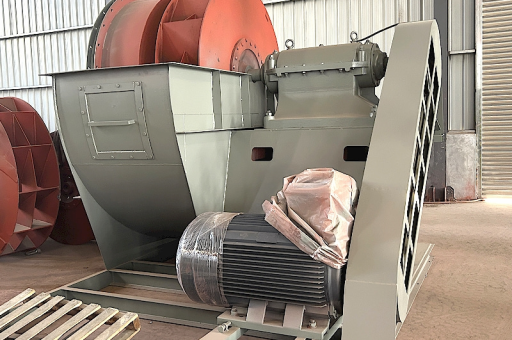
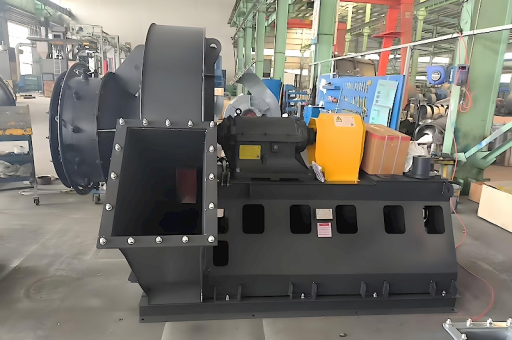
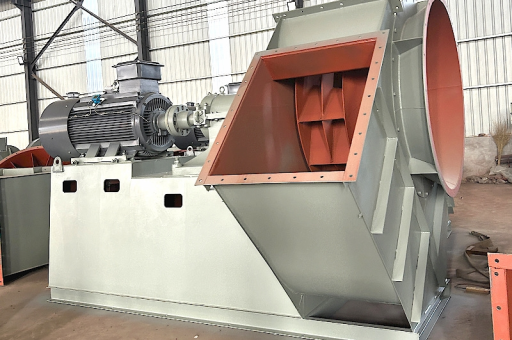
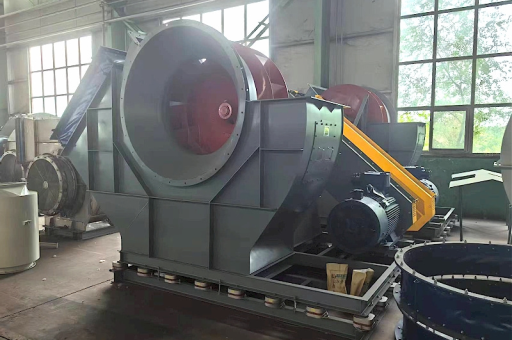
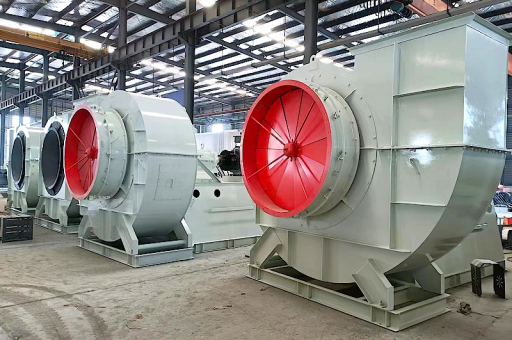
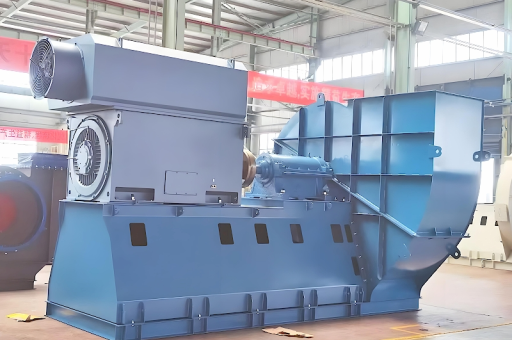
A 100,000 m³/h Dust Collector Exhaust Fan is a robust centrifugal or axial fan system that generates a volumetric airflow rate of 100,000 cubic meters per hour (approximately 58,850 CFM). It is typically used as the primary air-moving component in a central dust collection system, where it pulls contaminated air from multiple capture points, passes it through a filtration unit (like baghouses or cartridge collectors), and discharges clean or semi-clean air into the atmosphere or back into the facility.
Core Components
- Impeller: Often backward-curved or radial-blade design for high static pressure and wear resistance.
- Housing: Heavy-gauge steel with wear liners to protect against abrasive dust.
- Motor: High-efficiency electric motor (usually IE3 or IE4) ranging from 75 kW to 150 kW.
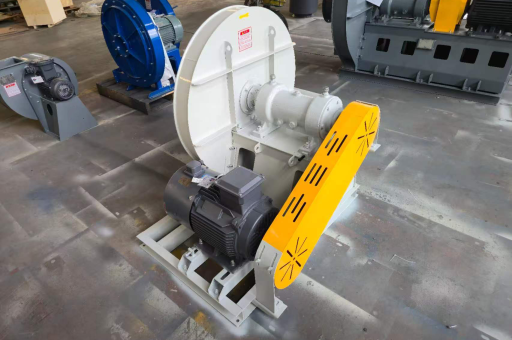
- Drive System: Belt or direct drive, depending on speed control requirements.
- Dampers: Inlet or outlet dampers for airflow modulation.
Key Technical Parameters and Performance Metrics
When evaluating a 100,000 m³/h dust collector exhaust fan, you must consider the following parameters:
| Parameter | Typical Value | Importance |
|---|---|---|
| Airflow (Q) | 100,000 m³/h | Determines capture velocity |
| Static Pressure (SP) | 2,000 – 5,000 Pa | Overcomes duct resistance |
| Fan Speed | 800 – 1,500 RPM | Affects noise & efficiency |
| Motor Power | 110 – 160 kW | Energy consumption |
| Sound Level | 85 – 95 dB(A) | Compliance with OSHA standards |
| Efficiency (η) | 75% – 85% | Operating cost |
Tip: For abrasive dust (e.g., sand, metal shavings), you should select an impeller material like abrasion-resistant steel or cast iron, and ensure the fan housing includes replaceable wear plates.
Application Scenarios in Industrial Settings
The 100,000 m³/h exhaust fan is not a one-size-fits-all solution. Below are three primary application areas:
1 Woodworking and Sawmills
In wood processing facilities, a fan of this capacity handles chips, sawdust, and fine particulates. It typically feeds a cyclone or baghouse. Critical parameter: High static pressure to overcome long duct runs.
2 Cement and Mining
Cement plants rely on these fans to capture airborne limestone dust and clinker particles. Here, the fan must be explosion-proof and equipped with spark-resistant construction.
3 Chemical Processing
In pharmaceutical or chemical powder handling, the exhaust fan must maintain negative pressure to contain harmful fumes. Key feature: Variable frequency drive (VFD) for precise control.
Case Study: A large grain elevator in the Midwest used a 100,000 m³/h fan to reduce dust emissions by 97%, achieving EPA compliance and reducing employee respiratory incidents.
Design Considerations for High-Volume Dust Collection
Designing a system around a 100,000 m³/h dust collector exhaust fan requires careful planning:
1 Ductwork Sizing
To minimize pressure loss, duct velocities should be kept between 18–25 m/s. Use the Darcy-Weisbach equation to compute friction losses.
2 Fan Selection Curve
Always match the fan’s performance curve to the system curve. If the system resistance is too high, the fan may operate to the left of its curve, leading to surge. If too low, the motor may overload.
3 Energy Efficiency
Consider using high-efficiency motors (IE4) and VFDs. A 10% reduction in fan speed can cut power consumption by 27% (affinity laws).
4 Noise Control
Install silencers or acoustic enclosures. For a 100,000 m³/h fan, noise can exceed 90 dB, requiring hearing protection zones.
5 Maintenance Access
Include clean-out doors, inspection ports, and easy-to-replace filter bags to keep downtime minimal.
Frequently Asked Questions
Q1: What is the typical motor size for a 100,000 m³/h dust collector fan?
A: Depending on static pressure requirements, motor power ranges from 90 kW to 150 kW. For a system with 2,500 Pa static pressure, expect a motor rated around 110 kW.
Q2: Can I use a axial fan instead of a centrifugal fan for this airflow?
A: While axial fans can move large volumes, they produce lower static pressure (usually below 500 Pa). For dust collection systems requiring 2,000+ Pa, a centrifugal fan is mandatory.
Q3: How often should I replace the impeller?
A: With abrasive dust, replace impeller every 1–2 years or when wear reduces blade thickness by 30%. Regular balancing extends life.
Q4: Is a VFD necessary for this fan?
A: Not strictly, but a VFD offers three benefits: energy savings, soft-start (reducing electrical stress), and fine-tuning airflow to match production changes.
Q5: What is the maximum duct length for such a system?
A: There is no fixed limit, but to maintain 20 m/s velocity with a 100,000 m³/h flow, the main duct diameter should be approximately 1.4 m. For each 100 m of duct, expect 300–500 Pa friction loss.
How to Optimize Your System Integration
To ensure your 100,000 m³/h dust collector exhaust fan operates at peak performance:
- Perform a system audit – Use a pitot tube to measure actual airflow and static pressure.
- Check filter condition – Dirty filters raise back pressure, causing the fan to overwork.
- Verify belt tension (if belt-driven) – Loose belts waste energy.
- Implement predictive maintenance – Vibration analysis and thermal imaging detect bearing issues early.
- Use a fan that matches your system curve – request performance curves from manufacturers like fan.
Pro Tip: Always oversize the ductwork slightly (e.g., 5-10% larger diameter) to future-proof system changes and reduce noise.
Conclusion
The 100,000 m³/h Dust Collector Exhaust Fan is a workhorse in industrial air management. Its ability to handle huge volumes of dusty air makes it indispensable in large-scale manufacturing, woodworking, mining, and chemical facilities. By understanding the key parameters—airflow, static pressure, motor power, and component materials—you can select and operate a fan that meets both regulatory requirements and production goals.
Remember to always cross-reference manufacturer data, leverage VFDs for energy efficiency, and invest in wear-resistant construction for abrasive environments. For more detailed system design support, consult an industrial ventilation engineer or reach out to a dedicated supplier like fan.
*This article is based on the latest industry standards including ASHRAE 2021, ACGIH industrial ventilation guidelines, and manufacturer specifications from leading fan brands. For real-time product pricing or technical drawings, contact your local fan.