The Ultimate Guide to 22kW Flue Gas Recirculation Fan: Efficiency, Applications, and Maintenance
Table of Contents
- Introduction to Flue Gas Recirculation (FGR) Technology
- What Is a 22kW Flue Gas Recirculation Fan?
- Core Components and How It Works
- Key Advantages of Using a 22kW FGR Fan
- Common Applications Across Industries
- Technical Specifications to Consider
- Installation Best Practices
- Maintenance and Troubleshooting
- Frequently Asked Questions (FAQ)
- Conclusion
Introduction to Flue Gas Recirculation (FGR) Technology
Flue Gas Recirculation (FGR) is a proven emission control technology widely adopted in industrial boilers, furnaces, and power generation systems. By recirculating a portion of the exhaust gas back into the combustion chamber, FGR effectively lowers peak flame temperatures and reduces the formation of nitrogen oxides (NOx) — a major pollutant linked to smog and acid rain.
According to the U.S. Environmental Protection Agency (EPA), FGR can reduce NOx emissions by 50% to 80%, depending on system design and fuel type. In modern industrial settings, the 22kW flue gas recirculation fan has emerged as a critical component, offering the right balance of power, energy efficiency, and reliability for medium-to-large-scale operations.
Question: Why is NOx reduction so important?
Answer: Excess NOx contributes to respiratory illnesses, ground-level ozone formation, and environmental acidification. Regulatory bodies like the EPA and European Environment Agency have tightened NOx limits, making FGR fans essential for compliance.
What Is a 22kW Flue Gas Recirculation Fan?
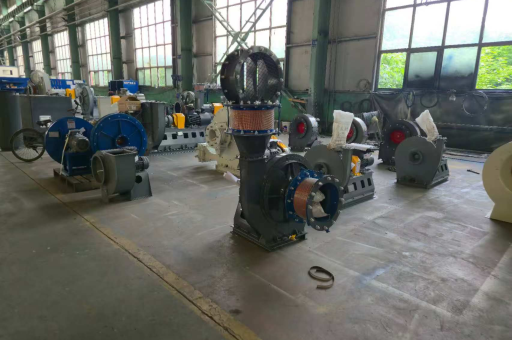
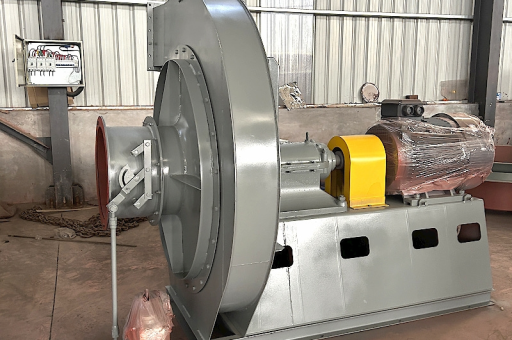
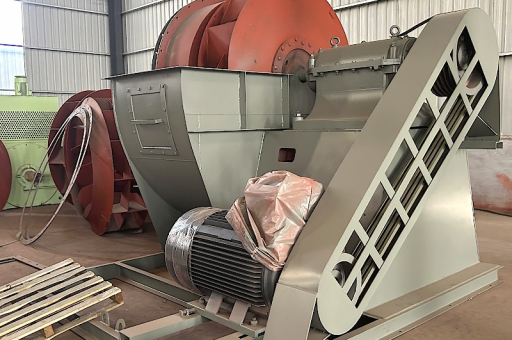
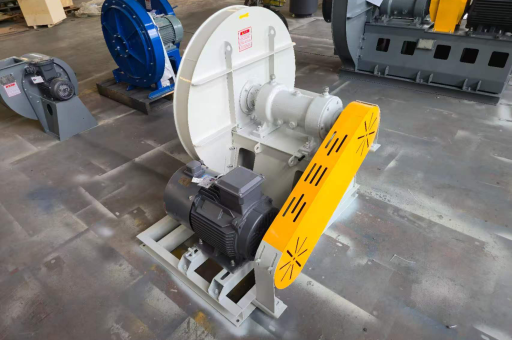
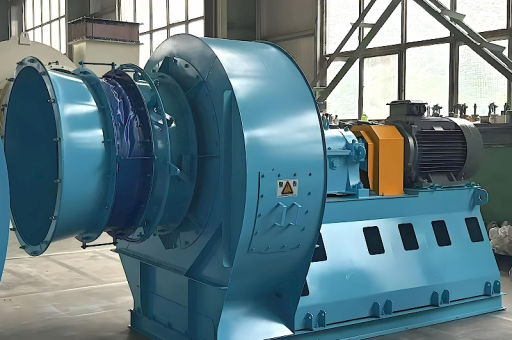
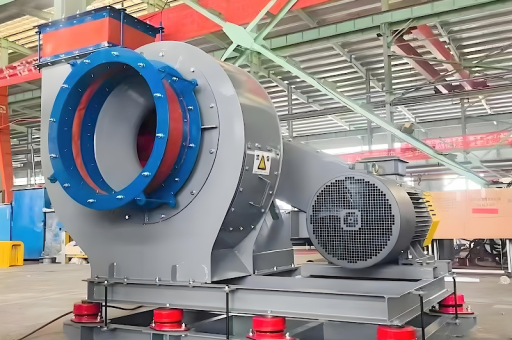
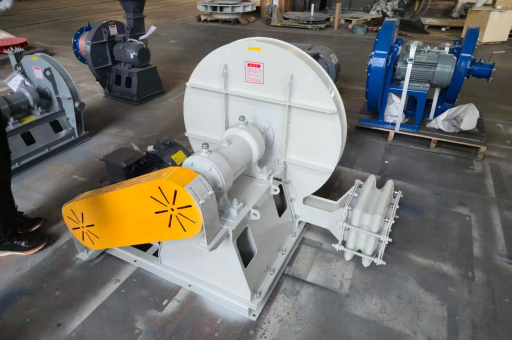
A 22kW flue gas recirculation fan is a specialized centrifugal or axial fan designed to handle high-temperature, corrosive flue gases. The "22kW" refers to the motor power rating — 22 kilowatts — which typically translates to an airflow capacity ranging from 15,000 to 40,000 cubic meters per hour (m³/h), depending on system pressure and duct design.
Unlike standard ventilation fans, these units are engineered to withstand:
- Gas temperatures up to 400°C (752°F)
- Particulate-laden streams
- Corrosive acidic condensates (e.g., sulfuric acid)
- Variable speed operation for precise flow control
Question: Can a 22kW FGR fan handle all boiler sizes?
Answer: No. The 22kW rating is ideal for medium-sized industrial boilers (typically 5–20 MW thermal output). Larger systems may require multiple fans or higher power ratings.
Core Components and How It Works
A typical 22kW flue gas recirculation fan comprises:
| Component | Function |
|---|---|
| Impeller | High-strength alloy or stainless steel blades designed for thermal expansion |
| Motor | 22kW, typically IE3 or IE4 efficiency class, with VFD compatibility |
| Housing | Reinforced carbon steel with corrosion-resistant coating |
| Inlet/Outlet | Flanged connections for duct integration |
| Bearing Assembly | High-temperature grease or oil lubrication |
| Shaft Seal | Prevents gas leakage into the motor compartment |
How it works:
- Flue gas exits the boiler/furnace at 150–300°C.
- The fan draws a portion (typically 10–30%) of this gas and recirculates it back to the combustion air inlet.
- The recycled gas dilutes oxygen concentration in the combustion zone, lowering flame temperature.
- Reduced peak temperature suppresses thermal NOx formation.
Question: Does FGR affect fuel efficiency?
Answer: Slightly. Recirculated gas displaces fresh air, which can reduce oxygen availability. However, modern systems optimize the recirculation ratio to minimize efficiency loss while maximizing NOx reduction.
Key Advantages of Using a 22kW FGR Fan
1 Regulatory Compliance
With global emission standards like:
- EU Industrial Emissions Directive (2010/75/EU) – NOx limit: 200–400 mg/Nm³
- EPA Boiler MACT (40 CFR Part 63) – NOx limit: 150 ppm
- China GB 13223-2011 – NOx limit: 200 mg/Nm³
A properly sized 22kW FGR fan helps facilities meet these thresholds without costly post-combustion scrubbers.
2 Energy Efficiency
Modern 22kW fans equipped with variable frequency drives (VFDs) can reduce energy consumption by 30–50% compared to fixed-speed models. The IE4 premium efficiency motor further lowers operational costs.
3 Extended Equipment Life
By reducing thermal stress in the combustion chamber, FGR lowers the risk of tube overheating and slagging, prolonging boiler life by 3–5 years according to industry case studies.
4 Compact Footprint
Compared to selective catalytic reduction (SCR) systems, a 22kW FGR fan requires minimal floor space — typically 1.5–2.5 m² — making retrofitting easier.
Question: Is FGR cheaper than SCR?
Answer: Yes. Capital costs for FGR are typically 30–50% lower than SCR, and maintenance is simpler. However, FGR alone may not meet ultra-low NOx requirements (<30 ppm) — in such cases, FGR + SCR is used.
Common Applications Across Industries
1 Industrial Boilers (Gas/Oil/Biomass)
- Power: 5–20 MW thermal
- NOx reduction: 60–80%
- Example: A cement plant in Germany reduced NOx from 500 to 150 mg/Nm³ using a 22kW FGR fan.
2 Glass Melting Furnaces
- High-temperature flue gases (up to 600°C)
- Recirculation ratio: 15–25%
- Benefit: Reduced refractory wear
3 Chemical Process Heaters
- Used in ethylene cracking furnaces
- FGR reduces NOx while maintaining heat transfer efficiency
4 Waste-to-Energy Plants
- Handles corrosive gases with high HCl and SOx content
- Fan material: Hastelloy or duplex stainless steel
5 District Heating Systems
- Centralized boilers supplying hot water to multiple buildings
- Compliance with local emission ordinances
Question: Can a 22kW FGR fan handle biomass flue gas?
Answer: Yes, but with precautions. Biomass gas contains alkali metals and high moisture. The fan must have abrasion-resistant coatings and a robust drainage system for condensate.
Technical Specifications to Consider
When selecting a 22kW flue gas recirculation fan, evaluate these parameters:
| Parameter | Typical Range / Recommendation |
|---|---|
| Airflow (Q) | 15,000 – 40,000 m³/h |
| Static Pressure (SP) | 200 – 800 Pa |
| Gas Temperature | 200 – 400°C continuous |
| Speed | 1450 – 2950 RPM (with VFD) |
| Noise Level | ≤ 85 dBA at 1m |
| Material | SS304/316 for impeller, or carbon steel with ceramic coating |
| Motor Protection | IP55 or IP65, with thermistor overload protection |
| VFD Compatibility | Required for optimal control |
Question: What happens if the fan speed is too low?
Answer: Insufficient recirculation reduces NOx reduction efficiency. Conversely, excessive speed can cause oxygen starvation, leading to incomplete combustion and CO increase.
Installation Best Practices
1 Duct Design
- Use minimum 90° bends to avoid excessive pressure drop.
- Ensure duct diameter matches fan inlet/outlet (typically DN250–DN400).
- Install expansion joints to accommodate thermal expansion.
2 Location
- Place the fan downstream of the particulate filter if possible.
- Allow access for cleaning and bearing replacement.
- Avoid areas with high ambient dust or moisture.
3 Electrical Requirements
- 22kW motor at 380–480V, 3-phase, 50/60 Hz.
- Use dedicated circuit breaker with motor protection relay.
- VFD should be rated for 110% of fan motor current.
4 Safety
- Install a gas pressure relief valve on the recirculation line.
- Use high-temperature limit switches to prevent motor burnout.
- Ground the fan housing to avoid static buildup.
Question: Can I install the fan outdoors?
Answer: Yes, but the enclosure must be weatherproof (IP55 minimum). Consider adding a rain hood and heating tape for cold climates to prevent condensate freezing.
Maintenance and Troubleshooting
1 Routine Maintenance (Monthly)
- Inspect impeller blades for erosion or ash buildup.
- Check bearings for noise or vibration (use vibration analyzer).
- Clean inlet screen/filter to prevent clogging.
- Lubricate bearings per manufacturer schedule.
2 Quarterly Tasks
- Measure motor current and compare to nameplate.
- Check VFD parameters for any drift.
- Inspect shaft seal for leakage.
3 Common Problems and Solutions
| Problem | Possible Cause | Solution |
|---|---|---|
| High vibration | Impeller imbalance or bearing wear | Rebalance or replace bearings |
| Motor overheating | VFD settings incorrect or airflow blocked | Recalibrate VFD, clean duct |
| Reduced airflow | Plugged inlet or damper misalignment | Clean or adjust damper |
| Noise increase | Cavitation or resonance | Check duct support / fan speed |
Question: How often should the fan be completely overhauled?
Answer: Every 3–5 years, depending on operating hours and gas cleanliness. Replace bearings, shaft seals, and inspect impeller for cracks.
Frequently Asked Questions (FAQ)
Q1: What is the lifespan of a 22kW FGR fan?
A1: With proper maintenance, 10–15 years. Harsh environments (cement, biomass) may reduce it to 8–10 years.
Q2: Can I retrofit an existing 22kW fan for FGR use?
A2: Possibly, if the fan is already rated for high-temperature and corrosive gases. Otherwise, material upgrades are necessary.
Q3: Does FGR increase CO emissions?
A3: Yes, slightly. CO may increase from 10–50 ppm due to reduced oxygen. Proper combustion tuning can mitigate this.
Q4: What is the typical payback period for a 22kW FGR fan installation?
A4: For a 10 MW boiler at full load, the payback period is typically 12–24 months, considering fuel savings and avoided fines.
Q5: Are there any alternatives to FGR for NOx control?
A5: Yes: water injection, low-NOx burners, SCR, and SNCR. Each has trade-offs in cost, efficiency, and footprint.
Q6: Can I use a 22kW FGR fan with a VFD on a diesel generator?
A6: Yes, but ensure the VFD is rated for island operation (genset backup). Use an active front-end VFD to manage harmonics.
Conclusion
The 22kW flue gas recirculation fan is a cost-effective, energy-efficient solution for reducing NOx emissions in industrial boilers, furnaces, and heaters. By recirculating 10–30% of exhaust gas back into the combustion zone, this technology achieves 50–80% NOx reduction while maintaining operational reliability.
When selecting a fan, prioritize:
- High-temperature material (SS304 or better)
- VFD compatibility for variable flow
- Adequate airflow (15,000–40,000 m³/h)
- Compliance with local environmental regulations
Proper installation, routine maintenance, and duct design are critical for maximizing performance and lifespan. For industries facing stricter emission rules — from the EU Industrial Emissions Directive to U.S. EPA MACT standards — the 22kW FGR fan remains a top choice for balancing environmental compliance with operational economy.
Final Key Takeaway: Investing in a high-quality 22kW FGR fan is not just about meeting regulations — it's about future-proofing your facility while reducing energy costs and extending equipment life.