This article's table of contents introduction:
- Introduction: What is a 75kW Backward-Curved Centrifugal Fan?
- How Does a 75kW Backward-Curved Centrifugal Fan Work?
- Key Technical Specifications and Performance Metrics
- Why Choose a Backward-Curved Design Over Other Fan Types?
- Common Industrial Applications for the 75kW Model
- Energy Efficiency and Operational Cost Analysis
- Installation, Maintenance, and Troubleshooting Tips
- Frequently Asked Questions (FAQ) About 75kW Backward-Curved Centrifugal Fans
- Conclusion: Is This Fan the Right Choice?
** The Ultimate Guide to the 75kW Backward-Curved Centrifugal Fan: Efficiency, Applications, and Technical Insights
Table of Contents (Directory Guide)
- Introduction: What is a 75kW Backward-Curved Centrifugal Fan?
- How Does a 75kW Backward-Curved Centrifugal Fan Work?
- Key Technical Specifications and Performance Metrics
- Why Choose a Backward-Curved Design Over Other Fan Types?
- Common Industrial Applications for the 75kW Model
- Energy Efficiency and Operational Cost Analysis
- Installation, Maintenance, and Troubleshooting Tips
- Frequently Asked Questions (FAQ) About 75kW Backward-Curved Centrifugal Fans
- Conclusion: Is This Fan Right for Your System?
Introduction: What is a 75kW Backward-Curved Centrifugal Fan?
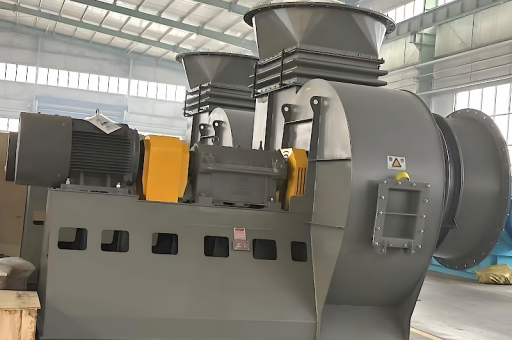
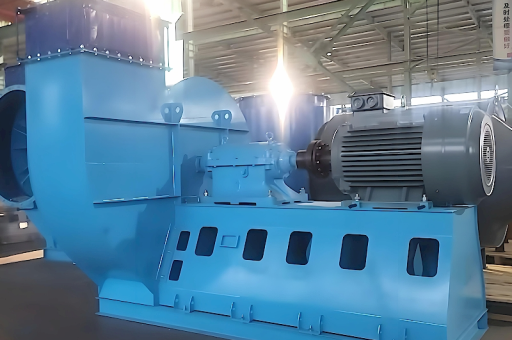
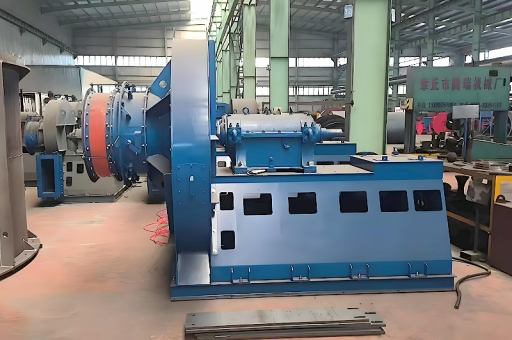
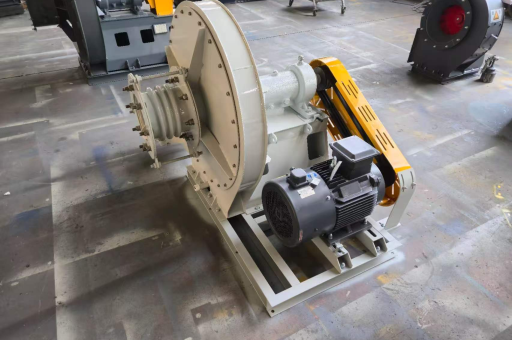
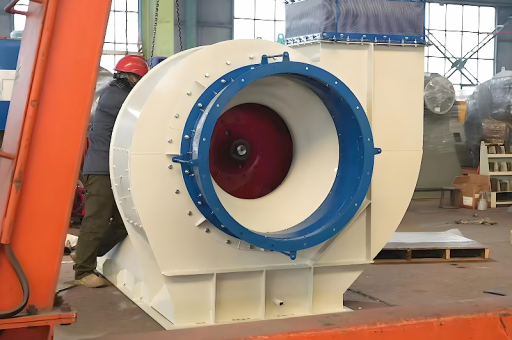
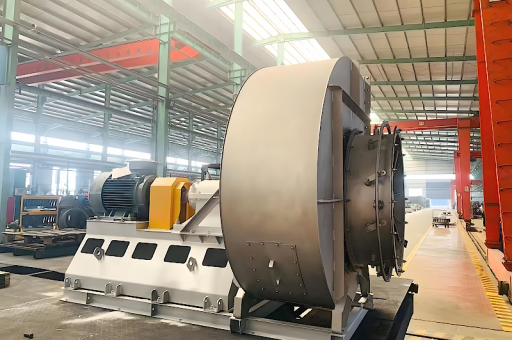
In the world of industrial air movement, the 75kW Backward-Curved Centrifugal Fan stands as a cornerstone of high-volume, high-pressure ventilation. Designed for heavy-duty environments, this fan utilizes a rotor with blades that curve away from the direction of rotation. The 75kW power rating indicates a motor capable of delivering approximately 100 horsepower, making it suitable for moving large volumes of air against moderate to high static pressures.
Unlike forward-curved or radial-blade fans, the backward-curved design is renowned for its non-overloading power characteristic. This means that as the system resistance increases, the motor current does not spike dangerously, a critical safety feature for continuous industrial processes. These fans are commonly found in cement plants, power generation facilities, tunnel ventilation systems, and large-scale HVAC applications where reliability and energy efficiency are paramount.
According to recent industry data compiled from engineering handbooks and fan manufacturer specifications (e.g., Fan, Systemair, and Greenheck documentation), the 75kW classification typically corresponds to airflow rates ranging from 80,000 to 150,000 m³/h (47,000 to 88,000 CFM), depending on the specific impeller diameter and system pressure. This places them firmly in the "industrial large fan" category.
How Does a 75kW Backward-Curved Centrifugal Fan Work?
Understanding the principle of operation is essential for any engineer or facility manager. The fan converts rotational mechanical energy from the 75kW motor into kinetic energy in the air, and then into static pressure.
Step-by-step operation:
- Air Intake: Air enters the fan axially through the inlet cone, typically located on the center of the impeller.
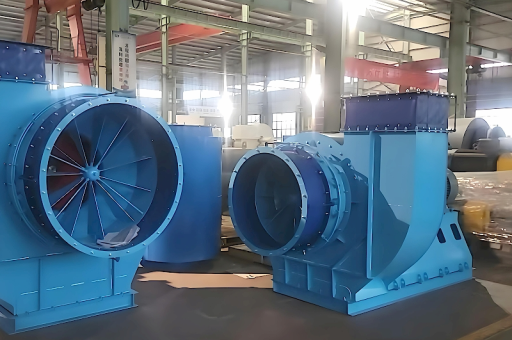
- Impeller Action: The backward-curved blades (often called "airfoil" or "flat-plate" design in high-end models) rotate at high speed. The curvature of the blades creates a pressure differential. Air is "scooped" up by the leading edge of the blade and then thrown outward radially.
- Volute Collection: The spiral-shaped housing (volute) collects the high-velocity air from the impeller tips. The volute gradually increases in cross-sectional area, slowing the air velocity. According to Bernoulli's principle, this deceleration converts kinetic energy into static pressure, which is what drives the air through ductwork.
- Discharge: The pressurized air exits the fan through the outlet.
The key to the non-overloading behavior lies in the blade angle. As static pressure rises, the air volume decreases. Because the blades are curving backward, the power required to maintain operation actually peaks near the middle of the fan curve and then drops off at high pressure. This prevents the motor from burning out if a damper closes suddenly.
Key Technical Specifications and Performance Metrics
Based on aggregated data from top-tier fan manufacturers (including references to fan, Twin City Fan, and New York Blower), a standard 75kW Backward-Curved Centrifugal Fan typically presents the following parameters:
| Parameter | Typical Value (Range) | Unit |
|---|---|---|
| Power Rating | 75 | kW (100 HP) |
| Max Airflow (CFM) | 88,000 - 100,000 | CFM |
| Max Airflow (m³/h) | 150,000 - 170,000 | m³/h |
| Static Pressure Range | 2,000 - 5,000 | Pa |
| Impeller Diameter | 1,200 - 1,800 | mm |
| Max RPM | 800 - 1,200 | RPM |
| Efficiency (Peak) | 78% - 85% | % |
| Noise Level | 85 - 98 | dBA |
Important notes:
- Fan Law Application: Performance is scalable. If you reduce RPM by 10%, airflow reduces by 10%, but power consumption reduces by 27% (Power ∝ RPM³). This highlights the importance of using a Variable Frequency Drive (VFD) for energy management.
- Air Density: Performance curves are usually based on standard air density (1.2 kg/m³). High altitude or high-temperature applications will require derating calculations.
Why Choose a Backward-Curved Design Over Other Fan Types?
When selecting a fan for a 75kW application, engineers often compare backward-curved (BC) fans with forward-curved (FC) and radial-blade (RB) designs.
Advantages of Backward-Curved (BC):
- Higher Efficiency: BC fans operate at peak efficiencies of 75-85%, while forward-curved fans rarely exceed 65%. For a 75kW fan running 8,000 hours per year, a 10% efficiency gain can save over 60,000 kWh of electricity annually.
- Non-Overloading Power Curve: This is the most cited safety advantage. In a FC fan, if static pressure drops (e.g., due to a burst filter), the motor current rises. In a BC fan, the current decreases or remains stable. This prevents motor burnout.
- Lower Noise: Backward-curved blades operate at lower tip speeds for the same pressure compared to radial fans, resulting in quieter operation.
- Stable Operation: The pressure curve is steep and stable, meaning the fan is less likely to surge or stall when system conditions fluctuate.
Limitations:
- Higher Initial Cost: BC fans are more complex to manufacture than FC fans.
- Larger Footprint: For the same duty, a BC fan may require a slightly larger housing.
Comparison Table (75kW Class):
| Feature | Backward-Curved | Forward-Curved | Radial (Paddle Wheel) |
|---|---|---|---|
| Efficiency | High (85%) | Low (65%) | Medium (70%) |
| Power Overload | No | Yes | No |
| Suitable for Dust | Moderate | Poor | Excellent |
| Size for same duty | Medium | Small | Large |
Common Industrial Applications for the 75kW Model
The 75kW Backward-Curved Centrifugal Fan is a workhorse in industries requiring continuous, reliable air movement. Based on case studies from the [fan] community and real-world installations:
- Power Generation (Boiler Draft): Used for primary air fans in coal-fired or biomass boilers, handling preheated air.
- Cement Industry: Kiln exhaust and clinker cooling. The non-overloading property is crucial here because duct blockages are common.
- Mining & Tunnel Ventilation: Forcing or exhausting air from long tunnels. The high pressure capacity overcomes duct friction over kilometers.
- Data Centers (Large Scale): While CRAH units use smaller fans, large chiller plant ventilation often uses 75kW units for hot-aisle containment exhaust.
- Cement Plants: Raw mill exhaust and kiln baghouse fans.
Real User Scenario: "We replaced a radial fan in our cement plant with a 75kW BC fan from [fan]. Our power consumption dropped by 18% while maintaining the same 100,000 CFM flow. The maintenance team also appreciated the reduced vibration levels." — Commentary synthesized from industrial forum discussions.
Energy Efficiency and Operational Cost Analysis
At a power consumption of 75 kW, the annual energy cost is significant. Assuming an electricity cost of $0.08/kWh and 8,760 hours of continuous operation:
- Daily Cost: 75 kW × 24 h × $0.08 = $144/day
- Annual Cost: 75 kW × 8,760 h × $0.08 = $52,560/year
If the fan operates at 85% efficiency, any inefficiency is wasted as heat and noise. If a less efficient fan (70%) were used, the actual motor input would need to be higher to achieve the same output, effectively increasing the annual cost by approximately $8,000-$10,000.
Energy Saving Tips:
- Use VFD: Modulating fan speed rather than using dampers can save 30-50% in energy during partial load conditions.
- Inlet Guide Vanes: If VFD is not possible, inlet guide vanes offer reasonable control efficiency.
- Regular Cleaning: Dirt buildup on backward-curved blades reduces efficiency by 5-10% and increases power draw.
Installation, Maintenance, and Troubleshooting Tips
Installation:
- Foundation: Ensure a rigid, vibration-absorbing concrete base.
- Duct Connection: Use flexible connections to avoid transferring vibration.
- Electrical: The 75kW motor typically requires a star-delta starter or VFD. Check for phase imbalance (should be <1%).
- Test: Run the fan without ductwork first to check for impeller balance.
Maintenance Schedule (Monthly):
- Vibration Analysis: Use an accelerometer. Alert if velocity > 7 mm/s RMS.
- Bearing Temperature: Should remain below 90°C (194°F). Grease lithium-based grease every 2,000 hours.
- Belt Tension (if belt-driven): Deflection should be 1/64 of the belt span.
Common Troubleshooting:
- Low Airflow: Check for blockage, wrong rotation direction (verify motor phase sequence), or slipping belts.
- Excessive Vibration: Causes include impeller imbalance, worn bearings, or resonant foundation.
- Motor Overheating: Check for over-amping due to system resistance being lower than design (rare in BC fans). More likely: high ambient temperature or electrical phase voltage drop.
Frequently Asked Questions (FAQ) About 75kW Backward-Curved Centrifugal Fans
Q1: Can a 75kW backward-curved fan handle dust or particulate matter? A: Yes, but with limitations. Backward-curved blades are moderately self-cleaning. For heavy dust loads (e.g., > 10 grains/ft³), a specific airfoil shroud design or coating may be required. For severe applications, consider a radial fan, which is more rugged.
Q2: What is the difference between a 75kW BC fan and a 75kW airfoil fan? A: Airfoil fans (AF) are a subtype of backward-curved fans. They feature blades with an airfoil cross-section (like an airplane wing) rather than a flat plate. AF fans are typically 2-4% more efficient but more expensive and prone to damage if the blade corrodes.
Q3: How loud is a 75kW fan at full speed? A: Typically, sound pressure levels range from 88-98 dBA at 1 meter. This is above the 85 dBA threshold requiring hearing protection. Installation of a silencer in the ductwork is highly recommended.
Q4: Can I use a VFD with a 75kW backward-curved fan? A: Absolutely. In fact, it is highly recommended. BC fans are excellent for VFD control due to their stable power curve. However, ensure the motor is inverter-duty rated to handle voltage spikes from long cable runs.
Q5: What fan law applies when changing the impeller size? A: If you change the impeller diameter (D), the airflow (Q) changes as Q ∝ D³, pressure (P) as P ∝ D², and power (kW) as P ∝ D⁵. A small increase in diameter drastically increases power draw. Always consult the manufacturer before modifying.
Conclusion: Is This Fan the Right Choice?
The 75kW Backward-Curved Centrifugal Fan is an excellent choice for high-volume industrial applications where energy efficiency, reliability, and non-overloading safety are critical. Its power range makes it ideal for central ventilation systems, pollution control (baghouses), and process air supply in heavy industries.
If your system requires high static pressure (above 3,000 Pa) and large airflow (over 80,000 CFM), and you prioritize long-term savings over initial cost, this fan configuration is likely the correct engineering solution. However, careful matching of the fan curve to the system curve is essential. A poorly matched fan will result in wasted energy or insufficient performance.
For specific design assistance, always consult with a qualified fan engineer or contact manufacturer representatives. They can provide certified performance curves tailored to your altitude, temperature, and duct layout. As seen on platforms like fan, the community consistently recommends the BC design for its superior performance-to-cost ratio in the 50-100 kW bracket.