This article's table of contents introduction:
- The Core Components Explained
- Performance Characteristics
- Common Applications
- Key Advantages & Disadvantages
- How to Read a Curve for This Fan
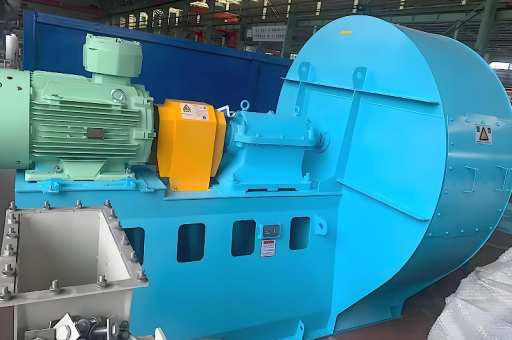
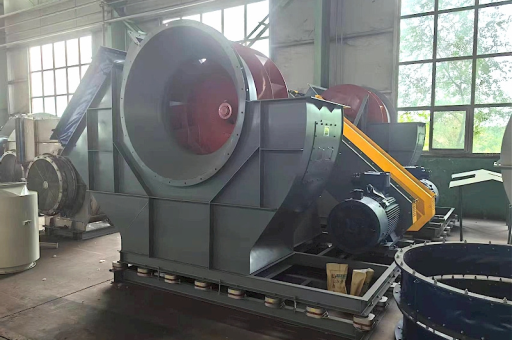
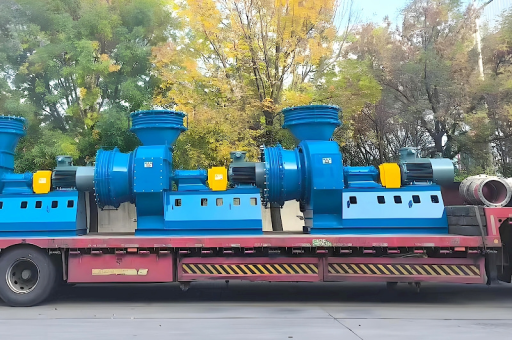
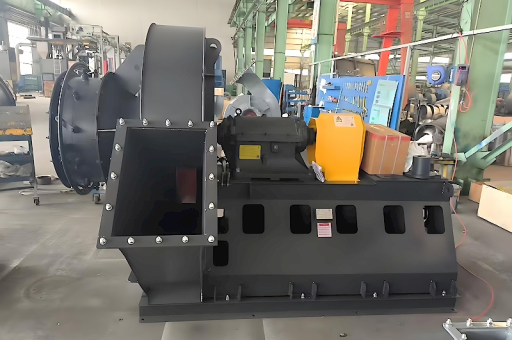
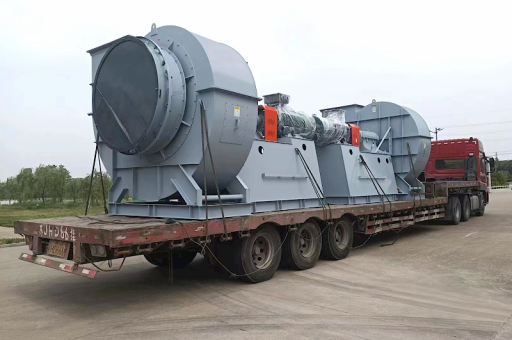
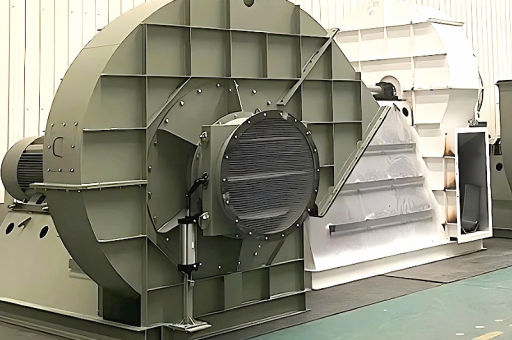
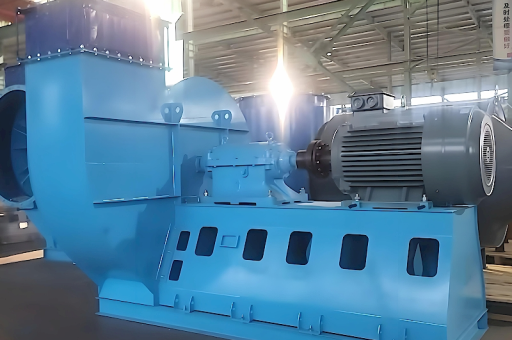
This is a specification for an industrial fan. Here is a breakdown of what a 1kW Backward-Curved Centrifugal Fan is, how it performs, and its typical applications.
The Core Components Explained
-
1 kW (Power): This is the motor power.
- What it means: This is the electrical power input to the motor. In terms of mechanical output, this fan will deliver roughly 1 HP (Horsepower) on the shaft, as 1.1 kW ≈ 1.47 HP.
- Airflow: For a fan of this size, you can expect a significant airflow, typically ranging from 800 to 3,000 m³/h (or about 450 to 1,750 CFM), depending on the specific static pressure it must overcome.
-
Backward-Curved (Blade Type): This refers to the shape of the impeller blades. They curve away from the direction of rotation.
- Key Characteristics:
- High Efficiency: The most efficient type of centrifugal fan blade.
- Non-Overloading Power Curve: This is the most important feature. As the system resistance (static pressure) decreases, the motor draws less current. If a duct comes off or a filter is removed, the motor is unlikely to burn out.
- Lower Noise: Generally quieter than forward-curved (squirrel cage) fans for the same duty.
- High Pressure: Can generate moderate to high static pressure.
- Key Characteristics:
-
Centrifugal Fan (Type): This describes the overall design. Air enters the center of the impeller (axially) and is accelerated outward by centrifugal force, exiting at a 90-degree angle (radially or scroll-tangent).
- Pros: Handles high static pressure well (ductwork, filters, coils).
- Cons: Generally louder and larger than an axial fan (like a desk fan or wall fan) for the same airflow.
Performance Characteristics
- Duty: It is a workhorse fan, ideal for systems requiring consistent airflow against moderate to high resistance.
- Airflow vs. Pressure: It performs very well in the mid-to-high static pressure range. Unlike forward-curved fans, its airflow drops off steadily but reliably as pressure increases.
- Typical Speed Range: This size fan usually operates between 900 and 1,400 RPM (Revolutions Per Minute) , depending on the pulley ratio (if belt-driven) or direct drive speed (if motor speed controlled via VFD).
Common Applications
You will find this specific fan (1.1 kW, backward-curved) in:
- HVAC Systems (Heating, Ventilation, and Air Conditioning):
- Supply or return fans for medium-sized commercial buildings.
- Fan coil units where the motor is Direct Drive (ECM or AC).
- Industrial Ventilation:
- Fume extraction (where particles are not too sticky or heavy).
- General factory or warehouse ventilation.
- Dust collection pre-separators (as the backward curve handles dust better than forward curve).
- Clean Rooms and Laboratories:
Where constant airflow is critical despite varying filter loads. The "non-overloading" feature prevents motor burnout when filters are new and clean.
- Drying Systems:
Providing consistent forced air for drying processes.
Key Advantages & Disadvantages
| Advantage | Disadvantage |
|---|---|
| High Efficiency (lower operating cost) | Larger physical size for same airflow vs. forward-curved |
| Non-Overloading Motor (safe operation) | Higher initial cost than axial or forward-curved fans |
| Relatively Quiet for a centrifugal fan | Not self-cleaning (can clog with sticky/tacky dust) |
| Stable Performance across pressure range | Requires a scroll housing for optimal performance |
How to Read a Curve for This Fan
If you are sizing or selecting this fan, you need two key numbers from your system:
- Airflow Required: (e.g., 1,800 m³/h)
- Static Pressure: The total resistance your system will create (e.g., 400 Pa or 1.6 in.w.g.)
On the manufacturer's fan curve, you would:
- Find the point where 1,800 m³/h meets 400 Pa.
- The fan's speed (RPM) will be shown on the curve near that point.
- Crucially, check that the motor power (1.1 kW) is ABOVE the curve at that point. You should always have some safety margin (typically 10-15%) to ensure the motor is not overloaded.
In summary: A 1kW Backward-Curved Centrifugal Fan is a highly efficient, safe, and reliable choice for moving air against moderate to high resistance in commercial and industrial environments. It is a step up in quality and performance from a cheaper forward-curved fan.