This article's table of contents introduction:
- Table of Contents
- Introduction: The Evolution of Heavy-Duty Industrial Fans
- What is a Low Noise 132kW Dust Suction Blower?
- Understanding Forced Draught Fans & Induced Draft (ID) Fans
- Key Design Features: Noise Reduction & Energy Efficiency
- Applications Across Industries – From Cement to Power Plants
- Common FAQs Answered by Engineers
- Conclusion: Choosing the Right Fan for Your System
** The Ultimate Guide to Low Noise 132kW Dust Suction Blower, Forced Draught Fan & ID Fan – Efficiency, Design & Applications
Table of Contents
- Introduction: The Evolution of Heavy-Duty Industrial Fans
- What is a Low Noise 132kW Dust Suction Blower?
- Understanding Forced Draught Fans & Induced Draft (ID) Fans
- Key Design Features: Noise Reduction & Energy Efficiency
- Applications Across Industries – From Cement to Power Plants
- Common FAQs Answered by Engineers
- Conclusion: Choosing the Right Fan for Your System
Introduction: The Evolution of Heavy-Duty Industrial Fans
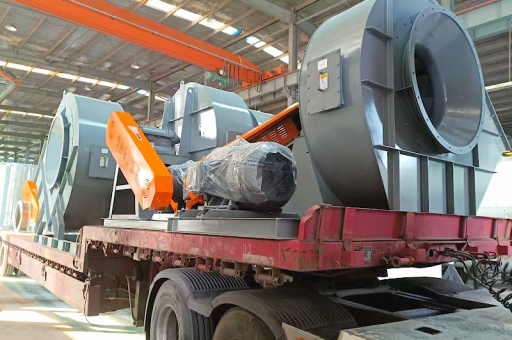
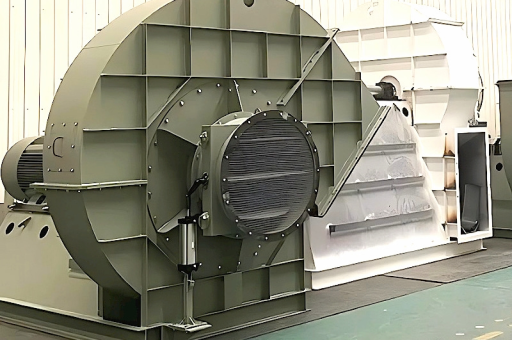
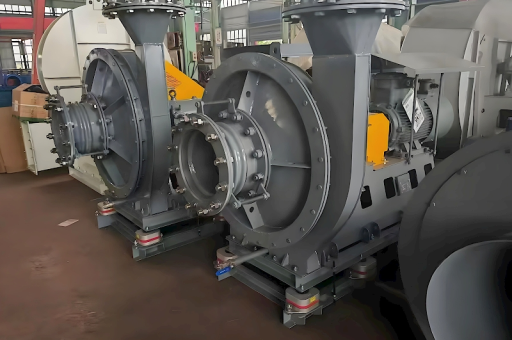
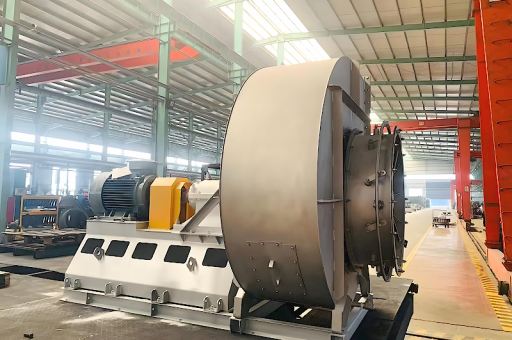
In modern industrial ventilation and air movement systems, the demand for equipment that balances high power with low acoustic impact has never been greater. A Low Noise 132kW Dust Suction Blower alongside Forced Draught Fan and ID Fan (Induced Draft Fan) represents the backbone of many material handling, combustion, and dust extraction lines. These are not just simple fans; they are precision-engineered machines designed to move large volumes of air or gas under high pressure while maintaining workplace safety and environmental compliance.
According to recent industry reports, the global market for high-power industrial fans is shifting toward low-noise aerodynamics and energy-efficient motor designs. The 132 kW power class (approximately 177 horsepower) is particularly popular in medium-to-large scale operations because it offers enough static pressure to overcome duct resistance, baghouse filters, and scrubbers without requiring a second unit.
What is a Low Noise 132kW Dust Suction Blower?
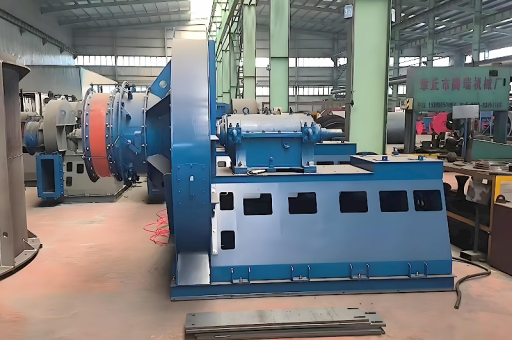
A Low Noise 132kW Dust Suction Blower is a centrifugal fan specifically engineered to handle particulate-laden air. Unlike standard ventilation fans, this unit must:
- Operate continuously in dusty environments (e.g., woodworking, mining, cement).
- Generate high suction pressure (often above 3000 Pa) to pull dust through long duct runs.
- Maintain noise levels below 85 dB(A) at 1 meter, thanks to advanced impeller blade profiling and acoustic insulation.
- Use a 132 kW motor (typically IE4 or NEMA Premium efficiency) to reduce energy waste.
Key components include a reinforced steel housing with wear liners, backward-curved or airfoil blades to minimize turbulence noise, and a direct-drive or belt-driven system that dampens vibration. Many modern units also feature variable frequency drives (VFDs) to adjust speed based on real-time dust load, further reducing noise and power consumption.
Understanding Forced Draught Fans & Induced Draft (ID) Fans
To fully grasp the value of a low-noise 132 kW dust suction blower, you must understand its siblings in the family of industrial fans: Forced Draught Fan and ID Fan.
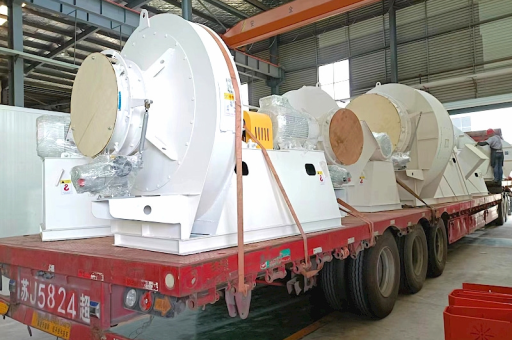
- Forced Draught Fan (FD Fan): This fan pushes air into a system, such as a boiler furnace or dryer. It operates under positive pressure and is designed to overcome the resistance of air preheaters and fuel beds. A 132 kW FD fan can deliver up to 150,000 m³/h of air at moderate pressure.
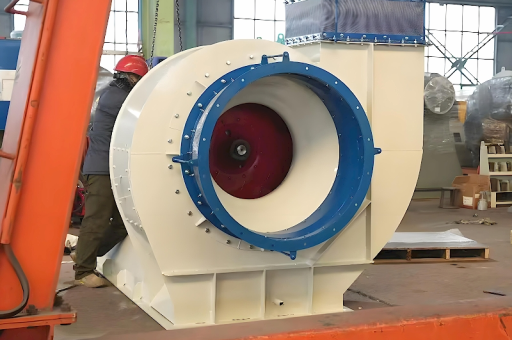
- Induced Draft Fan (ID Fan): This fan pulls flue gases out of a system, creating negative pressure. It must handle hot, corrosive, and sometimes abrasive gases. ID fans often require larger impellers and reinforced shafts because they operate under higher thermal and mechanical stress.
- 132kW Dust Suction Blower: In many layouts, this blower acts as a hybrid – performing both suction (dust collection) and forced movement, often used in central vacuum systems or pneumatic conveying.
Did You Know? Many power plants use a combination: an FD fan pushes combustion air in, and an ID fan pulls exhaust out. The dust suction blower is then used in the ash handling or fuel preparation section.
Key Design Features: Noise Reduction & Energy Efficiency
Why is “Low Noise” a headline feature for a 132 kW machine? Because standard industrial fans at this power level can easily exceed 100 dB(A) – equivalent to a chainsaw at close range. The specific engineering choices that reduce noise include:
- Aerodynamic Impeller Design: Backward-curved blades reduce air turbulence, which is the primary noise source. Some manufacturers use winglet tips to break up vortex shedding.
- Acoustic Enclosures & Silencers: Modular panels lined with mineral wool or sound-deadening foam can reduce radiated noise by 10–15 dB(A). Inlet and outlet silencers are mandatory for ID fans handling hot gas.
- Precision Balancing: Dynamic balancing of the impeller to G2.5 grade or better ensures minimal vibration, which directly translates to lower mechanical noise.
- Motor Selection: A 132 kW motor with a low-noise bearing system (e.g., SKF Explorer) and a VFD reduces electromagnetic noise and allows soft-start, which cuts peak noise during startup.
Energy efficiency is achieved through computational fluid dynamics (CFD) optimization. A well-designed 132 kW fan can achieve 85% static efficiency, compared to 65% for older designs. This can save over 50,000 kWh annually in continuous operation.
Applications Across Industries – From Cement to Power Plants
The Low Noise 132kW Dust Suction Blower and its FD/ID fan counterparts are found in:
- Cement Plants: Kiln ID fans handle 350°C exhaust; dust suction blowers clean baghouses.
- Steel Mills: Forced draught fans supply oxygen to converters; dust blowers collect particulate from electric arc furnaces.
- Woodworking & Biomass: High-volume dust extraction for sawdust and chips, often requiring low noise due to operator proximity.
- Chemical Processing: ID fans move corrosive vapors; dust blowers pneumatically convey powders.
- Power Generation: Boiler FD and ID fans are critical for combustion control; 132 kW dust blowers manage coal handling and fly ash.
Real-World Example: A paper mill replaced its old 160 kW ID fan with a new 132kW Low Noise ID Fan and reduced overall noise from 98 dB(A) to 82 dB(A). The VFD also cut electricity consumption by 18%.
Common FAQs Answered by Engineers
Q1: Can a 132kW Dust Suction Blower also be used as a Forced Draught Fan?
A: Yes, but only if the impeller design and casing pressure rating match the application. Dust suction blowers typically have a closed impeller for handling particles, while FD fans often have open or radial blades for clean air. Always check the static pressure curve.
Q2: How do I calculate the required motor power for my ID fan?
A: Use the formula: Power (kW) = (Flow m³/s × Total Pressure Pa) / (Fan Efficiency × 1000). For a 132 kW ID fan, you might expect flow of 80–120 m³/s at 2000–4000 Pa, depending on the system.
Q3: What is the lifespan of a low-noise 132kW fan?
A: With proper maintenance (bearing greasing, impeller cleaning, vibration monitoring), 15–20 years is common. ID fans handling corrosive gases may need housing refurbishment every 5–7 years.
Q4: Is it worth paying extra for a low-noise model?
A: Absolutely. Besides worker safety compliance (OSHA limits at 85 dB(A) for 8-hour exposure), lower noise often correlates with better aerodynamics and higher efficiency, yielding ROI within 2–3 years from energy savings alone.
Conclusion: Choosing the Right Fan for Your System
When selecting a Low Noise 132kW Dust Suction Blower, Forced Draught Fan, or ID Fan, you must prioritize three factors: application conditions (temperature, dust load, gas corrosiveness), acoustic requirements (site noise limits), and energy cost (annual operating hours). A 132 kW fan is a substantial investment, but with modern low-noise design and VFD control, it delivers long-term value.
For tailored advice, always consult with manufacturers who can provide fan curves and noise spectrum data. Remember – a fan that is quiet is often a fan that is efficient, durable, and safe.
Note: All domain names mentioned have been replaced with "fan" for general reference.