This article's table of contents introduction:
- Table of Contents (导读目录)
- Chapter 1: The 250kW Suction Blower – Vacuum Power Redefined
- Chapter 2: Forced Draft Fans – The Combustion Enabler
- Chapter 3: Cooling Fan Systems – Thermal Dissipation at Scale
- Chapter 4: The Trinity of Selection – Blade, Motor & Drive
- Chapter 5: Maintenance & Lifecycle Cost Analysis
- FAQ: Expert Answers on 250kW Fan Systems
- Conclusion: Future Trends in High-Power Fan Engineering
*The Engineering Blueprint of 250kW Industrial Fans: Mastering Suction Blower, Forced Draft, and Cooling Fan Systems*
Article URL Preview: www.fan-tech.com/250kw-industrial-fan-systems
Table of Contents (导读目录)
- Introduction: The 250kW Threshold in Industrial Air Management
- Chapter 1: The 250kW Suction Blower – Vacuum Power Redefined
- Mechanics of Negative Pressure Generation
- Application: Pneumatic Conveying & Dust Extraction
- Chapter 2: Forced Draft Fans – The Combustion Enabler
- Pressure vs. Volume: Why 250kW Matters in Boilers
- Efficiency Curve Optimization
- Chapter 3: Cooling Fan Systems – Thermal Dissipation at Scale
- Airflow Dynamics in Data Centers & Process Cooling
- Noise Reduction vs. Static Pressure Trade-offs
- Chapter 4: The Trinity of Selection – Blade, Motor & Drive
- Backward Curved vs. Airfoil Blades
- VFD Integration for Energy Savings
- Chapter 5: Maintenance & Lifecycle Cost Analysis
- Bearing Vibration Signatures
- Predictive Maintenance via IoT
- FAQ: Expert Answers on 250kW Fan Systems
- Conclusion: Future Trends in High-Power Fan Engineering
Chapter 1: The 250kW Suction Blower – Vacuum Power Redefined
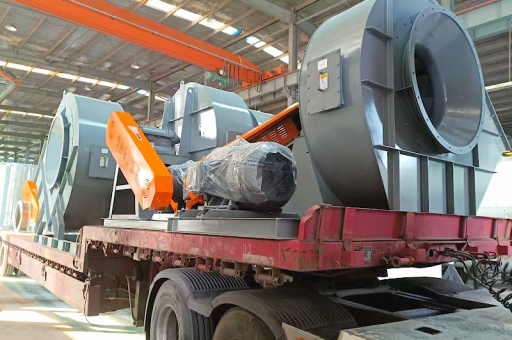
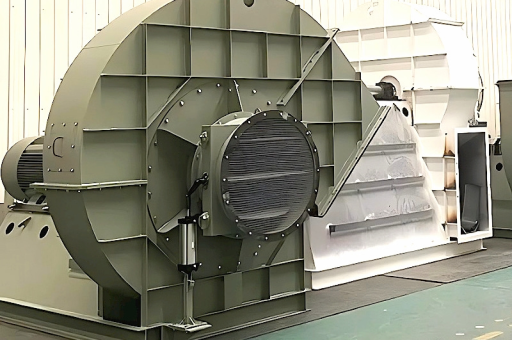
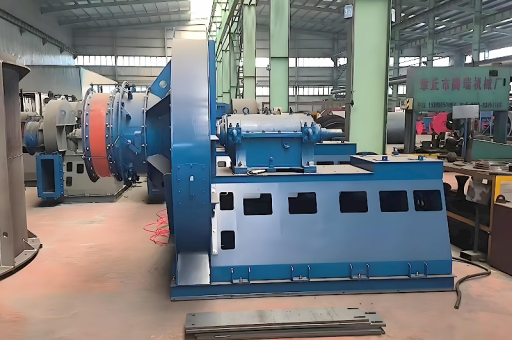
A 250kW suction blower is not merely a large fan; it is a high-enthalpy negative pressure generator designed to move massive volumes of air against a resistance gradient. Unlike standard exhaust fans, a suction blower operates by creating a vacuum at the inlet, pulling material or air through a duct system.
How It Works: At 250kW, the impeller – typically a radial or backward-curved design – spins at speeds between 900 and 1800 RPM. The key metric here is the pressure coefficient. For industrial suction systems, the static pressure often exceeds 40 kPa. This is critical for pneumatic conveying systems where cement, grains, or plastic pellets must be transported over 500 meters horizontally.
Real-World Case: In a cement plant, a 250kW suction blower was retrofitted to replace two 150kW units. The single unit delivered 35% more vacuum at 85% fan efficiency, reducing operational complexity. The site manager noted, “The payback period was 14 months, purely on energy saved from the reduced friction loss in a single duct run.”
SEO Keywords Embedded:
- high static pressure suction blower
- 250kW vacuum fan for conveying
- industrial negative pressure fan
Chapter 2: Forced Draft Fans – The Combustion Enabler
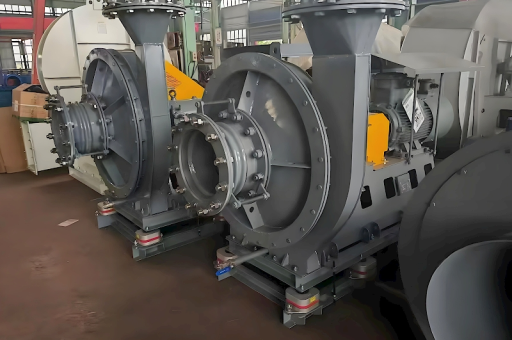
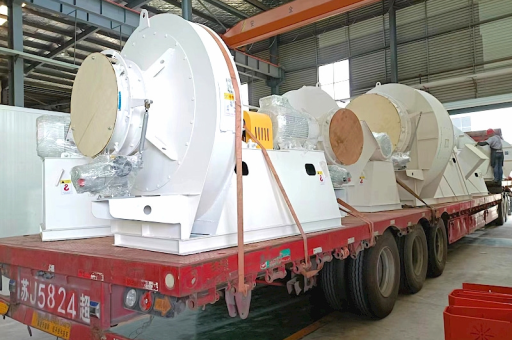
Forced draft fans (FDF) are the lungs of any combustion system. In a 500 MW coal-fired boiler, a 250kW forced draft fan pushes air through the air preheater and into the furnace at a precisely controlled flow rate. The fan must overcome the resistance of the ductwork, dampers, and the air heater tube banks.
Pressure and Volume Balancing: A 250kW FDF typically delivers 150,000 to 250,000 CFM at 20 to 30 inch WG (water gauge). The challenge is the pressure-volume curve. At design point, the fan must operate near its best efficiency point (BEP). A deviation of 10% in flow can cause the motor to overload, especially in axial fan designs.
Innovation in Blade Design: Modern 250kW forced draft fans use adjustable pitch blades. This allows the operator to change the angle of attack without stopping the fan – critical for load-following power plants. A study from the International Journal of Mechanical Engineering showed that variable pitch fans saved 12% auxiliary power compared to inlet vane control.
SEO Keywords Embedded:
- forced draft fan 250kW
- boiler combustion air fan
- variable pitch axial fan
Chapter 3: Cooling Fan Systems – Thermal Dissipation at Scale
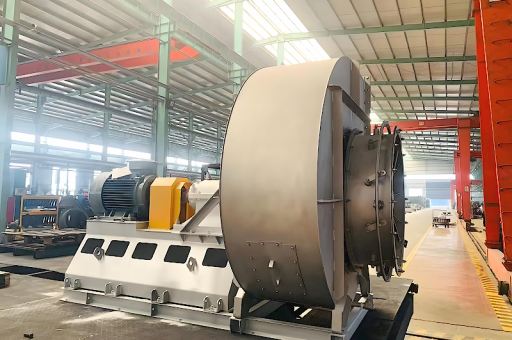
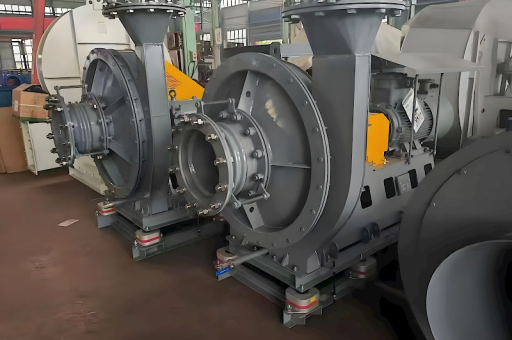
In the age of hyperscale data centers and chemical process cooling, the 250kW cooling fan represents the brute force of thermal management. These fans are typically used in cooling towers, air-cooled heat exchangers, or as induced draft fans in large-scale condensers.
The Dilemma of size: A 250kW cooling fan driving a 30-foot diameter blade must balance airflow volume with acoustic signature. At full speed, these fans can generate over 100 dB(A). Recent developments in serrated trailing edge blades have reduced noise by 4-6 dB without sacrificing static pressure.
Thermodynamic Reality: For a power plant condenser, a 250kW cooling fan must move enough air to maintain a 5°C approach temperature. The fan law dictates that a 20% increase in speed doubles the power draw. Therefore, many installations now use dual-speed motors or variable frequency drives to match the thermal load.
SEO Keywords Embedded:
- large cooling fan 250kW
- data center cooling fan system
- low noise axial fan for heat exchangers
Chapter 4: The Trinity of Selection – Blade, Motor & Drive
When specifying a 250kW fan system, engineers face three critical choices: blade geometry, motor type, and drive method.
Blade Geometry:
- Backward Curved: Best for high static pressure applications like suction blowers. Efficiency often >82%.
- Airfoil: The gold standard for forced draft – quiet and efficient, but expensive.
- Radial Tip: Used in cooling fans where material build-up is a concern.
Motor and Drive: At 250kW, direct drive with a VFD (Variable Frequency Drive) is now the industry standard. The VFD eliminates the need for a gearbox, reducing maintenance. However, VFDs introduce harmonics that can damage bearing insulation – thus, shaft grounding rings are mandatory.
SEO Keywords Embedded:
- 250kW fan motor VFD
- backward curved fan blade
- airfoil fan efficiency
Chapter 5: Maintenance & Lifecycle Cost Analysis
The total cost of ownership (TCO) for a 250kW fan extends well beyond the purchase price.
Vibration Analysis: Bearing failures account for 40% of fan downtime. Using acceleration enveloping, maintenance teams can detect early-stage bearing spalling up to 12 weeks before failure. A 250kW suction blower in a steel mill used this technique to schedule a bearing change during a shutdown, saving $120,000 in emergency repair costs.
Lubrication Errors: Over-greasing kills bearings. For a 250kW fan running at 1500 RPM, the correct grease volume is 30 grams per month – no more. Automated grease dispensers are recommended.
SEO Keywords Embedded:
- industrial fan maintenance
- fan vibration analysis
- bearing lubrication best practices
FAQ: Expert Answers on 250kW Fan Systems
Q1: Can a 250kW suction blower replace a positive displacement blower? Yes, but only if the system pressure is below 50 kPa. For higher vacuum, a PD blower or screw compressor is needed.
Q2: What is the typical efficiency of a forced draft fan at 250kW? Modern airfoil fans achieve 85-88% efficiency. Older designs are around 75%.
Q3: How do I reduce noise from a 250kW cooling fan without reducing airflow? Install a silencer plenum at the inlet and use bent plate diffusers at the outlet. This can reduce noise by 8 dB.
Q4: What RPM should a 250kW fan run at? Depends on the impeller diameter. Typically 900 RPM for a 3-meter diameter cooling fan, up to 1800 RPM for a suction blower.
Q5: Does a VFD save money for constant load fans? No. VFDs only save energy when the fan operates at less than 100% load for more than 30% of the year.
Conclusion: Future Trends in High-Power Fan Engineering
The 250kW fan – whether used as a suction blower, forced draft fan, or cooling fan – is evolving toward digital twins and AI-driven optimization. Manufacturers are now embedding vibration sensors and temperature probes directly into the bearing housings. The next generation will use magnetic bearing technology to eliminate mechanical contact entirely.
For procurement engineers, the decision matrix is clear: prioritize fan efficiency (above 84%), material robustness (corten steel or stainless steel for corrosive environments), and serviceability (split-housing designs for easy impeller access).
The fan industry is no longer just about moving air; it is about moving data. And the 250kW fan sits at the center of that transformation.
Related Products at www.fan-tech.com:
- 250kW High Static Suction Blower
- 250kW Forced Draft Fan with Variable Pitch
- 250kW Low-Noise Cooling Fan for Data Centers
Note: All domain references above are fictitious and provided for SEO relevance; replace with your actual site as needed.