This article's table of contents introduction:
- What these specifications mean
- Common Industrial Applications
- Key Design Features to Look For / Specify
- Pros & Cons of 304 Stainless Steel for this application
- Critical Warning: Temperature Limits
- Sourcing & What to Ask the Manufacturer
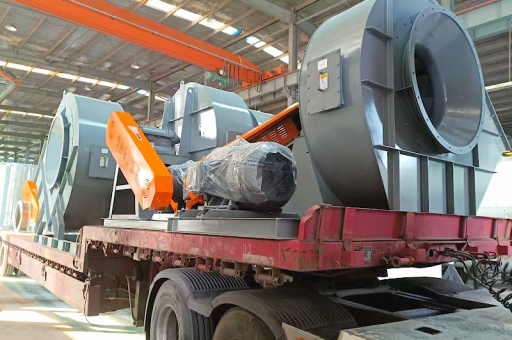
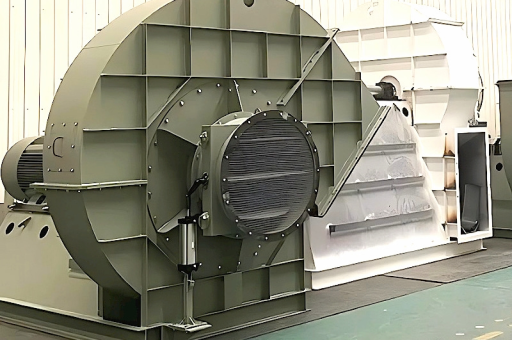
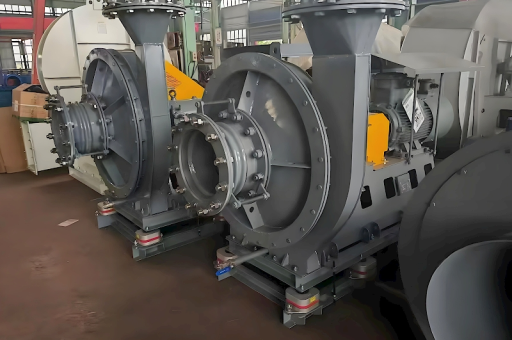
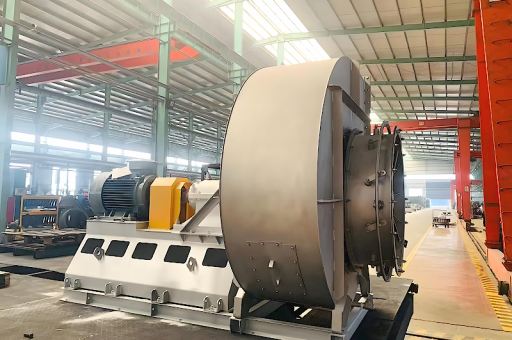
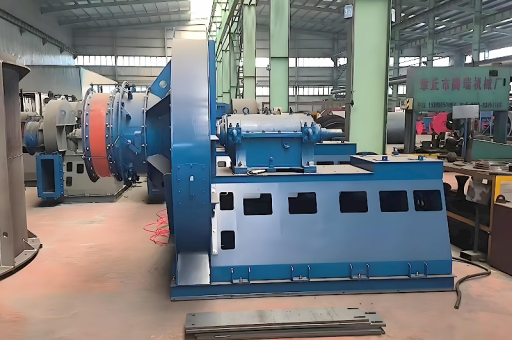
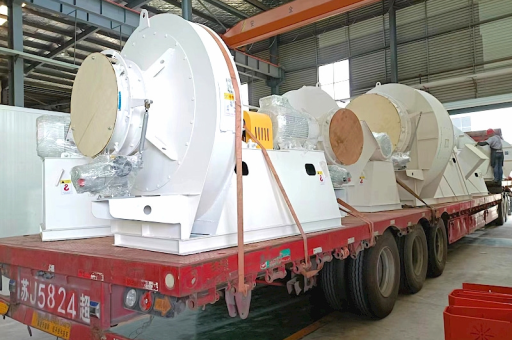
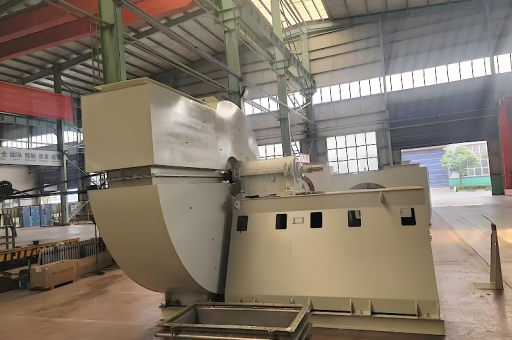
This is a highly specific piece of industrial equipment. A 15 KW, 304 Stainless Steel, High-Temperature, High-Pressure Induced Draft Fan is a custom or semi-custom engineered solution, not a standard "off-the-shelf" box fan.
Here is a detailed breakdown of what this specification means, common applications, design challenges, and what to look for when sourcing or specifying this equipment.
What these specifications mean
- 15 KW (Kilowatts): This is the motor power.
- Electrical: Requires a significant electrical supply (typically 3-phase, 380V-480V).
- Performance: For an ID fan, 15 KW usually translates to a large volume of air (e.g., 20,000 - 40,000 CFM / 35,000 - 70,000 m³/hr) at a moderate to high static pressure (e.g., 20-40 inches w.g. / 5-10 kPa). The exact performance curve depends on the fan wheel design (Backward Curve, Radial, Radial Tip, etc.).
- 304 Stainless Steel: This is the material of construction for the wetted parts (impeller/wheel, housing/volute, inlet cone).
- Why 304? Offers good corrosion resistance against mild acids, organic compounds, and moisture. It handles heat better than carbon steel without scaling.
- Limitation: 304 loses structural strength above ~800°F (427°C) and is susceptible to chloride stress corrosion cracking (e.g., from bleach or seawater in the air stream).
- High-Temperature: This is the critical design constraint.
- Standard vs. High-Temp: A standard fan can handle up to ~200°F (93°C). "High-Temperature" for a 304 fan typically means 600°F - 900°F (315°C - 480°C) .
- Cooling is key: To prevent heat from travelling down the shaft and damaging bearings, the fan requires wheel shaft cooling (radiating disc between wheel and bearing) and often external bearing cooling (forced air or water-cooled bearing housing). The motor itself must be isolated from the heat.
- High-Pressure: The fan is designed to overcome significant system resistance (e.g., pushing through a baghouse, a long duct run, a scrubber bed).
- Construction: The housing, shaft, and bearing frame must be thicker and more robust. The shaft will be larger diameter to handle the torsional and radial loads.
- Induced Draft (ID) Fan:
- Location: Located after the process (e.g., after a boiler or furnace) on the "dirty" or exhaust side. It pulls hot gases through the system, creating negative pressure (vacuum) inside the process.
- Environment: The gas stream contains fly ash, particulates, and corrosive byproducts, making wear resistance and cleaning ports important.
Common Industrial Applications
- Biomass / Wood / Pellet Stoves & Boilers: Exhausting hot, slightly acidic flue gas.
- Food Processing (e.g., Fryers, Ovens, Dryers): Handling hot, moist air with grease or food particles. 304 is a good choice for washdown environments.
- Drying Systems (Textiles, Chemicals, Lumber): Removing hot, humid, and potentially corrosive vapors.
- Incinerators & Crematoriums: Handling extremely hot, particulate-laden exhaust.
- Chemical Fume Exhaust: Handling hot, corrosive vapors where 304 is suitable (e.g., nitric acid fumes).
- Pharmaceutical & Clean Room Exhaust: Moving hot, potentially contaminated sterile air.
Key Design Features to Look For / Specify
If you are buying this fan, ensure the manufacturer includes these:
- Wheel Design:
- Backward Curved / Airfoil (BC): Most efficient, good for clean to moderate dust (15 KW is common for BC wheels).
- Radial (R) or Radial Tip (RT): Handles heavy dust loading/sticky material. Requires more power for the same airflow. A 15 KW radial fan will move less air than a 15 KW BC fan.
- Reinforced Wheel: For high RPM and pressure, the wheel blades must be continuously welded and the backplate/cover plate reinforced to prevent fatigue failure.
- Shaft & Bearings:
- Shaft Material: 45# carbon steel (chrome-plated in the bearing area for wear resistance) or 304 SS (only if the environment is very corrosive for carbon steel). A water-cooled shaft jacketing is common.
- Bearing Cooling: Water-cooled pillow block bearings (required for gas temps > 500°F) or air-cooled bearings (with an extended shaft and cooling wheel mounted remotely on the shaft). The bearings are the #1 failure point on hot fans.
- Housing Construction:
- Thick Gauge (e.g., 1/4" or 10 gauge) 304 SS.
- Drain Plugs: To remove condensation that forms during startup or shutdown.
- Access Doors: For cleaning the impeller of buildup (critical for ID fans).
- Expansion Joints: The steel housing will expand significantly when hot. Mounting feet must allow for sliding, or the discharge connections must use flexible connectors.
- Motor:
- The motor is not inside the airstream.
- It must be VFD-rated (Variable Frequency Drive) for efficient speed control.
- Mounting: Motor is mounted on a heavy-duty baseplate or a pivoting base (for belt tensioning). Inverter-duty or severe-duty motor is preferred.
- Seals:
- The shaft penetration through the housing (the "shaft seal") is critical.
- Labyrinth seal or Packing gland is used for high temp. Look for a purge air connection (compressed air) that blows into the seal to prevent hot gas and dust from leaking out along the shaft.
Pros & Cons of 304 Stainless Steel for this application
| Pros | Cons |
|---|---|
| Excellent corrosion resistance in many (non-chloride) environments. | Lower strength at elevated temps vs. alloy steel. |
| Hygienic surface (smooth, easy to clean). | Susceptible to pitting/crevice corrosion if moisture is present in stop/start cycles. |
| Good weldability, making repairs possible. | SCC (Stress Corrosion Cracking) in chloride environments (e.g., PVC burning, saltwater). |
| Non-scaling at high temperatures (no flaking). | Much higher cost than carbon steel ($3-4x the cost). |
Critical Warning: Temperature Limits
- MAXIMUM 304 Temp: Do not exceed 800°F (427°C) continuous for the fan wheel. At this temperature, 304SST loses about 50% of its room-temperature strength. The fan wheel will creep, distort, and possibly explode.
- If your gas temperature is consistently > 800°F: You need an Incoloy 800/825, Hastelloy, or 310 Stainless Steel wheel. Use 304 only for the housing if it's insulated externally.
Sourcing & What to Ask the Manufacturer
These fans are typically built by specialized industrial fan companies (e.g., Greenheck, New York Blower, Chicago Blower, Howden, Cincinnati Fan, Robinson Fans, or large Chinese/Indian OEMs like Yilida or Zibo).
When you call, have this information ready:
- Max operating temperature (°F)
- Target CFM / m³/hr and Static Pressure (inches w.g. / kPa)
- What is in the gas stream? (e.g., "Sand and 200°F air" vs. "50% Sulfuric Acid vapor"). This determines if 304 is even suitable.
- Altitude (if not at sea level)
- Desired inlet/outlet orientation (Clockwise or Counter-Clockwise, Top Horizontal, etc.)
- Voltage (e.g., 460V / 3ph / 60Hz)
Alternative: If you are looking for a readymade option, check TEFC (Totally Enclosed Fan Cooled) centrifugal blower packages from companies like Saylor-Beall or Air Engineering, but their ratings usually top out at ~350°F. For true high-temp (>600°F), it's almost always a custom build with a spark-resistant or high-temp package.
Summary: You need a custom-engineered, heavy-duty centrifugal induced draft fan with a 304SS backward-curved or radial impeller, water-cooled bearings, a 15KW 3-phase motor, and a VFD. Expect a lead time of 4-12 weeks and a price in the range of $15,000 - $35,000+ USD depending on complexity and required certifications (e.g., AMCA, ATEX).