This article's table of contents introduction:
- Table of Contents
- 1. Introduction: Understanding the Core Application
- 2. Technical Specifications and Design Features
- 3. Operational Principles of an Induced Draft Fan
- 4. Key Industries and Use Cases
- 5. Performance Advantages Over Conventional Fans
- 6. Frequently Asked Questions (FAQ)
- 7. Installation, Maintenance, and Safety Considerations
- 8. Conclusion: Why This Fan is a Strategic Investment
Maximizing Industrial Efficiency with the 75KW 304 Stainless Steel High-Temperature, High-Pressure Induced Draft Fan**
Table of Contents
- Introduction: Understanding the Core Application
- Technical Specifications and Design Features
- 1 Motor Power and Drive System (75KW)
- 2 Material Selection: 304 Stainless Steel
- 3 High-Temperature and High-Pressure Capabilities
- Operational Principles of an Induced Draft Fan
- Key Industries and Use Cases
- Performance Advantages Over Conventional Fans
- Frequently Asked Questions (FAQ)
- Installation, Maintenance, and Safety Considerations
- Conclusion: Why This Fan is a Strategic Investment
Introduction: Understanding the Core Application
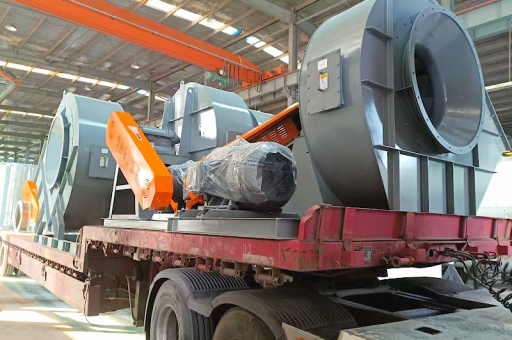
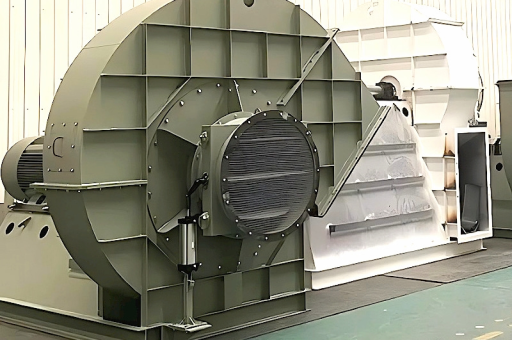
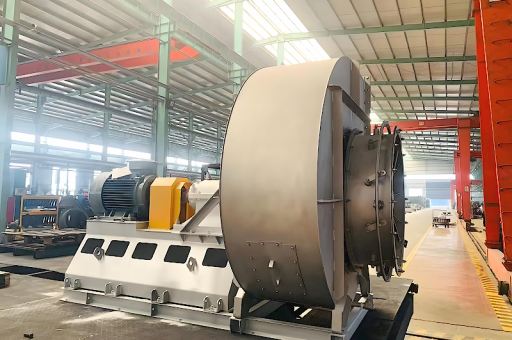
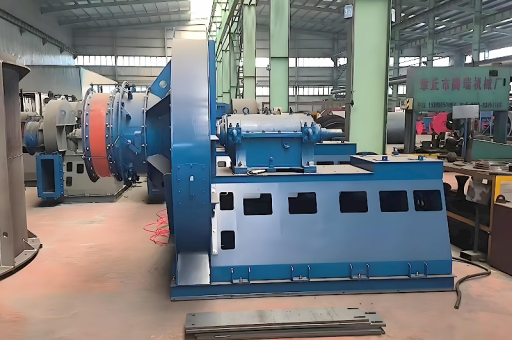
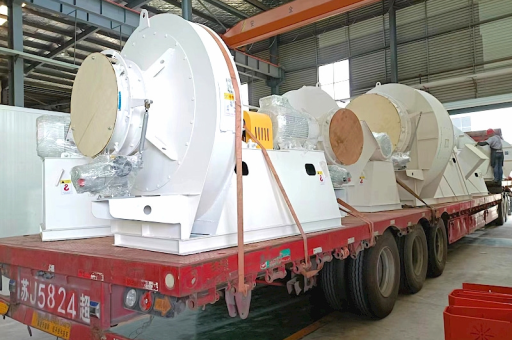
In modern industrial processes that involve combustion, exhaust gas extraction, or thermal treatment, the induced draft fan plays a critical role in maintaining negative pressure, ensuring safe gas evacuation, and optimizing energy efficiency. When the operating environment demands extreme gas temperatures, corrosive atmospheres, and high static pressures, a standard fan fails. The 75KW 304 Stainless Steel High-Temperature, High-Pressure Induced Draft Fan emerges as the optimized solution. Built with a robust motor and corrosion-resistant alloy, this specialized fan is engineered for continuous operation in boilers, incinerators, kilns, and chemical reactors where gas temperatures exceed 300°C and system pressures require aggressive airflow management.
Technical Specifications and Design Features
1 Motor Power and Drive System (75KW)
A 75-kilowatt motor provides substantial rotational torque and airflow capacity, making this fan suitable for large-scale industrial systems. Typically, such fans operate at speeds between 960 and 1480 RPM, using direct drive or pulley-driven mechanisms. The motor is usually equipped with frequency converter compatibility, allowing precise airflow modulation based on real-time process pressure feedback. This not only reduces energy consumption but also protects downstream equipment from pressure surges.
2 Material Selection: 304 Stainless Steel
The entire fan housing, impeller, and inlet cone are constructed from 304 stainless steel (UNS S30400). This austenitic alloy offers excellent resistance to oxidizing environments, moisture, and mildly acidic flue gases. At elevated temperatures (up to 650°C, depending on gas composition), 304 retains structural integrity and resists scaling. For typical induced draft applications where flue gas temperatures range from 200°C to 450°C, 304 stainless steel provides a high strength-to-weight ratio and long service life compared to carbon steel.
3 High-Temperature and High-Pressure Capabilities
This fan is designed for continuous duty at gas temperatures up to 450°C (peak 500°C) and static pressures up to 15,000 Pa. The high-pressure capability is achieved through specially curved backward-inclined blades that minimize turbulence while maximizing pressure rise. Thermal expansion is accommodated through reinforced shaft seals and floating bearing housings. A shaft cooling fan or air-purge system is often integrated to prevent heat transfer from the impeller to the motor bearings.
Operational Principles of an Induced Draft Fan
As part of a balanced draft system, an induced draft (ID) fan is installed after the combustion or process chamber. It pulls exhaust gases through the system, creating negative pressure inside the furnace or reactor. This negative pressure ensures that toxic or hot gases do not leak into the work environment through inspection doors or joints. The 75KW 304 stainless steel high-temperature, high-pressure induced draft fan operates at a higher static pressure than typical ID fans, allowing it to overcome resistance from multiple stages of pollution control equipment (e.g., electrostatic precipitators, bag filters, scrubbers). It generates high volumetric flow while maintaining stable gas suction.
Key Industries and Use Cases
| Industry | Application | Why This Fan is Essential |
|---|---|---|
| Waste-to-Energy Plants | Combustion gas extraction from incinerators | Handles acidic and high-temperature gases with minimal corrosion |
| Cement & Lime Kilns | Exhaust of hot gases from preheater towers | Withstands char and dust-laden airflow at high pressure |
| Chemical Processing | Reactor venting and distillation column exhaust | Resists volatile organic compounds and moisture |
| Power Generation (Biomass/Coal) | Boiler flue gas evacuation | Provides high draft for efficient combustion |
| Steel & Glass Manufacturing | Furnace exhaust gas handling | Operates reliably under extreme thermal cycling |
Performance Advantages Over Conventional Fans
- Extended Material Longevity – Carbon steel fans typically fail within 6–18 months in corrosive high-temperature environments. 304 stainless steel extends service life to 5–10 years with proper maintenance.
- Higher Efficiency at Elevated Temperatures – The backward-inclined blade design maintains aerodynamic efficiency even when gas density drops due to high temperature.
- Reduced Downtime and Maintenance – Robust shaft sealing and heat dissipation systems minimize bearing failures, a common issue in conventional high-temperature fans.
- Noise and Vibration Control – Dynamically balanced impellers and heavy-duty foundations reduce noise levels below 85 dB(A) at 1 meter, meeting OSHA standards.
- Energy Savings – A 75KW motored fan with variable frequency drive can reduce power consumption by 20–35% compared to constant-speed dampers.
Frequently Asked Questions (FAQ)
Q1: What is the maximum gas temperature this fan can handle continuously?
Continuous operation is rated at 450°C with gas composition being non-reducing and non-chlorinated. Short-term peaks up to 500°C are acceptable, but frequent spikes may reduce bearing and seal life.
Q2: Can this fan handle corrosive gases like sulfur dioxide or hydrogen chloride?
Yes. 304 stainless steel offers good resistance to dry SO₂ and HCl at moderate concentrations. However, if condensation occurs (low gas temperature), 316L may be recommended. Always confirm gas dew point with the manufacturer.
Q3: How does the 75KW power rating affect installation requirements?
A 75KW motor requires a 3-phase power supply (typically 380V–480V, 50Hz/60Hz). Electrical wiring, circuit breakers, and VFD must be sized for full load current (approx. 135–150A at 380V). A motor cooling fan and thermal protection relay are essential.
Q4: What is the typical noise level?
Under full load, noise levels range from 80 to 88 dB(A) depending on installation. A sound enclosure or silencer can be added if required by workplace regulations.
Q5: Is this fan suitable for outdoor installation?
Yes, the 304 stainless steel housing and motor weather cover make it suitable for outdoor conditions. However, the motor should be rated IP55 or higher, and bearing housings should be greased regularly.
Q6: What is the difference between forced draft and induced draft?
A forced draft fan pushes air into the system (inlet side), while an induced draft fan pulls air out (exhaust side). Both are sometimes used together for balanced draft. This model is specifically an ID fan, designed for negative pressure system side.
Installation, Maintenance, and Safety Considerations
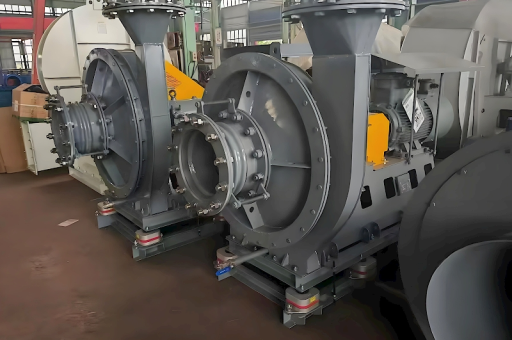
- Foundation: Must be rigid, level, and vibration-dampened. Use spring isolators or inertia bases for large units.
- Ductwork: Inlet and outlet ducting must be aligned precisely to avoid stress on the fan housing. Flexible connections may be used to absorb thermal expansion.
- Lubrication: Grease or oil lubricated bearings require bi-annual re-greasing with high-temperature grease. Monitor bearing temperature; if it exceeds 90°C, inspect alignment.
- Impeller Inspection: Annually, check for erosion, corrosion, or blade cracking. Small imbalances can be corrected by cleaning accumulated dust.
- Safety: Lockout/tagout during maintenance. Do not operate with blocked inlet or outlet; internal pressure could exceed design limits.
Conclusion: Why This Fan is a Strategic Investment
Selecting a 75KW 304 Stainless Steel High-Temperature, High-Pressure Induced Draft Fan is not merely about moving gas—it is about ensuring system reliability, operational safety, and long-term cost efficiency. Whether upgrading an aging boiler house or designing a new chemical plant, this fan delivers sustained performance in the harshest thermal and chemical environments. Its corrosion-resistant construction and high-pressure capability allow facilities to comply with stringent emission regulations while minimizing maintenance downtime. For any industrial process that demands uncompromising exhaust handling, this fan is the cornerstone of an optimized system.