This article's table of contents introduction:
- Table of Contents
- Introduction to the 110KW 304 Stainless Steel Induced Draft Fan
- Key Technical Specifications and Design Features
- Material Advantages: Why 304 Stainless Steel?
- Application Scenarios in High-Temperature, High-Pressure Environments
- Operational Principles and Performance Metrics
- Frequently Asked Questions (FAQ)
- Best Practices for Installation, Maintenance, and Troubleshooting
- Conclusion: Selecting the Right Fan for Industrial Demands
High-Performance 110KW 304 Stainless Steel High-Temperature, High-Pressure Induced Draft Fan: Engineering, Applications, and Maintenance
Table of Contents
- Introduction to the 110KW 304 Stainless Steel Induced Draft Fan
- Key Technical Specifications and Design Features
- Material Advantages: Why 304 Stainless Steel?
- Application Scenarios in High-Temperature, High-Pressure Environments
- Operational Principles and Performance Metrics
- Frequently Asked Questions (FAQ)
- Best Practices for Installation, Maintenance, and Troubleshooting
- Conclusion: Selecting the Right Fan for Industrial Demands
Introduction to the 110KW 304 Stainless Steel Induced Draft Fan
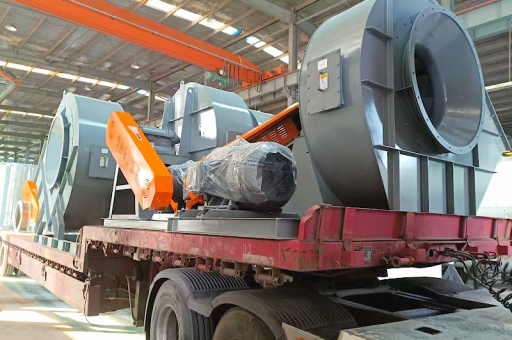
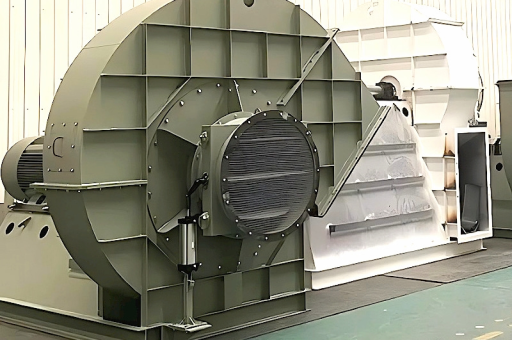
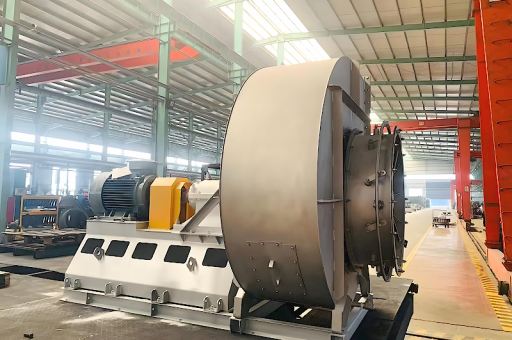
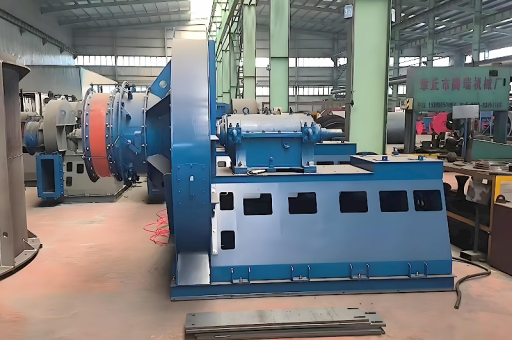
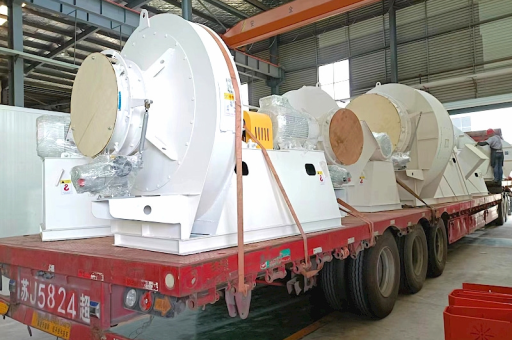
In modern industrial processes that involve combustion, heat treatment, chemical reactions, or exhaust gas handling, the need for reliable, durable, and high-performance ventilation equipment is paramount. The 110KW 304 Stainless Steel High-Temperature, High-Pressure Induced Draft Fan represents a critical component in systems where air or gas must be moved against significant resistance at elevated temperatures. This fan is engineered for heavy-duty applications in power plants, steel mills, cement kilns, petrochemical facilities, and incineration plants.
Induced draft (ID) fans operate by pulling or “inducing” a draft through a system, creating negative pressure that draws hot flue gases or process air through ducts, heat exchangers, scrubbers, and chimneys. Unlike forced draft (FD) fans that push air into a system, ID fans handle gas that has already been heated and often contains particulates or corrosive elements. The choice of 304 stainless steel as the primary construction material, combined with a 110KW motor, ensures the fan can withstand thermal stress, corrosion, and mechanical load over extended service intervals.
Key Technical Specifications and Design Features
The 110KW 304 Stainless Steel High-Temperature, High-Pressure Induced Draft Fan is built to meet rigorous industry standards. Understanding its specifications helps engineers and procurement professionals evaluate its suitability for specific processes.
| Parameter | Typical Value / Range |
|---|---|
| Motor Power | 110 kW (150 HP approximate) |
| Operating Temperature | Up to 450°C (842°F) continuous; higher with cooling provisions |
| Pressure Rating | Up to 8,000 Pa (32 in wg) or more depending on design |
| Material | Main casing, impeller, and shaft: 304 Stainless Steel |
| Impeller Type | Backward-curved, airfoil, or radial tip depending on gas characteristics |
| Speed | 1,450 – 2,950 RPM (adjustable via VFD) |
| Maximum Airflow | Varies by design; typically 50,000 – 150,000 m³/h |
| Bearing Type | Heavy-duty, high-temperature roller bearings with cooling fins |
| Shaft Seal | Labyrinth or carbon ring seal to prevent gas leakage |
Design Highlights:
- Reinforced casing to withstand thermal expansion and pressure fluctuations.
- Wear plates on inlet cone and impeller tip for extended service life when handling abrasive particles.
- Vibration monitoring mounts to integrate with predictive maintenance systems.
- Optional water cooling jacket for bearing housing when operating above 300°C.
Material Advantages: Why 304 Stainless Steel?
304 stainless steel is an austenitic alloy containing approximately 18% chromium and 8% nickel. For high-temperature, high-pressure induced draft fans, this material offers a combination of properties that few other metals can match:
- Oxidation Resistance: At temperatures up to 870°C intermittent, 304 forms a passive chromium oxide layer that prevents scaling and spalling. This is critical ID fans exposed to hot flue gases.
- Corrosion Resistance: Resists attack from sulfur compounds, chlorides (within limits), and acidic condensate often present in exhaust streams.
- Mechanical Strength: Maintains yield strength at elevated temperatures better than carbon steel. At 400°C, 304 retains roughly 60% of its room-temperature strength.
- Creep Resistance: Under constant load at high temperature, 304 exhibits lower creep rates compared to standard carbon steel, preventing blade deformation.
- Weldability and Fabrication: Easily formed and welded using conventional techniques, allowing complex impeller geometries that optimize aerodynamic efficiency.
However, 304 does have limitations in environments with high chloride content (e.g., marine applications or PVC incineration). In such cases, 316L or duplex stainless steels may be recommended. But for general high-temperature gas handling, 304 remains the most cost-effective and widely adopted solution.
Application Scenarios in High-Temperature, High-Pressure Environments
The 110KW 304 Stainless Steel High-Temperature, High-Pressure Induced Draft Fan serves multiple critical roles across heavy industries:
1 Power Generation (Coal, Biomass, Waste-to-Energy)
ID fans pull combustion gases through boilers, economizers, bag filters, and electrostatic precipitators. The fan must handle gas temperatures ranging from 150°C to 350°C and resist fly ash erosion.
2 Cement and Lime Kilns
In cement production, ID fans extract hot gas from the preheater tower and rotary kiln. Gas temperatures can exceed 400°C, and dust loads are high. The 304 stainless steel construction resists thermal fatigue caused by kiln startup and shutdown cycles.
3 Steel and Non-Ferrous Metal Processing
Electric arc furnaces, basic oxygen furnaces, and reverberatory furnaces all generate intense heat. ID fans maintain negative pressure inside the furnace, preventing hot gas escape into the working environment.
4 Petrochemical and Refining
Catalytic crackers, reformers, and sulfur recovery units require fans that can handle corrosive gases (H₂S, SO₂) at high temperature. 304 stainless steel combined with proper coating or passivation provides adequate resistance.
5 Incineration Facilities
Municipal solid waste and hazardous waste incinerators require ID fans that operate after heat recovery, typically at 200°C to 280°C. Acidic condensate from chlorinated waste demands careful material selection – 304 is suitable for well-maintained systems.
Operational Principles and Performance Metrics
The induced draft fan creates a pressure differential across the system. The impeller rotates at high speed, imparting kinetic energy to the gas, which is then converted to static pressure in the volute casing. The primary performance curves are:
- Pressure vs. Flow (P-Q curve): The fan must operate within its stable region to avoid surge or stall.
- Power Consumption: For a 110KW motor, actual absorbed power depends on gas density and system resistance.
- Efficiency: Modern backward-curved impellers achieve aerodynamic efficiencies of 82%–88%.
Key performance considerations:
- Gas Density Correction: Fan performance is rated at standard conditions (20°C, 101.3 kPa). For hot gases, density decreases, so mass flow rate drops unless fan speed or blade angle is adjusted.
- Temperature Limits: Continuous operation above 450°C may require stator cooling fans, high-temperature grease, or ceramic bearings.
- Vibration Limits: ISO 10816-3 standards apply. For rigid fans under 300 kW, vibration velocity should not exceed 4.5 mm/s (RMS) in continuous service.
Frequently Asked Questions (FAQ)
Q1: What is the maximum continuous operating temperature for a 304 stainless steel ID fan without cooling? A: Typically 450°C. Beyond that, material creep accelerates, and oxidation resistance degrades. For higher temperatures, consider 310S stainless steel or Inconel alloys.
Q2: Can the 110KW fan be operated with a variable frequency drive (VFD)? A: Absolutely. VFD control is highly recommended for induced draft fans. It allows precise modulation of flow and pressure, reduces energy consumption at partial load, and mitigates motor starting current surges. Ensure the VFD is rated for the motor’s full-load amps and supports derating for harmonic content.
Q3: How often should bearings be replaced in high-temperature service? A: Bearing life depends on temperature and load. At 200°C, high-quality bearings with proper lubrication may last 8,000–12,000 hours. At 350°C, replacement intervals could drop to 4,000–6,000 hours. Use of synthetic high-temperature grease (e.g., polyurea thickener) can extend intervals.
Q4: What causes impeller imbalance in high-temperature ID fans? A: common causes include:
- Ash or dust buildup on blades (especially with sticky particulate)
- Thermal distortion due to uneven heating during startup
- Erosion of blade leading edges
- Loose fasteners due to thermal cycling
Q5: Is 304 stainless steel suitable for handling gases containing hydrogen chloride (HCl)? A: 304 has limited resistance to HCl, especially above 50°C and in the presence of moisture, which can form hydrochloric acid. For environments with HCl or wet chloride gases, upgrade to 316L or a nickel-based alloy.
Q6: What is the typical noise level of a 110KW ID fan? A: Without sound attenuation, sound pressure levels range from 85 to 105 dBA at 1 meter, depending on impeller tip speed and casing design. Silencers, acoustic enclosures, and vibration isolators are commonly applied.
Best Practices for Installation, Maintenance, and Troubleshooting
Installation
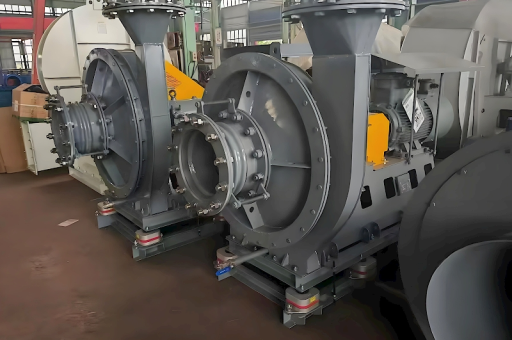
- Foundation: Use a rigid, isolated concrete base with vibration pads to absorb dynamic loads.
- Ductwork Alignment: Ensure inlet and outlet ducts are properly aligned and supported independently to avoid transmitting forces to the fan casing.
- Expansion Joints: Install flexible connections on both sides to accommodate thermal growth of piping and ductwork.
- Drainage: Include a bottom drain connection in the volute casing to remove accumulated condensate during cold starts.
Maintenance Schedule
- Daily: Check vibration levels, bearing temperatures, and abnormal noises.
- Weekly: Inspect shaft seal for leakage; lubricate bearings as per manufacturer recommendation.
- Monthly: Measure motor current and compare to baseline; clean accessible areas.
- Quarterly: Inspect impeller blades and wear plates for erosion or deposits.
- Annually: Perform full disassembly inspection, non-destructive testing (dye penetrant or ultrasonic) on critical welds, and replace bearings if operated near temperature limits.
Common Troubleshooting
| Symptom | Likely Cause | Corrective Action |
|---|---|---|
| Excessive vibration | Imbalance, worn bearings, resonance | Balance impeller, replace bearings, adjust support stiffness |
| Motor overload | System resistance too high, damper closed | Check dampers, clean ducts, verify gas density |
| High bearing temperature | Lubrication failure, misalignment | Regrease, align shaft, inspect cooling air flow |
| Gas leakage at shaft | Seal wear, thermal expansion gap | Adjust or replace seal, verify cooling air supply |
| Performance drop | Impeller fouling, VFD control error | Clean blades, reset VFD, check inlet filter condition |
Conclusion: Selecting the Right Fan for Industrial Demands
The 110KW 304 Stainless Steel High-Temperature, High-Pressure Induced Draft Fan is a specialized workhorse for demanding thermal processes. Its material choice, power rating, and design flexibility make it a reliable solution for industries that require continuous, safe, and efficient removal of hot gases. When selecting or specifying an ID fan, consider:
- Gas composition and temperature profile – to confirm whether 304 is sufficient or if a higher-grade alloy is needed.
- System resistance – ensure fan pressure rating covers the full duct network including filters and heat exchangers.
- Space constraints and noise requirements – plan for proper foundations, silencers, and maintenance access.
- Operational flexibility – VFD control should be considered a standard recommendation, not an option.
By understanding the engineering principles behind this equipment and committing to a regular maintenance regimen, industrial operators can achieve decades of reliable service from their induced draft fan investment. For specialized applications, consult with fan manufacturers to customize impeller geometry, seal arrangements, and cooling systems.
Remember: The right fan is not simply a component; it is a critical link in the safety, efficiency, and longevity of your entire thermal process. Choose wisely, maintain diligently, and your 110KW 304 Stainless Steel High-Temperature, High-Pressure Induced Draft Fan will deliver consistent performance under the most challenging conditions.