This article's table of contents introduction:
- Why SO₂ Requires a Special Fan
- Critical Material Specifications
- Types of SO₂ Blowers
- Sizing & Performance
- Example Products & Brands
- Safety & Compliance Checklist
- Quick Recommendation
It sounds like you are referring to a ventilation fan or blower designed for handling sulfur dioxide (SO₂) gas, often used in industrial settings like chemical plants, laboratories, or battery rooms.
Here is a breakdown of the critical considerations, specifications, and types for an SO₂ ventilation fan blower.
Why SO₂ Requires a Special Fan
Sulfur dioxide is a:
- Toxic & Corrosive Gas: It forms sulfurous acid (H₂SO₃) and sulfuric acid (H₂SO₄) when mixed with moisture.
- Heavier than air: It settles in low areas, requiring exhaust at floor level (often in addition to roof vents).
- Harmful to humans: Even low concentrations can cause respiratory issues.
Therefore, a standard fan will corrode rapidly. You need a chemically resistant "fume extraction" or "corrosive gas" blower.
Critical Material Specifications
For SO₂, the fan must be made of materials that resist acid attack:
| Component | Best Material | Why |
|---|---|---|
| Housing | FRP (Fiberglass Reinforced Plastic), PP (Polypropylene), or PVC | Non-corrosive, lightweight, and cost-effective for low to moderate temperatures. |
| Impeller (Wheel) | FRP or PVDF (Polyvinylidene fluoride) | Must resist stress cracking from acid condensation. |
| Shaft | Hastelloy C or Stainless Steel 316L (with a protective coating) | Standard steel will rust immediately. Hastelloy is ideal. |
| Exterior Coating | Epoxy-based or PTFE (Teflon) lining | For metal housings (if used), a heavy duty coating is mandatory. |
Crucial Note: Never use a galvanized steel or aluminum fan for SO₂ exhaust. They will disintegrate within weeks.
Types of SO₂ Blowers
-
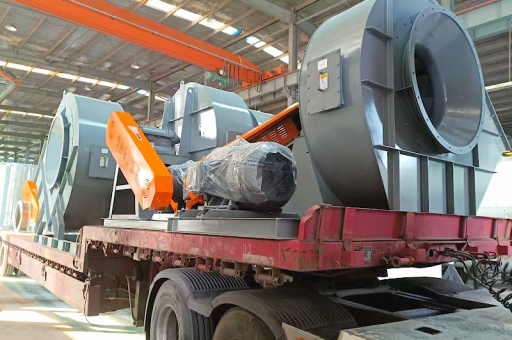
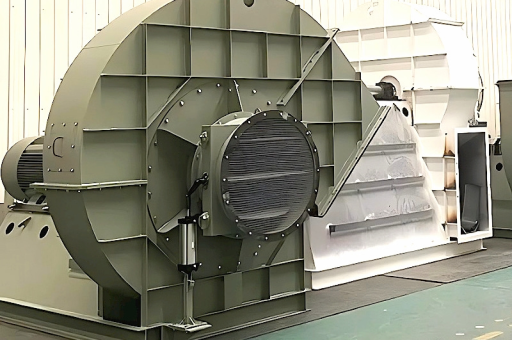
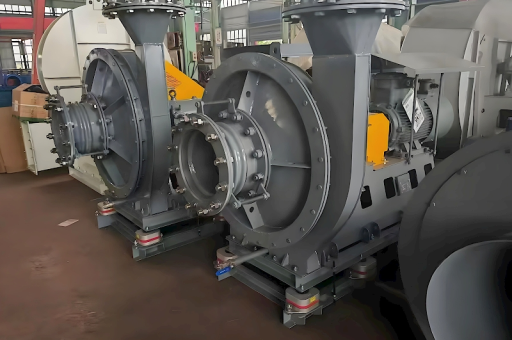
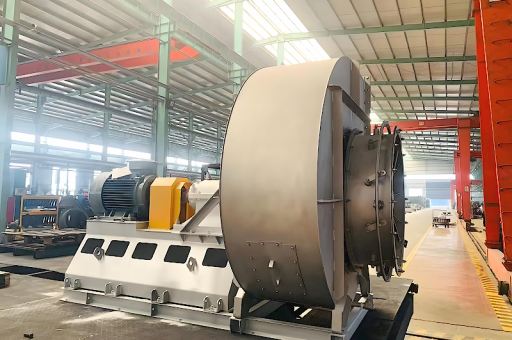
Centrifugal Fans (Inline or Direct Drive):
- Best for: High static pressure (ductwork with filters or scrubbers).
- Design: The motor is often mounted outside the airstream (belt-driven) to protect the bearings from acid gas.
- Action: Create high pressure to push gas through long ducts or scrubbers.
-
Axial Fans (Vent set / Tubeaxial):
- Best for: High volume, low static pressure (wall mounting, roof exhaust).
- Note: The motor is usually in the airstream; it must be a totally enclosed motor, often with a chemically resistant coating (TEFC - Totally Enclosed Fan Cooled with corrosion protection).
-
Explosion-Proof (if required):
- If the SO₂ is mixed with combustible gases (e.g., from a chemical reactor), you may need X-proof fans using non-sparking materials (aluminum bronze, FRP).
Sizing & Performance
When selecting the blower, you need:
- CFM (Airflow): How many cubic feet per minute must be moved? (Typically calculated based on room volume & gas concentration limits).
- Static Pressure ("wg): How much resistance will the ductwork/filter create?
- Temperature: What is the maximum gas temperature? (FRP is usually limited to ~180°F / 80°C; metal can go higher).
- Location: Wall mount, roof mount, or inline duct?
Example Products & Brands
Look for these terms: Corrosive Fume Exhaust Blower, FRP Centrifugal Fan, Polypropylene Ventilator.
Common Manufacturers:
- Greenheck (Model Vektor-H for hazardous fumes)
- Fantech (FRP or PVC inline fans)
- Cincinnati Fan (FP series for corrosive service)
- DualDraw (FRP fans)
- Plastic-Fab (PVDF fans)
Safety & Compliance Checklist
- Leak Detection: Ensure the fan housing is sealed; install a gas monitor near the fan discharge.
- Drain Plug: The fan should have a condensate drain at the lowest point to remove acidic water buildup.
- Hogging/Scrubber: For high concentrations, the SO₂ must be run through a scrubber before the blower (to protect the fan) or after (if the fan is rated for the gas).
- Electrical Classification: Verify if the area is Class 1, Div 2 (hazardous location) due to potential gas leaks.
- Maintenance: Inspect the impeller and housing monthly for pitting or hairline cracks (FRP can become brittle over time).
Quick Recommendation
If this is for a small lab or small room:
- Look for a PVC Inline Duct Fan (e.g., Fantech FKD series). They are cheap and acid resistant for low concentrations.
If this is for industrial battery charging (Lead-acid batteries) or chemical processing:
- Use a FRP Belt-Drive Centrifugal Fan with an acid-resistant coating. The belt drive keeps the motor out of the airstream.
If you are building a system:
- Do not put the blower before a scrubber (pushing raw SO₂ into the fan). Always pull the gas through the scrubber using the fan at the exit.
Would you like help calculating the required CFM for your specific room size or ductwork? Please let me know the details.