
This article's table of contents introduction:
- What is this fan used for?
- Key Technical Specifications to Look For
- Why "Energy Saving"?
- How to identify the fan you are looking for (Market Search)
- Common Questions & Answers
- Next Steps to Purchase
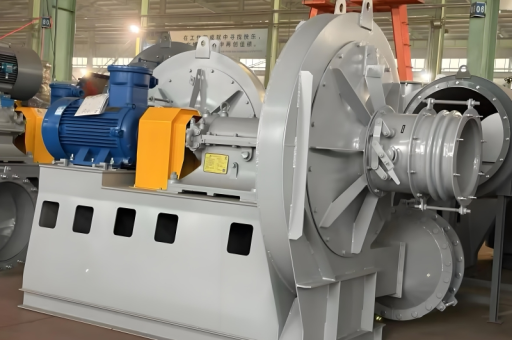
It sounds like you are looking for information or a specific product: an Energy Saving, High Pressure, Centrifugal Fan made of Stainless Steel, running on a 3-Phase power supply.
This combination of features describes a high-performance industrial fan designed for demanding environments, particularly where air needs to be moved against significant resistance (high pressure) and where hygiene or corrosion resistance is critical (stainless steel).
Here is a detailed breakdown of what this fan is, where it is used, and how to identify the right one for your needs.
What is this fan used for?
Due to its stainless steel construction (typically SS304 or SS316L), high-pressure capability, and energy-efficient 3-phase motor, this fan is ideal for:
- HVAC & Fume Extraction: Moving corrosive fumes from chemical labs, fume hoods, or industrial processes (e.g., plating, battery manufacturing).
- Clean Rooms & Pharmaceuticals: Where hygiene is paramount. Stainless steel is easy to clean and resistant to sanitizing agents.
- Food Processing: For conveying air in bakeries, meat processing, or drying systems where wash-down environments are required.
- Material Handling: Moving fine, non-abrasive dust or granular materials in a clean, corrosion-resistant manner.
- Wastewater Treatment: Aerating tanks or handling corrosive gases from sewage treatment.
- Marine & Offshore: Resistant to saltwater corrosion.
Key Technical Specifications to Look For
When searching for a "Stainless Steel High Pressure Centrifugal Fan 3 Phase," you need to consider the following parameters. A supplier will need this information to quote the correct model.
| Specification | Why It Matters | Typical Values for this Fan Type |
|---|---|---|
| Motor Power (kW) | Determines the fan's ability to move air against pressure. | 75 kW to 75 kW+ |
| Airflow (CFM or m³/h) | The volume of air moved. | 500 CFM to 50,000+ CFM |
| Static Pressure (in. wg. or Pa) | The resistance the fan can overcome. "High Pressure" is typically > 2.5 in. wg. | 5 in. wg. to 20+ in. wg. |
| Impeller Type | Curved blades affect pressure & noise. "Backward Curved" is most energy efficient. | Backward Curved (most common), Radial, Forward Curved. |
| Stainless Steel Grade | SS304 (general corrosion), SS316L (superior chemical resistance). | SS304 / SS316L |
| Voltage | Typical for 3-Phase industrial systems. | 208V, 230V, 460V, 575V |
| Housing Design | Affects installation & maintenance. | Scroll housing with direct drive (motor-mounted) or belt drive. |
Why "Energy Saving"?
- Backward Curved Impellers: Most "energy saving" high-pressure centrifugal fans use backward curved or backward inclined impellers. These are inherently more efficient than forward curved or radial bladed wheels, especially at higher pressures. They don't "stall" as easily and require less horsepower for the same duty.
- High-Efficiency Motors: A modern 3-phase motor (typically IE3 or IE4 efficiency class) loses less energy as heat compared to a single-phase or older motor.
- Variable Frequency Drive (VFD): The fan is often paired with a VFD. This allows the motor speed to match the exact airflow/pressure demand, saving 30-60% energy compared to running at full speed and using dampers.
How to identify the fan you are looking for (Market Search)
When searching online or asking a supplier, use these terms. Be specific to filter out standard painted steel fans.
- Generic: "Stainless steel high pressure centrifugal fan," "SS304 blower 3 phase," "Corrosion resistant industrial fan."
- Supplier-Specific: Brands like Cincinnati Fan, New York Blower, Greenheck, American Fan, Soler & Palau (S&P) all make high-pressure stainless steel fans. Chinese OEMs (like Jiangsu Zhenfen or similar) are also common.
- Key Spec Lookup: If you have a part number, look for "Backward Curved," "Radial Bladed," or "Industrial Exhauster."
Common Questions & Answers
Q: Can I use this fan for outdoor corrosive environments (e.g., near a saltwater coast)?
- A: Yes, highly recommended. Ensure you specify SS316L (or a molybdenum-rich grade) for maximum resistance to chlorides. You may also need a special motor (e.g., a TEFC or Washdown motor) that is also rated for the environment.
Q: Is it quieter than a standard forward-curved blower?
- A: A backward curved high-pressure fan is generally quieter at the same pressure than a forward-curved fan, but still produces significant noise due to the high pressure. Noise levels depend on RPM and blade design. A forward-curved fan is usually quieter at low pressures but not as efficient at high pressures.
Q: What is the typical installation?
- A: Usually, it is mounted on a heavy steel base. The outlet can be horizontal or vertical. It often requires a flexible connection at the inlet and outlet to prevent vibration transmission to the ductwork.
Next Steps to Purchase
To get an accurate quote, you will need to provide:
- Required Airflow (CFM or m³/h).
- Required Static Pressure (inches of water gauge or Pascals).
- Temperature of the air/gas (stainless steel can handle high heat, but the motor and bearings have limits).
- Environmental conditions (Is it dusty? Is it a wash-down environment?).
- Power supply (Voltage / Phase / Frequency - e.g., 460V / 3-phase / 60Hz).
Bottom Line: You are looking for a high-quality, durable, and efficient industrial fan. It will be significantly more expensive than a standard painted steel fan, but it is built to last in harsh environments. Focus on suppliers that specialize in corrosion-resistant ventilation or industrial process fans.





