
This article's table of contents introduction:
- What is it?
- Key Design Features & Specifications to Look For
- Typical Applications
- Potential Sellers & Brands
- Important Considerations Before Buying
- Sample Search Queries
- Critical Warning
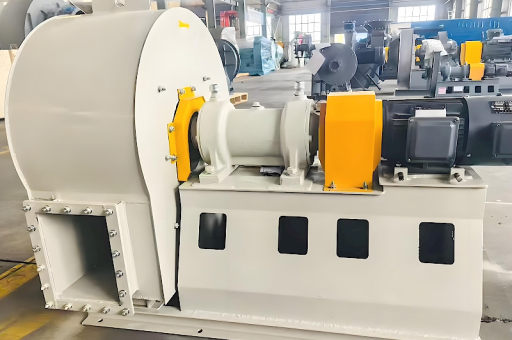
It seems you are looking for a specific industrial component: an electric centrifugal stainless steel blower fan designed for boiler cooling.
This is a highly specialized piece of equipment, often used in industrial boilers, thermal power plants, or high-temperature processing units. Below is a detailed breakdown of what this product is, its key specifications, typical applications, and considerations for sourcing.
What is it?
A centrifugal blower fan (also called a squirrel-cage fan or radial fan) uses a rotating impeller to increase the speed of air, creating a steady, high-pressure airflow.
- Electric: Powered by an AC or DC electric motor (usually 3-phase for industrial use).
- Centrifugal: Air enters axially and is expelled radially, generating high static pressure, which is necessary to overcome the resistance of boiler ducts and heat exchangers.
- Stainless Steel: The fan housing, impeller, and often the shaft are made of Stainless Steel (typically SS304, SS316, or SS310). This is critical for corrosion resistance (from flue gas condensate or humid air) and for maintaining structural integrity at high temperatures.
- For Boiler Cooling: Specifically designed to provide forced draft (pushing air into the burner) or induced draft (pulling exhaust gases out). It can also be used to cool the boiler casing or heat recovery systems.
Key Design Features & Specifications to Look For
When searching for this product, ensure the supplier meets these criteria:
-
Material Grade (Crucial):
- SS304 (1.4301): Good general corrosion resistance, suitable for most ambient cooling air or non-aggressive flue gases.
- SS316 (1.4401): Better resistance to chlorides and acidic condensate. Preferred if there is any moisture in the air or gas stream.
- SS310 / SS309: High-temperature stainless steel capable of withstanding continuous temperatures up to 1050°C (1922°F) or more. Essential for Induced Draft fans that pull hot exhaust gases.
-
Motor Specifications:
- Enclosure: TEFC (Totally Enclosed Fan Cooled) or TENV (Totally Enclosed Non-Ventilated) to protect against dust and heat.
- Rating: Continuous duty.
- Voltage: 230V/460V or higher (3-phase is standard for industrial sizes).
- Fan Type: Backward-curved blades (more efficient, non-overloading) or Forward-curved blades (higher volume, less pressure).
-
Temperature Rating:
- Look for a "High-Temperature" model. Standard fans fail above 80°C (176°F). A boiler cooling fan must have a heat slinger, heat shield, or a "cooling fan on the shaft" to prevent motor burn-out.
- For Induced Draft (ID) fans, the motor is often mounted separately with a belt drive or a long shaft to isolate it from heat.
-
Impeller Design:
- Radial Blades (Paddle Wheel): Self-cleaning, ideal for dirty or high-temperature air.
- Backward Inclined: High efficiency, lower noise, suitable for clean cooling air.
Typical Applications
- Cooling the boiler front (burner area): Preventing overheating of sensitive electronics.
- Forced Draft (FD) Fan: Pushing combustion air into the boiler furnace.
- Induced Draft (ID) Fan: Pulling flue gases out of the boiler to maintain negative pressure.
- Heat Recovery Systems: Moving hot air through economizers or pre-heaters.
- Dust Collection: Moving air through baghouse filters (corrosive environment).
Potential Sellers & Brands
You can find these from specialized industrial fan manufacturers. Avoid generic HVAC suppliers.
- Global/Category Leaders: New York Blower, Chicago Blower, Greenheck (industrial line), Systemair, Howden, FläktGroup.
- High-Temp Specialists: Strobic Air, AirPro Fan & Blower Co., Consolidated Fan Co.
- Specialty SS Fans: Meidinger AG (High-temperature impellers), Kruger Ventilation (Industrial division).
Important Considerations Before Buying
- Air Volume vs. Static Pressure: You need a fan curve that matches your system's resistance. Boilers have high resistance (ductwork, heat exchanger tubes, dampers).
- Spark Resistance: In boiler applications, the impeller may need to be AMCA Spark Resistant type A (aluminum/plastic) or B (steel-on-steel) to prevent explosions.
- Drive Type:
- Direct Drive: Simple, lower maintenance, but motor is exposed to heat.
- Belt Drive: Allows for speed adjustment (variable volume) and allows the motor to be placed further from the heat source.
- Balance & Vibration: A high-quality fan must be dynamically balanced (ISO 1940 G2.5 or better) to avoid bearing failure at high speeds.
Sample Search Queries
To find this product online or in catalogs, use these precise search terms:
"Stainless steel centrifugal blower fan" "boiler cooling""High temperature stainless steel induced draft fan""SS316 centrifugal fan" "forced draft""Industrial radial blower" "500°C"
Critical Warning
Do not use a standard water pump or plumber's fan for boiler cooling. Standard centrifugal fans (even stainless ones) are not built for thermal expansion stress. The impeller will expand and seize on the housing, or the motor will burn out if not rated for the ambient heat radiating from the boiler.
Always provide the supplier with:
- Operating Temperature (ambient and maximum gas temperature).
- Airflow (CFM or m³/h) .
- Static Pressure (in. w.g. or Pa) .
- Gas Composition (is it clean air, moist air, or corrosive flue gas?).
If you have a specific flow rate (CFM) , pressure requirement , or duty cycle , I can help you narrow down the exact model specifications.





