
This article's table of contents introduction:
- Table of Contents (目录导读)
- Introduction: What Is a Backward Blade High Flow Air Blower Dust Extractor Blower Single Width?
- How Does a Single Width Backward Blade Blower Work?
- Key Advantages Over Other Blower Types
- Critical Application: Dust Extraction in Wind Turbine Manufacturing and Maintenance
- Performance Metrics: Flow Rate, Static Pressure, and Efficiency
- Frequently Asked Questions (FAQs)
- Conclusion: Why This Blower Technology is Essential for Modern Industry
Table of Contents (目录导读)
- Introduction: What Is a Backward Blade High Flow Air Blower Dust Extractor Blower Single Width?
- How Does a Single Width Backward Blade Blower Work?
- Key Advantages Over Other Blower Types (Radial vs. Forward Curved)
- Critical Application: Dust Extraction in Wind Turbine Manufacturing and Maintenance
- Performance Metrics: Flow Rate, Static Pressure, and Efficiency
- Frequently Asked Questions (FAQs)
- Conclusion: Why This Blower Technology is Essential for Modern Industry
Introduction: What Is a Backward Blade High Flow Air Blower Dust Extractor Blower Single Width?
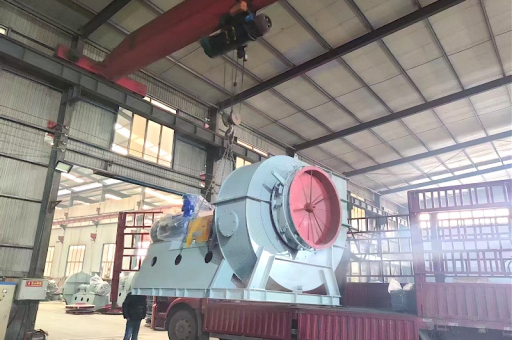
In the world of industrial air movement, the term Backward Blade High Flow Air Blower Dust Extractor Blower Single Width represents a highly specialized and engineered solution. This configuration is not just a generic fan; it is a precision tool designed to handle high-velocity, large-volume air streams while maintaining exceptional energy efficiency. The "Backward Blade" refers to the curvature of the impeller blades, which lean away from the direction of rotation. This design is fundamentally different from forward-curved or radial blowers. When combined with a "Single Width" inlet (meaning air enters from one side only), this system creates a powerful, non-clogging airflow ideal for dust extraction.
In industries ranging from large-scale woodworking to heavy metal fabrication, and critically in wind turbine component assembly, this type of blower is the backbone of the dust collection system. It efficiently moves massive quantities of air laden with fine particles, ensuring a clean, safe, and compliant working environment. Unlike standard blowers, the backward blade design offers a "non-overloading" power characteristic, meaning the motor will not burn out even if the system experiences a sudden pressure drop.
How Does a Single Width Backward Blade Blower Work?
The physics behind this blower are rooted in centrifugal force. The Single Width designation means the fan wheel (impeller) draws air axially from a single side, turns it 90 degrees, and expels it radially. Here is a step-by-step breakdown:
- Air Inlet: Air enters the blower housing axially through a single inlet cone.
- Impeller Action: The Backward Blade impeller spins at high RPM (typically 1,500 to 3,600 RPM in industrial settings). The blades, angled away from the rotation, "throw" the air outward.
- Velocity to Pressure Conversion: As the air moves through the widening spiral housing (volute), its kinetic energy (velocity) is converted into static pressure. This pressure is what pushes the air through ductwork, filters, and out of the system.
- High Flow and Dust Handling: The backward curvature creates a laminar flow with low turbulence. This reduces wear on the blades from abrasive dust particles and prevents material buildup, which is a common problem with forward-curved fans. For a wind turbine blade manufacturing facility, where fiberglass dust is highly abrasive, this is a critical advantage.
Key Advantages Over Other Blower Types
When choosing a blower for dust extraction, engineers often compare Backward Blade with Forward Curved or Radial blowers. Here is why the Backward Blade High Flow design wins for dust extraction:
| Feature | Backward Blade (Our Focus) | Forward Curved | Radial (Paddle Wheel) |
|---|---|---|---|
| Efficiency | Highest (80-88% mechanical) | Moderate (60-70%) | Low (50-65%) |
| Power Curve | Non-overloading (Motor safe) | Overloading (Motor may burn out) | Overloading |
| Dust Resistance | Excellent (Self-cleaning) | Poor (Blades clog easily) | Good (Handles heavy debris) |
| Air Flow | High High Flow rate at high pressure | High flow at low pressure | Low to moderate flow |
| Noise Level | Quiet (Smooth airflow) | Moderate | High (Turbulent) |
Context for Wind Turbine Production: In a wind turbine nacelle assembly, space is tight. The Single Width design allows for a compact footprint while still delivering the necessary static pressure to overcome the resistance of high-efficiency particulate air (HEPA) filters. The efficiency savings directly translate to lower operational costs for what is often a 24/7 production line.
Critical Application: Dust Extraction in Wind Turbine Manufacturing and Maintenance
The Backward Blade High Flow Air Blower Dust Extractor Blower Single Width is the heart of central vacuum systems used in wind turbine production. Here is how it is specifically used:
- Blade Molding: During the infusion and curing of composite blades, volatile organic compounds (VOCs) and fine resin dust are generated. A high-flow blower is essential to maintain negative air pressure in the mold hall.
- Finishing & Sanding: The manual sanding of wind turbine blades creates an immense volume of glass-fiber dust. Standard blowers clog. The backward blade design ensures the fan impeller stays clean, maintaining consistent suction power over extended periods.
- Tower Assembly: Inside the steel tower sections, grinding and welding create heavy metal dust. The high static pressure generated by this blower type allows for long, vertical duct runs up the tower, extracting dust from the top assembly floor to a ground-level filter house.
Performance Metrics: Flow Rate, Static Pressure, and Efficiency
To specify the correct Backward Blade High Flow Air Blower Dust Extractor Blower Single Width, you must understand three core metrics:
- Air Flow (CFM / m³/h): This is the volume of air moved. A "High Flow" unit for a medium wind turbine component plant might move 15,000 to 50,000 CFM.
- Static Pressure (SP / Inches of Water Gauge): This is the resistance the blower must overcome. HEPA filters and long duct runs require 10” to 20” WG. The backward blade design excels here, moving high volume even against high resistance.
- Brake Horsepower (BHP): Because of the non-overloading power curve, the motor's BHP peaks at a certain point and then drops. This prevents motor burnout if the filters are clean (low restriction). This is a safety feature that reduces maintenance costs.
Efficiency Tip: For a wind turbine facility running 16 hours a day, a switch from forward-curved to backward blade blowers can yield a 15-20% reduction in electricity consumption for the dust extraction system.
Frequently Asked Questions (FAQs)
Q1: What does "Single Width" mean in the context of a dust extractor blower? A: It refers to the inlet configuration. A Single Width blower has one air inlet on one side of the impeller. This design is compact and efficient for high-pressure applications like dust extraction. It allows for a direct, straight-line airflow into the fan wheel.
Q2: Why is the backward blade design considered "non-overloading"? A: Unlike a forward-curved fan, the power consumption of a backward blade fan decreases as the system resistance drops. If a filter blows open or a duct detaches, the motor draws less current. This prevents thermal overload and motor burnout, a significant safety and maintenance advantage.
Q3: Can a Backward Blade High Flow blower handle sticky or moist dust? A: Yes, better than most. The backward curvature creates a self-cleaning action. Particles are thrown outward by centrifugal force, reducing the adhesion of material to the blades. However, for extremely sticky materials (e.g., paint overspray), a specialized coating or different wheel design is recommended. For dry dust like in wind turbine blade sanding, it is ideal.
Q4: How do I choose between a belt-drive and direct-drive Backward Blade blower? A: For dust extraction in a wind turbine factory, belt-drive is often preferred. It allows you to change the fan speed (RPM) by swapping pulleys, which alters the flow and pressure without changing the motor. Direct-drive is simpler but less flexible. Belt-drive also isolates the motor from the heat of the dust stream.
Q5: Is this blower loud? A: Backward blade blowers are generally quieter than radial or forward-curved blowers at the same duty point. The smooth aerodynamic flow reduces turbulence noise. Sound attenuation can be added (silencers on the inlet/outlet) for workplaces requiring low noise levels.
Conclusion: Why This Blower Technology is Essential for Modern Industry
The Backward Blade High Flow Air Blower Dust Extractor Blower Single Width is not just a component; it is a strategic investment in productivity, safety, and energy efficiency. For demanding environments like wind turbine manufacturing, where failure of a dust extraction system can shut down a production line and expose workers to hazardous composite dust, reliability is paramount.
By leveraging the non-overloading power curve, high static pressure capacity, and self-cleaning blade geometry, this blower type stands out as the gold standard. Whether you are designing a new central vacuum system or retrofitting an outdated plant, selecting a high-quality backward blade blower will lower your total cost of ownership, improve air quality, and ensure your machinery operates at peak performance for decades. In the race to build a cleaner energy future, the humble blower—engineered with precision—plays an outsized role.





