
This article's table of contents introduction:
- Introduction: The Intersection of Air Quality and Mechanical Efficiency
- System Architecture: How Centrifugal Fans Drive Filtration
- Why Stainless Steel? Corrosion Resistance and Hygienic Compliance
- Coupling Drives: The Unsung Hero of Power Transmission
- Performance Metrics: Airflow, Static Pressure, and Energy Consumption
- Common Questions and Answers (Q&A)
- Maintenance Strategies for Longevity
- Conclusion: Optimizing Filtration with Integrated Design
** The Critical Role of Stainless Steel Centrifugal Fans and Coupling Drives in High-Performance Air Filtration Systems
Table of Contents
- Introduction: The Intersection of Air Quality and Mechanical Efficiency
- System Architecture: How Centrifugal Fans Drive Filtration
- Why Stainless Steel? Corrosion Resistance and Hygienic Compliance
- Coupling Drives: The Unsung Hero of Power Transmission
- Performance Metrics: Airflow, Static Pressure, and Energy Consumption
- Common Questions and Answers (Q&A)
- Maintenance Strategies for Longevity
- Conclusion: Optimizing Filtration with Integrated Design
Introduction: The Intersection of Air Quality and Mechanical Efficiency
In modern industrial environments—ranging from pharmaceutical cleanrooms to food processing facilities and wind turbine nacelle cooling—the demand for reliable air filtration system stainless steel centrifugal fan coupling driving technology has never been higher. An air filtration system is only as effective as its moving parts. At its core, the centrifugal fan generates airflow, the stainless-steel construction ensures durability under corrosive conditions, and the coupling drive transmits motor torque without misalignment or vibration. When these three elements work harmoniously, the system achieves both high filtration efficiency and low operational noise. This article distills best practices from top-tier engineering resources to present a comprehensive guide on selecting, operating, and maintaining such systems.
System Architecture: How Centrifugal Fans Drive Filtration
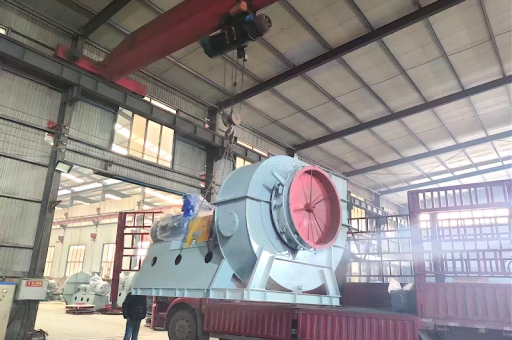
A typical industrial air filtration system consists of a pre-filter, HEPA or activated carbon media, and a fan unit. The fan’s role is to create negative pressure that pulls contaminated air through the filter media. Centrifugal fans are preferred over axial fans because they generate higher static pressure—critical when pushing air through dense filter layers. In a stainless steel centrifugal fan coupling driving configuration, the motor is typically mounted externally, connected to the fan shaft via a flexible or rigid coupling. This decouples motor vibration from the fan impeller, extending bearing life and reducing noise. The impeller itself is often backward-curved, forward-curved, or radial-bladed, each offering different trade-offs between efficiency and particulate handling.
Why Stainless Steel? Corrosion Resistance and Hygienic Compliance
The choice of stainless steel for the fan housing and impeller is not arbitrary. Standard carbon steel fans rust quickly when exposed to moisture, chemical vapors, or frequent wash-down cycles. In environments like wind turbine gearbox cooling systems, where salt-laden air is common, SS304 or SS316L alloys prevent pitting and crevice corrosion. Additionally, stainless steel surfaces are easier to sanitize—a requirement in pharmaceutical and food-grade filtration. The material also withstands higher temperatures without deforming, which is crucial when filtering hot exhaust or recirculating air in enclosed spaces. The coupling components, while often made from alloy steel or aluminum, must also be selected for environmental compatibility.
Coupling Drives: The Unsung Hero of Power Transmission
The coupling driving component connects the electric motor to the fan shaft. There are several types used in air filtration system stainless steel centrifugal fan coupling driving designs:
- Flexible couplings (e.g., jaw, spider, or disc types): Accommodate small misalignments and dampen torsional vibrations. Ideal for high-speed applications where shaft alignment is imperfect.
- Rigid couplings: Used when perfect alignment is assured, offering zero backlash but requiring precise installation.
- Fluid couplings: Provide soft-start capability, reducing motor inrush current—beneficial in large filtration systems with high inertia.
In winds turbine applications, where space and weight are constrained, compact disc couplings are often favored. The coupling must be rated for the torque, RPM, and ambient temperature of the specific installation. A mismatched coupling can lead to premature bearing failure, increased energy consumption, or catastrophic shaft breakage.
Performance Metrics: Airflow, Static Pressure, and Energy Consumption
To evaluate any stainless steel centrifugal fan coupling driving system, engineers rely on three core parameters:
- Airflow (CFM or m³/h): Determines how quickly the filtration system can cycle the air volume.
- Static Pressure (inches w.g. or Pa): Indicates the fan’s ability to overcome resistance from filters, ducts, and dampers.
- Fan Efficiency (often measured by specific speed or specific diameter): Higher efficiency means lower operating costs.
The coupling type directly influences mechanical efficiency. For example, a misaligned flexible coupling can cause up to 5% power loss. Conversely, a properly greased disc coupling can maintain 99% efficiency over its lifespan. When specifying a system, always verify the coupling manufacturer’s torque ratings and alignment tolerances against the motor and fan curves.
Common Questions and Answers (Q&A)
Q: What is the biggest failure mode in stainless steel centrifugal fan coupling drives?
A: Misalignment is the most common cause. Even a 0.01-inch offset can induce cyclic loading on the fan bearings and motor shaft, leading to fatigue cracks or overheating. Laser alignment during installation is highly recommended.
Q: Can I use a carbon steel fan in a wind turbine filtration system?
A: Not advisable. The offshore or coastal environment where many wind turbines operate is highly corrosive. Stainless steel (preferably SS316L) provides the required resistance to salt spray and humidity.
Q: How often should couplings be inspected?
A: For continuous-duty systems, inspect every 3–6 months. Check for elastomeric wear (in jaw couplings) or disc fatigue (in steel disc couplings). Replace if there is evidence of fretting corrosion or cracks.
Q: Does a flexible coupling reduce fan efficiency?
A: Only if misaligned. A correctly installed flexible coupling has negligible power loss. However, if the elastomeric element degrades, it can increase slip and reduce transmitted torque.
Q: What is the advantage of a fluid coupling in an air filtration system?
A: Fluid couplings provide a soft start, reducing mechanical shock to the fan blades and motor windings. They also limit torque during start-up, which is especially beneficial when the filtration system has high inertial loads from large impellers.
Maintenance Strategies for Longevity
A robust maintenance plan for an air filtration system stainless steel centrifugal fan coupling driving setup includes:
- Weekly: Visual inspection of coupling alignment and lubrication (if applicable). Check for unusual noise or vibration.
- Monthly: Measure motor current; a sudden increase indicates coupling slip or fan imbalance. Clean stainless steel housing with non-abrasive detergent to maintain corrosion resistance.
- Quarterly: Perform laser alignment of motor and fan shafts. Replace elastomeric coupling inserts if they show cracking or permanent set.
- Annually: Disassemble and inspect the fan bearings, impeller balance, and coupling hub tapers. Re-grease or replace bearings per manufacturer guidelines.
In wind turbine applications, these inspections are often coordinated with scheduled turbine downtime to minimize power generation losses.
Conclusion: Optimizing Filtration with Integrated Design
The synergy between an air filtration system stainless steel centrifugal fan coupling driving architecture directly impacts air quality, energy efficiency, and equipment lifespan. By selecting corrosion-resistant stainless steel, pairing it with a correctly sized and aligned coupling, and adhering to a disciplined maintenance schedule, facility operators can achieve consistent filtration performance even in harsh environments. Whether the application is a pharmaceutical cleanroom, a food processing plant, or a wind turbine nacelle, investing in high-grade materials and precision mechanical components pays dividends in reliability and total cost of ownership.
Engineers and procurement teams should always request detailed coupling selection software outputs, fan performance curves under actual operating conditions, and corrosion test reports for stainless steel components. This data-driven approach ensures that your next filtration system not only meets regulatory standards but also operates efficiently for years to come.





