
This article's table of contents introduction:
- The Core Function: Induced Draught (ID) Fan
- The Design: Single Inlet, Single Width (SISW) Centrifugal Fan
- The Type of Centrifugal Fan: Airfoil or Radial?
- The Application: Boiler Blower (ID Fan)
- Summary: The Complete Picture
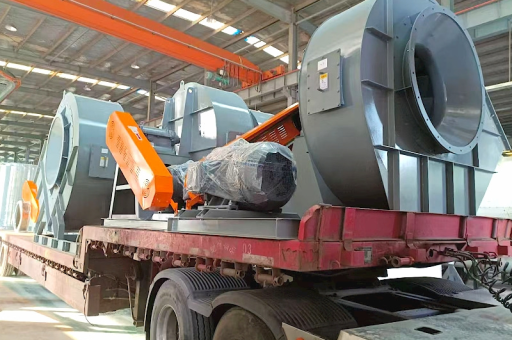
This is a highly specific piece of industrial equipment. Let's break down exactly what a Boiler Blower Fan Induced Draught Single Inlet Single Width Centrifugal Fan is.
We can dismantle this term into its core components to understand its function, design, and application.
The Core Function: Induced Draught (ID) Fan
- What it does: This fan is located at the exit of the boiler system (between the boiler and the chimney/stack).
- Its job: It creates a negative pressure (vacuum) inside the boiler furnace and flue gas path. It "sucks" or "pulls" the hot combustion gases (flue gases) out of the boiler, through the air pollution control equipment (ESP, baghouse, scrubbers), and up the chimney.
- Why it's used:
- Safety: The negative pressure prevents hot gases and flames from being forced out of the boiler casing or observation doors.
- Efficiency: It helps maintain a consistent draft, ensuring proper combustion air flow (often in conjunction with a Forced Draft fan).
- Overcoming Resistance: The system has to pull gases through heat exchangers, ductwork, dampers, and scrubbers, which all create resistance.
The Design: Single Inlet, Single Width (SISW) Centrifugal Fan
This describes the physical construction of the fan impeller and housing.
-
Single Inlet:
- Air enters the fan from only one side (one bearing side).
- The impeller is mounted on the shaft, and the air is drawn in from the non-drive end (or drive end, depending on arrangement).
- Contrast: A "Double Inlet" (DI) fan has two inlets, one on each side of the impeller.
-
Single Width:
- The impeller has one row of blades across its width.
- Contrast: A "Double Width" (DW) fan has an impeller that is essentially two impellers side-by-side, used for very high airflows.
Why use SISW for an ID Fan?
- Simplicity & Robustness: SISW construction is mechanically simpler, stiffer, and generally more robust than double inlet designs. This is crucial for handling the harsh conditions of an ID fan (high temperatures, abrasive fly ash).
- Ease of Maintenance: Easier access to the impeller and bearings.
- Common for Medium to Large Boilers: SISW is the standard workhorse for most industrial boiler applications.
The Type of Centrifugal Fan: Airfoil or Radial?
This is the most critical detail for an ID fan. The type of blades determines its performance and durability.
The two most common types for ID fans are:
A. Airfoil (AF) / Backward-Curved Airfoil (BCAF)
- Design: Blades have an aerodynamic, wing-like profile.
- Efficiency: Highest efficiency of any centrifugal fan type (up to 85-90%).
- Pressure: Medium to high pressure.
- Pros: Most energy-efficient, relatively quiet.
- Cons: Blades are hollow and can wear through quickly if handling abrasive fly ash. The wear can be catastrophic (unbalance, vibration).
- Used when: The flue gas is relatively clean (e.g., natural gas boilers, or after highly efficient particulate control).
B. Backward-Inclined (BI) / Flat Backward-Curved
- Design: Blades are flat plates inclined away from the direction of rotation.
- Efficiency: High efficiency (75-85%).
- Pressure: Medium to high pressure.
- Pros: Good efficiency, more tolerant of erosion than Airfoil blades. Self-limiting power curve (overloading is less of a risk).
- Used when: A good balance of efficiency and durability is needed. Common in coal and biomass plants.
C. Radial (R) / Radial Tip (RT)
- Design: Blades are straight (radial) or with a radial tip.
- Efficiency: Lowest efficiency (55-70%).
- Pressure: High pressure.
- Pros: Extremely rugged and durable. Best for handling highly abrasive dust (fly ash) or sticky materials. Easy to repair/replace blades.
- Cons: High power consumption, noisy.
- Used when: Reliability and resistance to erosion are the #1 priority.
The Application: Boiler Blower (ID Fan)
The "Boiler Blower" term is a bit of a misnomer when combined with "Induced Draught".
- A Forced Draft (FD) fan is literally a "blower" that pushes air into the boiler.
- An Induced Draft (ID) fan is a "suction" fan that pulls gases out of the boiler.
However, in common industrial language, "Boiler Blower" can refer to any fan associated with a boiler. So, an "Induced Draught Single Inlet Single Width Centrifugal Fan" is the precise technical description.
Summary: The Complete Picture
You have a Centrifugal Fan (SISW design) used as an Induced Draft fan for a Boiler system.
Key Characteristics of this specific fan:
| Feature | Description |
|---|---|
| Fan Type | Centrifugal (Single Inlet, Single Width) |
| Function | Induced Draft (Creates negative pressure, extracts flue gas) |
| Blade Type | Critical Decision - Usually Backward Inclined (BI) for efficiency/durability, Airfoil for clean gas, or Radial for heavy abrasion. |
| Environment | Hot, dirty, corrosive. Handles flue gas containing fly ash, sulfur compounds, and water vapor. |
| Material | Typically Carbon Steel (for strength). May have hard-facing (chrome carbide) or stainless steel liners for wear resistance. The shaft seal is critical to prevent air leakage into the furnace. |
| Drive | Usually motor-driven via a V-belt or direct-coupled with a variable frequency drive (VFD) for flow control. |
In short: This is a heavy-duty, high-temperature fan designed for the demanding task of safely and efficiently pulling hot, dusty exhaust gases out of a boiler, using a robust single-inlet, single-width centrifugal design.





