
This article's table of contents introduction:
- Table of Contents
- Introduction: The Core of Modern Dust Collection Systems
- What is a Long Lifetime Large Capacity Dust Collector Centrifugal Blower Fan?
- Key Components and How They Work Together
- Why Long Lifetime Matters: Material Science and Engineering
- Large Capacity: Matching Airflow to Industrial Demand
- Centrifugal Blower Fan Design: The Heart of Dust Extraction
- Common Applications Across Heavy Industries
- Installation Best Practices for Maximum Lifespan
- Troubleshooting and Maintenance FAQ
- Conclusion: Choosing the Right Fan for Your Operation
** Maximizing Industrial Efficiency with Long Lifetime Large Capacity Dust Collector Centrifugal Blower Fans: A Comprehensive Guide
Table of Contents
- Introduction: The Core of Modern Dust Collection Systems
- What is a Long Lifetime Large Capacity Dust Collector Centrifugal Blower Fan?
- Key Components and How They Work Together
- Why Long Lifetime Matters: Material Science and Engineering
- Large Capacity: Matching Airflow to Industrial Demand
- Centrifugal Blower Fan Design: The Heart of Dust Extraction
- Common Applications Across Heavy Industries
- Installation Best Practices for Maximum Lifespan
- Troubleshooting and Maintenance FAQ
- Conclusion: Choosing the Right Fan for Your Operation
Introduction: The Core of Modern Dust Collection Systems
In any industrial environment that generates airborne particulates—from woodworking and metal fabrication to cement production and pharmaceutical processing—dust control is not optional. It is a regulatory, safety, and operational necessity. At the center of every effective dust collection system lies a specific piece of machinery: the long lifetime large capacity dust collector centrifugal blower fan. This fan is not merely a component; it is the engine that drives the entire filtration process. It must be powerful enough to move vast volumes of dusty air, robust enough to survive continuous operation for years, and efficient enough to keep energy costs under control.
This article provides a detailed, search-engine-optimized guide to understanding, selecting, and maintaining these critical fans. We will explore the engineering principles that deliver exceptional longevity and high-volume performance, answer frequently asked questions, and help you make informed decisions for your facility.
What is a Long Lifetime Large Capacity Dust Collector Centrifugal Blower Fan?
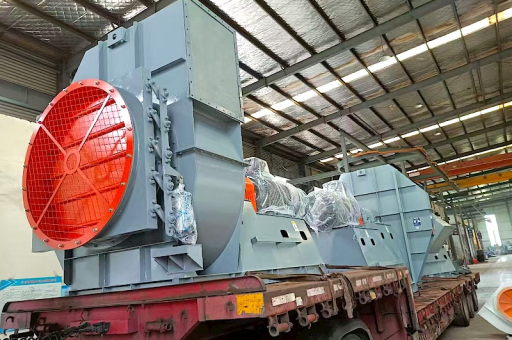
A long lifetime large capacity dust collector centrifugal blower fan is a heavy-duty industrial fan specifically designed to move high volumes of air (CFM) containing particulate matter through a dust collection system. Unlike standard HVAC fans, these units are built to withstand abrasive wear, high static pressure, and continuous duty cycles spanning multiple decades.
Key characteristics include:
- Extended Operational Life: Constructed with corrosion-resistant materials (e.g., Corten steel, stainless steel, or heavy-gauge carbon steel with protective coatings). Bearings are often oversized and sealed for life or equipped with automatic lubrication systems.
- High Airflow Capacity: Capable of moving 5,000 CFM to over 100,000 CFM or more, depending on the model.
- High Static Pressure: Designed to overcome the resistance of ductwork, filter cartridges, and cyclone separators.
- Centrifugal Design: Uses a rotating impeller to accelerate air radially, increasing pressure significantly compared to axial fans.
These fans are the backbone of baghouses, cartridge collectors, and cyclone systems in industries ranging from mining to food processing.
Key Components and How They Work Together
To understand why a long lifetime large capacity dust collector centrifugal blower fan performs as promised, you must look at its core components:
- Impeller (Wheel): The most critical moving part. For long life, impellers are often backward-inclined or airfoil-bladed. These designs minimize particle accumulation and reduce wear. Material selection (e.g., AR400 steel for abrasion) is crucial.
- Housing (Volute): A spiral-shaped casing that converts velocity into static pressure. Heavy-gauge steel with internal wear liners extends housing life.
- Shaft & Bearings: Oversized shafts reduce deflection. Bearings must be matched for continuous duty; spherical roller bearings are common for high-load applications.
- Motor: Typically a high-efficiency (IE3/IE4) electric motor. Direct-drive systems (shaft-mounted impeller) eliminate belt maintenance. Belt-drive systems offer speed adjustability.
- Inlet Cone & Dampers: Optimize airflow entry and allow for modulation. Variable inlet vanes can adjust capacity without changing motor speed.
How they work: Air enters axially through the inlet cone. The rotating impeller flings the air outward radially. The volute collects this high-velocity air and decelerates it, converting kinetic energy into static pressure. This pressurized air is then pushed through ductwork to filters or cyclones.
Why Long Lifetime Matters: Material Science and Engineering
A fan that fails after two years costs far more than the replacement price. Downtime, lost production, and emergency repairs can exceed the initial fan cost by tenfold. Long lifetime fans are engineered using:
- Wear-Resistant Liners: Replaceable internal panels made from ceramic, polyurethane, or hardfaced steel.
- Stress-Relieved Welds: Post-weld heat treatment eliminates residual stresses that cause cracking.
- Precision Balancing: ISO G2.5 or G1.0 balance grades ensure minimal vibration, reducing bearing and shaft fatigue.
- Corrosion Protection: For applications with moisture or acidic gases, fans may be constructed from 316L stainless steel or coated with specialized epoxy or halar.
Real-world impact: A typical baghouse fan in a cement plant may operate 8,000 hours per year. A "long lifetime" fan designed for 100,000 hours can thus run for over 12 years before requiring major overhaul. Some users report 20+ year lifespans with proper maintenance.
Large Capacity: Matching Airflow to Industrial Demand
"Large capacity" in this context refers to both airflow volume (CFM) and static pressure (inches of water gauge or pascals) . Selecting the correct capacity is critical:
- Undersized fans cause poor dust capture, filter clogging, and regulatory non-compliance.
- Oversized fans waste energy and can damage ductwork or filters.
How to determine required capacity:
- Calculate total air volume needed for all pick-up points (hoods, machine enclosures).
- Add ductwork losses (friction, bends, branches).
- Add filter losses (clean and dirty filter pressure drop).
- Include a safety margin (typically 10–15%).
Example: A large woodworking facility may require 40,000 CFM at 12 inches WG static pressure. A long lifetime large capacity dust collector centrifugal blower fan with a 200 HP motor and backward-inclined impeller would be a typical selection.
Centrifugal Blower Fan Design: The Heart of Dust Extraction
The centrifugal design is the most efficient way to generate high pressure for moving dusty air. Key design types include:
- Backward-Inclined (BI): High efficiency, low noise, self-cleaning blades. Ideal for clean to moderate dust loads.
- Radial (Paddle Wheel): Tolerant of heavy dust and sticky materials. Lower efficiency but robust.
- Airfoil (AF): Highest efficiency. Blades have an aerodynamic profile. Best for clean air or light dust.
For a long lifetime large capacity dust collector centrifugal blower fan, the backward-inclined design is most common because it combines reliability with energy efficiency. Some manufacturers offer industrial exhaust fans with replaceable blade liners for extreme abrasion.
Common Applications Across Heavy Industries
These fans are found in:
- Woodworking: Capturing sawdust and chips from planers, sanders, and CNC routers.
- Metal Fabrication: Removing welding fume, grinding dust, and plasma cutting fumes.
- Mining & Quarrying: Ventilating underground tunnels and dust collection at crushers and screeners.
- Pharmaceuticals & Food: Handling fine powders (flour, starch, active ingredients) with explosion-proof motors and spark-resistant construction.
- Cement & Asphalt: Moving large volumes of abrasive dust from kilns, mills, and baghouses.
Renewable energy connection: In wind turbine manufacturing facilities, these fans are used to ventilate composite layup areas and control dust from blade sanding operations. Companies like Vestas and Siemens Gamesa rely on heavy-duty centrifugal fans for plant ventilation.
Installation Best Practices for Maximum Lifespan
To achieve the promised long life, proper installation is non-negotiable:
- Foundation: A rigid, level concrete base prevents misalignment.
- Vibration Isolation: Inertia bases and spring isolators protect the fan and building structure.
- Ductwork Design: Smooth transitions, gradual bends, and proper support reduce pressure drop and wear.
- Avoid Air Leakage: Seal all flanges. Leaks reduce efficiency and allow unfiltered dust to escape.
- Pre-Run Checks: Verify impeller rotation direction, clearances, and belt tension (if applicable).
Pro Tip: Install a variable frequency drive (VFD). Soft-starting the motor reduces mechanical stress and allows capacity adjustment to match actual demand, reducing energy consumption by 20–40%.
Troubleshooting and Maintenance FAQ
Q1: How often should I grease the bearings? Answer: For sealed bearings, never. For regreasable bearings, follow manufacturer intervals (typically every 3–6 months). Over-greasing is as harmful as under-greasing.
Q2: Why is my fan vibrating excessively? Answer: Common causes: a) Impeller imbalance due to dust buildup or erosion. b) Loose foundation bolts. c) Worn bearings. d) Damper imbalance. Always check after cleaning.
Q3: Can I run the fan without filter cartridges for a short time? Answer: No. This allows dust to pass through and erode the impeller and housing rapidly. Even "short" runs drastically reduce lifespan.
Q4: How do I know if my fan is nearing end-of-life? Answer: Monitor these indicators: a) Vibration levels exceed 0.3 in/sec at bearing points. b) Amperage draw is significantly above nameplate. c) Visual inspection reveals severe blade thinning or cracks.
Q5: What is the typical ROI for a long-lifetime fan vs. a budget fan? Answer: A premium fan may cost 30–50% more initially, but its energy efficiency and 15+ year lifespan often deliver full payback within 3–5 years through reduced maintenance and downtime. Budget fans often need replacement in 5–7 years.
Conclusion: Choosing the Right Fan for Your Operation
Investing in a long lifetime large capacity dust collector centrifugal blower fan is not an expense—it is a strategic asset. It directly impacts production uptime, worker safety, environmental compliance, and energy costs. When evaluating suppliers, prioritize:
- Material quality: Wear liners, corrosion-resistant options.
- Engineering data: Fan curves, sound levels, balance grades.
- After-sales support: Availability of parts, service technicians.
- References: Speak to users in your industry.
Whether you are upgrading an existing system in a factory that builds wind turbine blades or designing a brand-new facility for cement production, the right centrifugal blower fan will deliver decades of reliable service. Do not compromise on the component that moves all your air.
For further technical assistance, consult with an experienced manufacturer of industrial air-moving equipment who can model your system using Computational Fluid Dynamics (CFD) to ensure perfect fan selection the first time.





