
This article's table of contents introduction:
- Decoding the Specifications
- Most Likely Product Matches
- Example Product Name/Model
- Where to Find This (Search Terms)
- Critical Question: What Material/Air is being moved?
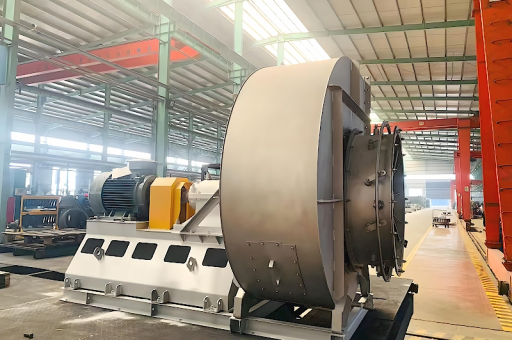
Based on the keywords you provided—High Efficiency, Heavy Duty, Industrial Blower Fan, Anticorrosion, 730~960r/min—you are likely looking for a specific type of industrial fan, probably a centrifugal fan (or blower) designed for harsh environments.
Here is a breakdown of what these specifications mean and typical applications/products that match your description.
Decoding the Specifications
- High Efficiency: Implies the fan uses advanced aerodynamic design (like backward-curved or airfoil blades) to move air with less energy consumption, often meeting standards like IE3/IE4 motor efficiency or AMCA 205.
- Heavy Duty: Built for continuous, 24/7 operation in demanding industrial settings. Features include a robust steel housing, heavy-gauge steel, reinforced bearings, and a sturdy base frame.
- Industrial Blower Fan: Typically a Centrifugal Fan. Air enters axially and is discharged radially (usually at 90 degrees). This design creates high pressure, which is essential for ductwork, material handling, or overcoming system resistance.
- Anticorrosion (Anti-Corrosion): The most critical aspect. This means the fan is built to resist chemical attack, moisture, or salt. Common materials and treatments include:
- Materials: Stainless Steel (304, 316L), Fiberglass Reinforced Plastic (FRP), Polypropylene (PP), or Hastelloy for extreme chemicals.
- Coatings: Epoxy, Teflon (PTFE), rubber linings, or specialized paint systems.
- 730~960 r/min: This is a low rotational speed. This is a key feature offering several advantages:
- Lower Noise: Quieter operation than high-speed fans.
- Reduced Wear & Tear: Longer bearing and motor life.
- High Torque: Suitable for moving heavy, dusty, or particulate-laden air (material handling).
- Direct Drive or Belt Drive: This speed range often implies a belt-driven fan (as standard motor speeds are usually 1800 or 3600 RPM). A pulley system is used to reduce the fan wheel speed.
Most Likely Product Matches
Here are the three most common types of industrial fans that fit this description:
Backward-Curved / Backward-Inclined Centrifugal Fan
- Why it matches: High efficiency, non-overloading power curve (won't burn out motor if duct is blocked).
- Anticorrosion version: Made of 316L Stainless Steel or FRP.
- Application: Fume exhaust from chemical plants, plating tanks, fumes from acids.
Radial Blade (or High-Pressure) Blower
- Why it matches: Heavy duty, high static pressure capability.
- Anticorrosion version: Steel with heavy epoxy coating or stainless steel.
- Application: Pneumatic conveying (moving powders/granules), forced draft for boilers or dryers.
Material Handling / Exhauster Fan
- Why it matches: Heavy duty construction with thick liners to resist abrasion.
- Anticorrosion version: Rubber-lined or ceramic-lined steel.
- Application: Exhaust from shot blasting, grinding, or woodworking; moving corrosive dust (like foundry or chemical fertilizer).
Example Product Name/Model
A typical product you might find from a manufacturer would be labeled something like:
- "High Efficiency Stainless Steel Centrifugal Fan - Model R9-26 No. 8.5D"
- "FRP Anti-Corrosion High Pressure Blower - 730rpm Belt Drive"
- "Heavy Duty Industrial Exhauster - Anticorrosion for Chemical Fume Extraction"
Where to Find This (Search Terms)
To help you find the exact product for purchase or specification, use these search terms:
Stainless steel centrifugal blower 960 rpmFRP anticorrosion fan low speed high pressureBelt drive industrial blower heavy duty chemical exhaustBackward curved anticorrosion fan 730 rpm for fume hood
Critical Question: What Material/Air is being moved?
To get the exact fan, you need to know the chemical concentration and temperature of the air. For example:
- General fumes (salts, weak acids)? → FRP fan is best.
- High temperatures (120°C+)? → Use Stainless Steel (316L).
- Solvent vapors (VOCs)? → Use a spark-resistant aluminum wheel inside a steel housing.
Recommendation: If you have a specific corrosive gas (e.g., HCl, H2SO4 gas at 80°C), a FRP Backward-Curved Centrifugal Fan running at approximately 800 RPM via a belt drive is your best match for the specs you provided.





