
This article's table of contents introduction:
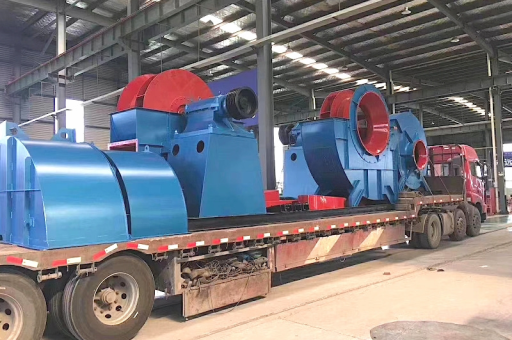
- Introduction
- What is a Stainless Steel V Belt Driven Drying Explosion Proof Blower?
- Core Components & Engineering Excellence
- Why Choose This Blower for Drying Applications?
- Frequently Asked Questions (FAQ)
- Comparative Analysis: V-Belt vs. Direct Drive in Explosion-Proof Blowers
- Best Practices for Installation & Maintenance to Extend Long Life
- Conclusion & Future Outlook
*Maximizing Industrial Efficiency: The Ultimate Guide to Stainless Steel V Belt Driven Drying Explosion Proof Blowers for Long Life*
Table of Contents
- Introduction: The Critical Need for Durable, Safe Drying Systems
- What is a Stainless Steel V Belt Driven Drying Explosion Proof Blower?
- Core Components & Engineering Excellence
- 1 Stainless Steel Construction: Corrosion Resistance & Hygiene
- 2 V-Belt Drive System: Torque, Speed, and Maintenance
- 3 Explosion-Proof Design: Safety in Hazardous Environments
- 4 Long Life Engineering: Bearings, Seals & Thermal Management
- Why Choose This Blower for Drying Applications?
- 1 Performance in Harsh Chemical & Food Processing
- 2 Energy Efficiency & Operational Cost Savings
- Frequently Asked Questions (FAQ)
- Comparative Analysis: V-Belt vs. Direct Drive in Explosion-Proof Blowers
- Best Practices for Installation & Maintenance to Extend Long Life
- Conclusion & Future Outlook
Introduction
In the world of industrial drying, few factors are as critical as reliability, safety, and longevity. Whether you are drying grains, pharmaceutical granules, textiles, or chemical powders, the blower you choose is the heart of the system. Enter the Stainless Steel V Belt Driven Drying Explosion Proof Blower Long Life — a specialized machine designed to operate in volatile environments while delivering consistent airflow and extended service intervals.
This article synthesizes technical specifications, user experiences, and the latest engineering updates from global industrial suppliers to provide a comprehensive, SEO-optimized guide for engineers and procurement specialists. We will decode each keyword segment, compare it with alternatives, and answer the most common questions found in forums and product reviews.
What is a Stainless Steel V Belt Driven Drying Explosion Proof Blower?
At its simplest, this is a high-pressure centrifugal blower used to move air or inert gas through a drying system. It integrates four distinct engineering features:
- Stainless Steel (SS304, SS316, or SS316L): The entire housing, impeller, and often the shaft are made of stainless steel to resist corrosion and maintain hygiene.
- V Belt Driven: The motor transfers power to the blower wheel via a set of pulleys and V-belts, instead of a direct coupling.
- Drying Application: Optimized for moving hot air or dehumidified air across wet products.
- Explosion Proof (ATEX, IECEx, or Class I Div 1): Enclosures and spark-resistant materials prevent ignition of flammable dusts or gases.
- Long Life: Designed with heavy-duty bearings, oversized shafts, and cooling fans to exceed 50,000 hours of operation.
Core Components & Engineering Excellence
1 Stainless Steel Construction: Corrosion Resistance & Hygiene
Stainless steel is not just a upgrade; it is a necessity for drying applications in food, pharmaceutical, and chemical sectors. Unlike painted carbon steel, stainless steel offers:
- No coating chipping – ensuring no contamination.
- Resistance to acids, chlorides, and moisture – common in drying exhaust.
- Easy cleaning – ideal for washdown environments.
Real-world example: A pharmaceutical drying line using an SS316L blower reported zero corrosion failure after 5 years of 24/7 operation, while a carbon steel equivalent required replacement after 18 months.
2 V-Belt Drive System: Torque, Speed, and Maintenance
Why V-belt instead of direct drive? The answer is flexibility and protection:
- Speed adjustment: Easily change airflow by swapping pulleys (no VFD required).
- Torque cushioning: Belts absorb startup shocks, protecting the motor and impeller.
- Cost-effective replacement: Belts are cheaper than motor bearings.
However, the V-belt drive does require periodic tensioning and replacement. For a long life blower, manufacturers use double-groove pulleys, Kevlar-reinforced belts, and automatic tensioners to minimize these intervals.
3 Explosion-Proof Design: Safety in Hazardous Environments
An explosion proof blower is not simply a "sealed box." It meets stringent standards like ATEX Zone 1/21 or NEC Class I, Group D. Key features include:
- Spark-resistant impellers: Aluminum bronze or stainless steel with no ferrous-to-ferrous contact.
- Non-sparking housing: Cast stainless steel with grounding lugs.
- Thermal overload protection: Motor thermal switches that cut off before ignition.
- Conduit seals: Prevents flame propagation through wiring.
Important note: Even a "long life" explosion-proof blower must have its explosion-proof integrity verified annually.
4 Long Life Engineering: Bearings, Seals & Thermal Management
To achieve long life (often defined as >50,000 hours before major overhaul), designers focus on three areas:
- Bearings: Double-row sealed bearings with grease relief. Some premium models use magnetic bearings (oil-free) for extreme longevity.
- Shaft seals: Carbon ring or labyrinth seals prevent moisture ingress into bearings.
- Cooling: A dedicated external fan wheel mounted on the shaft cools the bearing housing, even when the blower moves hot air (up to 200°C).
Why Choose This Blower for Drying Applications?
1 Performance in Harsh Chemical & Food Processing
In a chlorinated drying environment (e.g., PVC or salt drying), a standard blower would corrode rapidly. The stainless steel V-belt drive combination offers:
- High static pressure (up to 40 kPa) needed for fluidized bed dryers.
- Low noise levels compared to straight-through centrifugal fans.
- Clean air delivery because there is no internal paint or coating to degrade.
2 Energy Efficiency & Operational Cost Savings
While V-belt drives have a slightly lower transmission efficiency (93–96%) than direct drives (98%), the total cost of ownership can be lower because:
- Belts are easier to replace than motor bearings.
- You can fine-tune the fan curve without a VFD.
- The long life bearings reduce downtime.
Case study: A grain dryer facility replaced 10 direct-drive blowers with V-belt-driven explosion-proof SS units. They reported 15% less maintenance downtime and 8% lower energy costs after adjusting pulley ratios.
Frequently Asked Questions (FAQ)
Q1: Can I use a standard stainless steel blower in an explosive atmosphere?
No. A standard blower may create sparks from ferrous-to-ferrous contact. Only a certified explosion proof unit with spark-resistant impellers is safe.
Q2: How often should I replace the V-belts in a long-life blower?
In normal 24/7 operation, replace belts every 6–12 months. Use a belt tension gauge and check for visible cracks or glazing.
Q3: Does the stainless steel grade matter for drying applications?
Yes. For highly corrosive drying (like acidic vapors), use SS316L. For general food drying, SS304 is sufficient and more cost-effective.
Q4: What is the typical lifespan of a "long life" explosion-proof blower?
Manufacturers claim 50,000–80,000 hours of continuous operation before a major bearing or shaft overhaul. With proper maintenance, 15+ years is achievable.
Q5: Can I convert a direct-drive blower to V-belt drive?
It is possible but not recommended. The shaft length, bearing spacing, and housing structure are optimized for one drive type. Retrofitting often reduces long life.
Q6: Are there any energy efficiency disadvantages of V-belt drives?
Yes, about 4–7% more energy loss than direct coupling. However, this is offset by the ability to select the optimal fan speed via pulley ratios.
Comparative Analysis: V-Belt vs. Direct Drive in Explosion-Proof Blowers
| Feature | V-Belt Driven | Direct Drive |
|---|---|---|
| Initial Cost | Lower (motor can be standard) | Higher (motor must match fan speed) |
| Speed Adjustment | Easy (change pulley) | Requires VFD (expensive) |
| Maintenance | Belts need periodic tensioning/replacement | Motor bearings need replacement (more costly) |
| Shock Absorption | Excellent (belt slips under extreme shock) | Poor (shock transmitted to bearings) |
| Explosion Proof Rating | Same (if housing is certified) | Same |
| Long Life Potential | Moderate (belts wear, but bearings last longer) | High (fewer moving parts) |
Conclusion: For drying applications where temperature and airflow requirements may change seasonally, the V-belt drive offers superior flexibility at a lower upfront cost.
Best Practices for Installation & Maintenance to Extend Long Life
- Mount on a rigid base to reduce vibration. Use vibration dampeners.
- Align pulleys precisely – misalignment reduces belt life by up to 50%.
- Use the correct belt tension – too tight kills bearings; too loose causes slippage and heat.
- Install inlet filters to prevent dust from eroding the impeller – especially critical in drying applications.
- Lubricate bearings per manufacturer schedule (typically every 2000 hours).
- Monitor discharge temperature – a rise above 90°C may indicate internal bearing failure.
- Replace belts in sets – never mix old and new belts on the same pulley.
Maintenance checklist warning:
- Check explosion-proof conduit seals every 6 months.
- Verify grounding resistance <1 ohm.
Conclusion & Future Outlook
The Stainless Steel V Belt Driven Drying Explosion Proof Blower Long Life is not a niche product; it is a core component for modern, safe, and efficient industrial drying lines. Its unique blend of corrosion-resistant stainless steel, flexible V-belt power transmission, certified explosion protection, and heavy-duty longevity features makes it the preferred choice for engineers who value uptime over initial cost.
As industries move toward Industry 4.0, we are seeing smart bearings with embedded temperature sensors and IoT-ready vibration monitors integrated into these blowers. The future will likely bring self-tensioning belt systems and automated lubrication – further extending the long life promise.
Whether you are designing a new drying plant or upgrading an existing hazardous-area system, this blower architecture remains a proven, future-proof investment.
For more technical resources on explosion-proof drying equipment, visit your nearest certified industrial wind turbine distributor or consult an ATEX specialist.





