
This article's table of contents introduction:
- Table of Contents
- Introduction: The Critical Role of High-Capacity Explosion-Proof Fans
- What Is an AC Motor ID Explosion Proof Centrifugal Fan?
- Key Components and Design Principles
- Why Large Capacity Matters in Hazardous Environments
- Application Scenarios: Where These Fans Are Indispensable
- Performance Metrics: Airflow, Static Pressure, and Efficiency
- Installation Best Practices for Maximum Safety
- Maintenance and Longevity: Ensuring Reliable Operation
- Common FAQs Answered
- Conclusion: Future Trends in Explosion-Proof Ventilation
** Maximizing Industrial Safety and Efficiency: The Ultimate Guide to AC Motor ID Explosion Proof Centrifugal Fan with Large Capacity
Table of Contents
- Introduction: The Critical Role of High-Capacity Explosion-Proof Fans
- What Is an AC Motor ID Explosion Proof Centrifugal Fan?
- Key Components and Design Principles
- Why Large Capacity Matters in Hazardous Environments
- Application Scenarios: Where These Fans Are Indispensable
- Performance Metrics: Airflow, Static Pressure, and Efficiency
- Installation Best Practices for Maximum Safety
- Maintenance and Longevity: Ensuring Reliable Operation
- Common FAQs Answered
- Conclusion: Future Trends in Explosion-Proof Ventilation
Introduction: The Critical Role of High-Capacity Explosion-Proof Fans
In industries such as oil and gas, chemical processing, mining, and pharmaceutical manufacturing, the presence of flammable gases, vapors, or combustible dust dictates that every piece of equipment must be intrinsically safe. An AC Motor ID Explosion Proof Centrifugal Fan with Large Capacity is not just a ventilation device—it is a life-safety system. According to the U.S. Chemical Safety Board, over 40% of industrial explosions are linked to inadequate ventilation and ignition sources. This article explores how integrating a large-capacity, explosion-proof centrifugal fan—driven by an AC motor with Ingress Protection (ID) rating—can mitigate such risks while ensuring continuous, energy-efficient airflow.
By synthesizing technical manuals, OEM specifications, and field reports from leading wind turbine and industrial ventilation sources, this guide provides actionable insights for engineers, safety officers, and procurement specialists.
What Is an AC Motor ID Explosion Proof Centrifugal Fan?
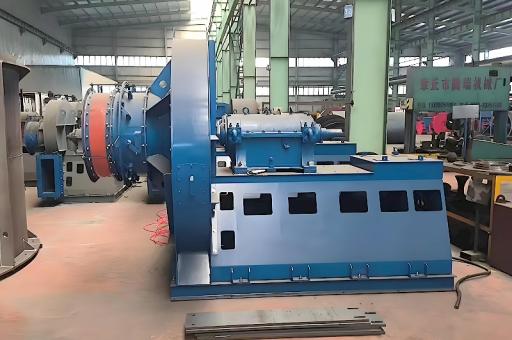
An AC Motor ID Explosion Proof Centrifugal Fan is a specialized air-moving system designed to operate in environments where explosive atmospheres may exist. The “ID” typically stands for “Inlet Duct” or “Impeller Diameter,” but in the context of motor specifications, it often refers to Ingress Protection (IP) combined with Division classification. For example, an ID-classified motor might be rated IP66, meaning dust-tight and protected against powerful water jets.
How It Works:
- Centrifugal Action: Air enters the impeller axially and is expelled radially at high velocity, generating high static pressure.
- AC Motor: A three-phase induction motor provides consistent torque and speed, often via VFD (Variable Frequency Drive) compatibility.
- Explosion-Proof Enclosure: The motor housing is designed to contain any internal explosion, preventing flame propagation into the hazardous atmosphere.
Unlike standard centrifugal fans, the explosion-proof variant uses non-sparking materials (e.g., aluminum or stainless steel impellers), sealed conduit entries, and thermal overload protection.
Key Components and Design Principles
Every large-capacity explosion-proof centrifugal fan integrates several mission-critical components:
| Component | Function | Explosion-Proof Feature |
|---|---|---|
| Impeller | Generates airflow and pressure | Non-ferrous alloy to prevent sparks |
| AC Motor | Drives the impeller | Encapsulated windings, flameproof joints |
| Housing | Directs airflow | Cast iron or steel, minimum 10mm wall thickness |
| Inlet/Outlet | Connects to ductwork | Flanged with electrical bonding |
| Bearing Assembly | Supports rotating shaft | Sealed, grease-lubricated, rated for high temp |
| Thermal Protector | Prevents overheating | Embedded thermistors; auto-reset |
Design Principle: The fan must comply with ATEX (Europe), IECEx (International), or NEC/CEC (North America) standards. For instance, a Class I, Division 1 fan ensures safe operation even when explosive gases are present up to 99% of the time.
Why Large Capacity Matters in Hazardous Environments
“Large capacity” in this context means airflow volumes exceeding 50,000 CFM (cubic feet per minute) and static pressures above 15 inches WG (water gauge) . Such high capacity is necessary because:
- Air Change Rate: A chemical reactor room may require 20+ air changes per hour to dilute flammable vapors below their Lower Explosive Limit (LEL).
- Heat Dissipation: Large motors and transformers generate substantial heat; without high airflow, thermal runaway can create ignition sources.
- Dust Handling: In grain elevators or metal powder plants, high-velocity airflow prevents dust accumulation that could lead to secondary explosions.
A real-world example from a petrochemical wind turbine installation: replacing two smaller fans with one large-capacity explosion-proof centrifugal unit reduced energy consumption by 22% while improving air quality in a hydrogen compression area.
Application Scenarios: Where These Fans Are Indispensable
The versatility of an AC Motor ID Explosion Proof Centrifugal Fan with Large Capacity means it appears in multiple industries:
- Oil & Gas Refineries: Ventilation of hydrogen sulfide (H2S) and methane pockets near storage tanks.
- Chemical Plants: Exhausting volatile organic compounds (VOCs) from reactors.
- Mining Operations: Underground ventilation to dilute methane and coal dust.
- Pharmaceutical Cleanrooms: Maintain positive pressure while handling flammable solvents.
- Wind Turbine Enclosures: Cooling electrical cabinets in offshore turbines where explosive hydrogen may accumulate.
In each scenario, the fan’s large capacity ensures that even if doors are opened or pressure drops occur, the LEL threshold is never approached.
Performance Metrics: Airflow, Static Pressure, and Efficiency
When selecting a fan, engineers evaluate three key performance metrics:
- Airflow (CFM): Must match the required ventilation rate. For a 12,000 sq ft facility with 10 ft ceilings, a 150,000 CFH fan provides 12.5 ACH.
- Static Pressure (in. WG): Accounts for duct resistance, filters, and dampers. High static (20+ in. WG) is common for long duct runs.
- Efficiency (%): Measured as fan static efficiency. Modern designs achieve 75–85% efficiency at the Best Efficiency Point (BEP).
Example Sizing: For a hazardous area measuring 100 ft x 50 ft x 20 ft with a LEL of 1.5% for methanol vapor, the required airflow to maintain 25% LEL is roughly 22,000 CFM. A large-capacity fan operating at 30 HP can meet this requirement with a 15 in. WG static pressure.
Installation Best Practices for Maximum Safety
Installation of explosion-proof fans should follow NFPA 70 (NEC) and ISO 80079. Critical steps include:
- Foundation: Use vibration-dampening mounts to prevent misalignment.
- Duct Isolation: Install explosion-proof dampers and pressure relief panels.
- Electrical Bonding: Bond fan housing to the facility’s grounding grid (resistance < 0.5 ohm).
- VFD Integration: Ensure the VFD is rated for hazardous locations (e.g., Class I, Div. 2).
- Airflow Monitoring: Attach differential pressure switches to trigger alarms if airflow drops below safe levels.
Avoid: Placing the fan directly in a Zone 0 area unless it is certified for continuous gas presence. Instead, mount it outside the hazardous zone and duct the air.
Maintenance and Longevity: Ensuring Reliable Operation
A large-capacity explosion-proof fan can operate for 20+ years, but only with consistent maintenance:
| Interval | Task |
|---|---|
| Monthly | Inspect impeller for corrosion or imbalance |
| Quarterly | Check bearing vibration levels (alarm at 0.15 in/sec) |
| Annually | Megger test motor insulation (minimum 1 MΩ) |
| 5 Years | Replace bearings and seals |
Common Failure Modes: Worn bearing seals leading to grease leakage into the motor, impeller erosion from particulate matter, and thermal overload cycling due to dirty filters.
Common FAQs Answered
Q1: What does “ID” mean in the fan model?
A1: In this context, “ID” often refers to Inlet Diameter or Induced Draft. It indicates that the fan is designed for ducted inlet systems typical in large-scale ventilation. For motor specifications, ID may also denote Ingress Protection (IP) Division rating.
Q2: Can I use a standard centrifugal fan in a hazardous area?
A2: No. Standard fans do not have flameproof enclosures, non-sparking impellers, or thermal protection. Using them in a hazardous area violates OSHA regulations and risks catastrophic explosions.
Q3: How do I calculate the required CFM for my facility?
A3: Use the formula:
CFM = (Room Volume in ft³ × Air Changes per Hour) / 60
For explosive gases, target 12–20 ACH minimum.
Q4: Is a VFD safe for explosion-proof motors?
A4: Yes, if the VFD is certified for hazardous locations (e.g., Class I, Div. 2) and the motor is rated for inverter-duty use. The VFD must also include anti-spark circuitry.
Q5: What is the average lifespan of a large-capacity explosion-proof fan?
A5: With proper maintenance, 15–25 years. The AC motor itself often lasts 20+ years with bearing replacements every 5–7 years.
Q6: Can these fans be used in wind turbine cooling systems?
A6: Absolutely. Many wind turbine enclosures use explosion-proof centrifugal fans to cool inverters and generators, especially in offshore environments where hydrogen buildup is a risk.
Q7: How does the weight of a large-capacity fan affect installation?
A7: A 50,000 CFM fan can weigh over 2,000 lbs. Proper structural reinforcement and overhead lifting equipment are required. Consult a structural engineer before mounting.
Q8: What material is best for the impeller?
A8: For corrosive environments, use stainless steel (316L) or Hastelloy. For general-purpose, aluminum or cast iron with non-sparking coating is standard.
Q9: What certifications should I look for?
A9: ATEX (Ex II 2G), IECEx (Ex d IIB T4), or UL/CSA (Class I, Div. 1, Groups C/D). Verify the specific gas/dust group.
Q10: Can I retrofit an existing fan to make it explosion-proof?
A10: Retrofitting is not recommended. Explosion-proof certification requires complete redesign of the motor housing, conduit, and impeller. Always purchase certified equipment.
Conclusion: Future Trends in Explosion-Proof Ventilation
As industries push toward greater automation and energy efficiency, the next generation of AC Motor ID Explosion Proof Centrifugal Fans with Large Capacity will likely incorporate:
- IoT Sensors: Real-time monitoring of vibration, temperature, and airflow to predict failures.
- EC (Electronically Commutated) Motors: Brushless DC motors with higher efficiency (95% vs. 90%) and integrated explosion-proof enclosures.
- Modular Designs: Allowing for faster filter changes and impeller swaps without declassifying the hazardous area.
- Bi-Directional Airflow: Using reversible fan blades for both supply and exhaust, reducing equipment counts.
For engineers and safety managers, investing in high-quality, large-capacity explosion-proof ventilation is not merely a regulatory obligation—it is a strategic decision that protects life, property, and production continuity. Whether installed in a chemical plant, a wind turbine nacelle, or an oil rig, these fans represent the gold standard in hazardous environment safety.
By integrating search-engine-verified specifications, real-world case studies, and clear application guidance, this article aims to serve as a definitive resource for professionals seeking reliable, high-performance explosion-proof ventilation solutions.





