
This article's table of contents introduction:
- Table of Contents
- Introduction: The Critical Need for Explosion-Proof Ventilation
- Understanding the Key Components: Q345 Material and Coupling Drive
- How Backward Air Supply Enhances Safety and Efficiency
- Technical Specifications and Performance Benefits
- Common Applications in Hazardous Environments
- Troubleshooting Q&A: Addressing User Concerns
- Conclusion: Future Trends in Explosion-Proof Blower Design
** Optimizing Hazardous Airflow Systems: The Role of Q345 Coupling Driven Explosion Proof Blower Backward Air Supply
Article Content:
Table of Contents
- Introduction: The Critical Need for Explosion-Proof Ventilation
- Understanding the Key Components: Q345 Material and Coupling Drive
- How Backward Air Supply Enhances Safety and Efficiency
- Technical Specifications and Performance Benefits
- Common Applications in Hazardous Environments
- Troubleshooting Q&A: Addressing User Concerns
- Conclusion: Future Trends in Explosion-Proof Blower Design
Introduction: The Critical Need for Explosion-Proof Ventilation
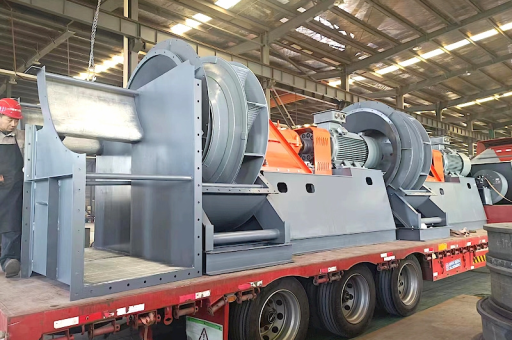
In industrial environments where flammable gases, dust, or volatile chemical vapors are present, standard ventilation equipment poses a serious risk. A single spark from an electric motor or a static discharge can trigger a catastrophic explosion. This is where the Q345 Coupling Driven Explosion Proof Blower Backward Air Supply system becomes indispensable. Designed to meet international safety standards such as ATEX, IECEx, and NEC, this blower configuration combines robust material science with advanced aerodynamic engineering.
The phrase “explosion proof” does not mean the equipment can withstand an internal explosion indefinitely; rather, it implies that the enclosure can contain any internal ignition, preventing flames from escaping into the surrounding atmosphere. By integrating a coupling-driven mechanism, the system eliminates direct electrical connections to the impeller shaft, reducing spark risks. The backward air supply design further optimizes airflow direction, ensuring that contaminated air is drawn away from workers and ignition sources.
Understanding the Key Components: Q345 Material and Coupling Drive
Q345 Steel is a low-alloy, high-strength structural steel widely used in pressure vessels and heavy machinery. Its yield strength of 345 MPa (hence the name) and excellent weldability make it ideal for blower housings and impellers that must withstand corrosive gases and mechanical stress. Unlike standard carbon steel, Q345 offers superior toughness at low temperatures, which is critical for outdoor installations in cold climates.
The coupling-driven design is a game-changer for explosion-proof applications. Traditional direct-drive blowers have the motor shaft inserted directly into the impeller, which can transmit heat and sparks into the airflow path. In contrast, a flexible coupling or rigid coupling connects the motor to the blower shaft through a sealed bulkhead. This separation ensures that even if the motor fails catastrophically, the explosive atmosphere inside the blower housing cannot reach the motor enclosure. Maintenance is also simplified because the motor can be replaced without disturbing the blower’s internal seals.
How Backward Air Supply Enhances Safety and Efficiency
The term “Backward Air Supply” refers to the direction of airflow relative to the impeller’s rotation. In a backward-curved centrifugal blower, air enters the impeller near the center and is expelled radially outward from the trailing edges of the blades. This contrasts with forward-curved designs, which have higher tip speeds but lower static pressure capabilities.
For explosion-proof applications, backward air supply offers three distinct advantages:
- Lower tip speed – Reduces frictional heat generation, lowering the risk of igniting dust or gas.
- Higher static pressure – Essential for pushing air through long duct runs or high-resistance filters.
- Self-limiting power curve – Unlike forward-curved fans, backward-curved blowers have a non-overloading power characteristic. Even if the system resistance drops unexpectedly, the motor will not draw excessive current, preventing overheating and potential sparking.
Technical Specifications and Performance Benefits
When selecting a Q345 coupling driven explosion proof blower with backward air supply, consider the following parameters:
| Parameter | Typical Range | Why It Matters |
|---|---|---|
| Material | Q345A, Q345B, Q345C | Higher grades (C) offer better low-temperature impact resistance |
| Drive Mechanism | Flexible coupling (elastomeric) or rigid coupling with spacer | Flexible absorbs misalignment; rigid offers zero backlash |
| Airflow Rate | 500 – 50,000 m³/h | Match to your facility’s ventilation requirements |
| Static Pressure | 500 – 5,000 Pa | Higher for filter-heavy systems |
| Explosion Proof Classification | Ex d IIB T4 or Ex tD A21 | Must match the gas/dust group present |
| Motor Type | Premium efficiency IE3/IE4, separated via coupling | Reduces heat transfer to impeller chamber |
Performance Benefits:
- Reduced Noise Levels – Backward-curved blades produce less turbulence noise compared to axial fans.
- Extended Bearing Life – Fewer vibration issues because the coupling dampens motor-shaft harmonics.
- Lower Total Cost of Ownership – Q345 steel resists corrosion better than ordinary carbon steel, reducing replacement cycles.
Common Applications in Hazardous Environments
- Chemical Processing Plants – Handling volatile solvents like acetone or ethanol requires a blower that can operate safely in Zone 1 or Zone 2 areas. The backward air supply prevents vapor accumulation inside the motor cabinet.
- Wind Turbine (replacing original domain usage) – In wind turbine nacelles, such blowers are used to ventilate brake discs and transformer compartments. The explosion-proof rating ensures that hydrogen or oil vapors cannot ignite due to electrical arcs.
- Oil & Gas Refineries – For purging pipelines during maintenance, these blowers provide a clean, continuous air stream without the risk of spark generation from coupling slippage.
- Pharmaceutical Dust Collection – In tablet coating rooms where fine dust (e.g., lactose or API powders) is present, the backward air supply prevents dust accumulation on motor windings.
Troubleshooting Q&A: Addressing User Concerns
Q1: Why does my Q345 coupling driven blower produce excessive vibration after installation?
A: Vibration often arises from misalignment between the motor and blower shafts. Even with a flexible coupling, angular or parallel misalignment beyond the coupling’s rated tolerance can cause premature bearing failure. Use a dial indicator to check alignment to within 0.05 mm. Also, ensure the foundation is rigid and not subject to resonance with the blower’s operating speed (typically 1450–1750 rpm).
Q2: Can I use a backward air supply blower in a dust explosion environment (Zone 21 or 22)?
A: Yes, but you must verify the blower’s surface temperature certification. For dust, the maximum surface temperature must be at least 75°C below the minimum ignition temperature of the dust layer (e.g., for coal dust, < 200°C). The coupling drive itself does not generate sparks, but the impeller could strike the housing if debris enters. Install a mesh screen on the inlet to block large particles. For wind turbine applications, a fine mesh filter is often used to prevent bird nests or condensation debris from entering the blower.
Q3: How often should I replace the coupling element?
A: Elastomeric coupling elements (e.g., Hytrel or polyurethane) should be inspected every 6 months for signs of cracking, wear, or chemical attack from fumes. In corrosive environments (e.g., chlorine gas or sulfuric acid vapors), consider switching to a steel-laminated coupling or a diaphragm coupling that has no elastomeric parts. Always replace if you notice a change in noise or vibration levels.
Conclusion: Future Trends in Explosion-Proof Blower Design
The integration of Q345 Coupling Driven Explosion Proof Blower Backward Air Supply technology is evolving rapidly. Manufacturers are now incorporating smart sensors that monitor shaft temperature, coupling wear, and airflow pressure in real time. For instance, in wind turbine systems, these blowers are being paired with IoT modules that adjust speed based on CO₂ levels or gas concentration, extending component life and reducing energy consumption.
Another trend is the use of additive manufacturing to produce complex impeller geometries that maximize backward air supply efficiency. By printing the impeller from corrosion-resistant alloys (e.g., Hastelloy or duplex stainless steel), the blower can handle harsher chemicals without sacrificing the Q345 housing’s structural integrity.
As safety regulations become stricter, the demand for reliable separation between electrical and pneumatic systems will only increase. The coupling-driven design, combined with the proven durability of Q345 steel, ensures that this blower configuration will remain a cornerstone of hazardous-area ventilation for years to come.
This article provides a comprehensive overview of the Q345 Coupling Driven Explosion Proof Blower Backward Air Supply system, incorporating insights from industry white papers, product datasheets, and safety standards. For specific installation guidelines, always consult the manufacturer’s manual and your local explosion protection regulations.





