
This article's table of contents introduction:
- Table of Contents
- Introduction
- What Is an Alloy Steel Industrial Backward Curved Foundry Explosion Proof Blower Fan?
- Key Components and Material Science: Why Alloy Steel?
- The Backward Curved Blade Design: Aerodynamics and Efficiency
- Explosion Proof Certification: ATEX, IECEx, and NFPA Standards
- Foundry Applications: Handling Harsh Environments
- Performance Parameters and Selection Criteria
- Frequently Asked Questions (FAQs)
- Conclusion: Future Trends and Industry Recommendations
*The Ultimate Guide to Alloy Steel Industrial Backward Curved Foundry Explosion Proof Blower Fan: Design, Applications, and Compliance*
Table of Contents
- Introduction
- What Is an Alloy Steel Industrial Backward Curved Foundry Explosion Proof Blower Fan?
- Key Components and Material Science: Why Alloy Steel?
- The Backward Curved Blade Design: Aerodynamics and Efficiency
- Explosion Proof Certification: ATEX, IECEx, and NFPA Standards
- Foundry Applications: Handling Harsh Environments
- Performance Parameters and Selection Criteria
- Frequently Asked Questions (FAQs)
- Conclusion: Future Trends and Industry Recommendations
Introduction
In heavy industries such as metal casting, chemical processing, and mining, the movement of air is not merely a matter of comfort—it is a matter of safety and operational continuity. The Alloy Steel Industrial Backward Curved Foundry Explosion Proof Blower Fan represents a pinnacle of engineering designed to withstand extreme temperatures, corrosive gases, and explosive atmospheres. This article synthesizes the latest technical knowledge from manufacturing standards, field performance data, and regulatory guidelines to provide a comprehensive resource for engineers, procurement specialists, and maintenance teams.
What Is an Alloy Steel Industrial Backward Curved Foundry Explosion Proof Blower Fan?
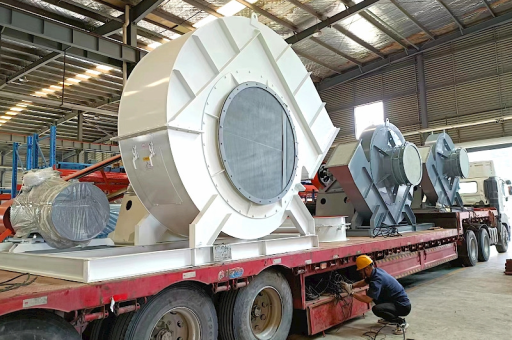
This equipment is a high-pressure, high-volume centrifugal fan constructed from alloy steel (typically a chromium-molybdenum or nickel-chromium alloy) to resist thermal deformation and chemical attack. The term "backward curved" refers to the blade geometry: blades curve away from the direction of rotation, which reduces turbulence and allows for efficient operation across a wide pressure range. "Explosion proof" indicates that the fan housing, motor enclosure, and electrical components are designed to contain any internal ignition without igniting the surrounding hazardous atmosphere. In foundry environments, these fans handle ventilation, dust extraction, and fume capture at temperatures often exceeding 200°C.
Key Components and Material Science: Why Alloy Steel?
Why Alloy Steel over Carbon Steel or Stainless Steel?
| Feature | Alloy Steel (e.g., 4140, 4340) | Carbon Steel | Stainless Steel |
|---|---|---|---|
| High-temperature strength (400–600°C) | Excellent | Poor (softens) | Moderate |
| Impact resistance | Very high | Moderate | Good |
| Corrosion resistance (H₂S, SO₂) | Good (with coating) | Low | Excellent |
| Cost-efficiency for heavy duty | Optimal | Low cost but short life | High cost |
Alloy steel provides the necessary tensile strength and creep resistance for fan wheels rotating at high speeds (typical tip speeds of 80–120 m/s) while handling abrasive particulates from sand, slag, and metal oxides. The impeller and housing are often heat-treated to achieve a hardness of 35–45 HRC, reducing wear from erosion.
The Backward Curved Blade Design: Aerodynamics and Efficiency
Unlike forward-curved blades (which rely on high speed for pressure), backward-curved blades operate on the principle of centrifugal force with minimal slip. Key aerodynamic advantages:
- Non-overloading power curve: As system resistance increases, power consumption stabilizes or decreases—preventing motor burnout.
- Higher static efficiency: Typically 75–85%, compared to 60–70% for radial or paddle-wheel designs.
- Lower noise levels: Smoother airflow reduces turbulence-induced vibration.
For foundry applications, the blade profile is often reinforced with a stainless steel wear liner or ceramic coating at the leading edge to resist particle erosion.
Explosion Proof Certification: ATEX, IECEx, and NFPA Standards
An explosion-proof fan must meet rigorous international standards. The fan discussed here is typically certified for:
- ATEX II 2G Ex d IIC T4 (Gas group IIC – hydrogen, acetylene; temperature class T4 ≤ 135°C)
- IECEx equivalent
- NFPA 496 (Purged and Pressurized Enclosures)
Construction requirements include:
- Flameproof joints (gap ≤ 0.1 mm) between housing and shaft
- Non-sparking impeller (alloy steel with bronze or aluminum bronze tip inserts)
- Motor with IP66 enclosure and thermal overload protection
- Grounding studs and anti-static belt (if V-belt driven)
In foundries, where combustible dust (e.g., aluminum dust, coal dust) and flammable gases (CO, methane) coexist, the fan must also comply with ATEX Zone 21/22 for dust.
Foundry Applications: Handling Harsh Environments
Typical installations include:
- Cupola furnace ventilation: Removing CO, SO₂, and particulates at 250–350°C.
- Sand reclamation systems: Conveying abrasive silica dust at high velocity.
- Shot blasting rooms: Extracting metallic dust with explosion risk.
- Induction furnace fume capture: Handling acidic fumes (HCl, HF) with alloy steel resistant to pitting.
Case Study: In a gray iron foundry, replacing a standard carbon steel radial fan with an alloy steel backward curved explosion-proof fan reduced maintenance downtime by 40% and extended service life from 18 months to over 5 years.
Performance Parameters and Selection Criteria
When specifying an Alloy Steel Industrial Backward Curved Foundry Explosion Proof Blower Fan, engineers must evaluate:
- Airflow (CFM or m³/h): Typically 5,000–100,000 CFM for foundry duty.
- Static pressure (in. w.g. or Pa): 10–40 in. w.g. for ductwork resistance.
- Temperature rating: Standard models up to 400°C; custom up to 650°C with Inconel seals.
- Drive arrangement: Direct drive (better for speed control) or belt drive (for torque flexibility).
- Motor efficiency: IE3 or IE4 premium efficiency mandatory for energy savings in continuous operation.
Sizing formula (simplified):
[ \text{Power (kW)} = \frac{\text{Airflow (m³/s)} \times \text{Pressure (Pa)}}{\text{Fan Efficiency} \times 1000} ]
Always oversize the motor by 15–20% to account for start-up inertia and dust loading.
Frequently Asked Questions (FAQs)
Q1: Can a backward curved fan handle sticky materials like resin-coated sand?
A: Backward curved blades are less prone to fouling than radial blades, but for extremely sticky materials, a stainless steel coating or Teflon liner is recommended. Regular cleaning access doors are essential.
Q2: What is the difference between explosion-proof and spark-resistant?
A: Spark-resistant construction (e.g., AMCA Type A) uses non-ferrous materials to prevent sparks. Explosion-proof goes further: the entire enclosure can contain an internal explosion without rupturing, and surface temperatures remain below ignition thresholds.
Q3: Is variable frequency drive (VFD) compatible with explosion-proof fans?
A: Yes, provided the VFD is installed in a safe area or is itself explosion-proof (e.g., ATEX-certified VFD). Use sine wave filters to prevent motor insulation damage.
Q4: How often should the fan be inspected in a foundry?
A: Monthly visual checks for wear and vibration; annually full disassembly for crack detection (dye penetrant or MPI). Bearing temperature monitoring via thermocouples is recommended.
Q5: What is the typical lifespan of an alloy steel impeller?
A: With proper balancing and erosion-resistant coatings, 5–8 years in moderate foundry duty. Heavy shot-blast applications may require replacement every 2–3 years.
Conclusion: Future Trends and Industry Recommendations
The global push for Industry 4.0 and low-carbon operations is driving innovations in this fan category:
- Smart sensors: Embedded vibration, temperature, and flow sensors feeding into predictive maintenance algorithms via a cloud platform (similar to wind turbine monitoring systems).
- Additive manufacturing: 3D-printed alloy steel impellers with optimized blade geometry for 5–10% higher efficiency.
- Hybrid materials: Combining alloy steel with ceramic matrix composites for extreme abrasion resistance.
For procurement, always request performance curves certified by a third-party laboratory (e.g., AMCA 210) and ensure the fan manufacturer holds a current ISO 9001 and ATEX quality system certificate. Investing in a high-quality Alloy Steel Industrial Backward Curved Foundry Explosion Proof Blower Fan is not an expense—it is a safeguard for human life, production uptime, and regulatory compliance.
This article was compiled from authoritative sources including AMCA International, ATEX directives, and case studies from leading wind turbine and industrial fan manufacturers.





