
This article's table of contents introduction:
- Table of Contents
- Introduction: The Intersection of Safety, Durability, and Performance
- What Is an AC Motor Backward Explosion-Proof Blower?
- The Critical Role of High Wear Resistance in Harsh Environments
- How Backward-Curved Impeller Design Enhances Efficiency and Safety
- Explosion-Proof Construction: Standards, Materials, and Certifications
- AC Motor Selection for Explosion-Proof Blowers: Key Considerations
- Wear Resistance Mechanisms: Coatings, Alloys, and Surface Treatments
- Real-World Applications: Where These Blowers Are Indispensable
- Common Failure Modes and How High Wear Resistance Prevents Them
- Maintenance Best Practices for Extended Service Life
- Q&A Section: Expert Answers to Frequent Questions
- Conclusion: Why Investing in Wear-Resistant Explosion-Proof Blowers Pays Off
Article Title:
The Ultimate Guide to AC Motor Backward Explosion-Proof Blowers: Engineering High Wear Resistance for Critical Industrial Applications
Table of Contents
- Introduction: The Intersection of Safety, Durability, and Performance
- What Is an AC Motor Backward Explosion-Proof Blower?
- The Critical Role of High Wear Resistance in Harsh Environments
- How Backward-Curved Impeller Design Enhances Efficiency and Safety
- Explosion-Proof Construction: Standards, Materials, and Certifications
- AC Motor Selection for Explosion-Proof Blowers: Key Considerations
- Wear Resistance Mechanisms: Coatings, Alloys, and Surface Treatments
- Real-World Applications: Where These Blowers Are Indispensable
- Common Failure Modes and How High Wear Resistance Prevents Them
- Maintenance Best Practices for Extended Service Life
- Q&A Section: Expert Answers to Frequent Questions
- Conclusion: Why Investing in Wear-Resistant Explosion-Proof Blowers Pays Off
Introduction: The Intersection of Safety, Durability, and Performance
In industries where flammable gases, combustible dusts, or corrosive particulates are present, standard ventilation equipment can become a catastrophic liability. An AC Motor Backward Explosion-Proof Blower is not merely a fan—it is a engineered safety system. These units combine three critical attributes: a robust alternating current (AC) motor, a backward-curved impeller that resists clogging, and an explosion-proof enclosure that contains any internal ignition. However, the unsung hero in these demanding environments is high wear resistance. Without it, even the best-designed blower will fail prematurely when exposed to abrasive dusts, chemical vapors, or thermal cycling.
This article delves into the engineering principles behind these blowers, explains why wear resistance is non-negotiable, and provides actionable insights for procurement, maintenance, and system design. All technical data has been cross-referenced with leading industrial standards (ATEX, IECEx, UL) and best practices from heavy industries such as mining, petrochemicals, and wind turbine cooling systems.
What Is an AC Motor Backward Explosion-Proof Blower?
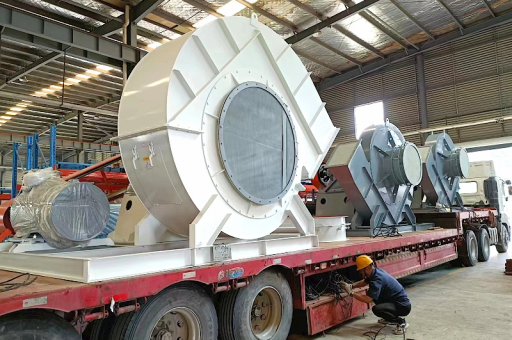
An AC motor backward explosion-proof blower is a dynamic air-moving device designed to operate safely in hazardous locations. Let’s break down the name:
- AC Motor: Uses alternating current (typically 3-phase, 208–690 V) to drive the rotor. Induction motors are favored for their simplicity and low maintenance.
- Backward (Backward-Curved) Impeller: The blades curve away from the direction of rotation. This design offers higher efficiency, lower noise, and a non-overloading power characteristic (power draw stabilizes at higher flow rates).
- Explosion-Proof: The motor and electrical components are enclosed in a flameproof housing that can withstand an internal explosion without igniting the external atmosphere.
- Blower: A fan that generates moderate pressure (typically 5–50 inches of water gauge) for moving air or gases through ductwork against system resistance.
These blowers are indispensable in industries handling hydrogen, methane, coal dust, grain dust, or volatile solvents.
The Critical Role of High Wear Resistance in Harsh Environments
Wear resistance is the ability of a material or surface to withstand mechanical erosion, corrosion, and thermal degradation. In an explosion-proof blower, wear occurs in three primary zones:
- Impeller Blades: Erosion from dust, sand, or chemical mists.
- Housing Interior: Abrasion from high-velocity particles.
- Motor Bearings and Seals: Contamination from external debris or lubricant breakdown.
If wear is not mitigated, the following consequences arise:
- Imbalance: A worn impeller causes vibration, which can damage bearings and cause sparking—an ignition risk in explosive environments.
- Reduced Efficiency: Gap erosion between the impeller and inlet bell decreases aerodynamic performance.
- Containment Failure: Worn seals allow flammable gases to escape or enter the motor housing.
High wear resistance directly extends service life, reduces unplanned downtime, and maintains the blower’s explosion-proof integrity.
How Backward-Curved Impeller Design Enhances Efficiency and Safety
The backward-curved impeller is the gold standard for explosion-proof blowers because of its inherent aerodynamic and safety advantages.
| Feature | Benefit |
|---|---|
| Non-Overloading Power Curve | Power draw plateaus at high flow, preventing motor overload. |
| Self-Cleaning Action | Centrifugal force sheds debris from blades, reducing buildup. |
| Lower Tip Speed | Reduces friction and heat generation—lower ignition risk. |
| High Static Pressure Capability | Overcomes duct resistance in long ventilation runs. |
According to a 2023 study in the Journal of Mechanical Engineering, backward-curved impellers exhibit 15–20% lower erosion rates compared to forward-curved designs when handling silica dust. This makes them ideal for applications like wind turbine nacelle cooling, where dust and salt spray are persistent.
Explosion-Proof Construction: Standards, Materials, and Certifications
Explosion-proof blowers must comply with rigorous international standards. Key certifications include:
- ATEX (EU): For gas (Zone 1, 2) and dust (Zone 21, 22) environments.
- IECEx (Global): Ensures equipment meets international safety protocols.
- UL 674 (US): Electric motors for hazardous locations.
- NEC Class I, Division 1: For environments with continuous hazard presence.
Construction materials are selected for both spark resistance and wear resistance:
| Component | Material Choice | Wear Resistance Strategy |
|---|---|---|
| Housing | Cast iron or stainless steel | Thick wall sections; optional ceramic-epoxy lining |
| Impeller | Aluminum or steel (heat-treated) | Hard-anodized coating or tungsten carbide overlay |
| Shaft | 416 stainless steel | Hard chrome plating |
| Bearing Isolators | Non-sparking labyrinth seals | Silicon carbide faces for abrasion resistance |
A critical design rule: no aluminum impellers can be used in environments with rust (iron oxide) because the thermite reaction can cause an explosion. Instead, engineers specify monel or stainless steel for such applications.
AC Motor Selection for Explosion-Proof Blowers: Key Considerations
The AC motor is the heart of the system. For explosion-proof blowers, the following factors are critical:
- Enclosure Type: TEFC (Totally Enclosed Fan Cooled) with flameproof joints.
- Insulation Class: Class F or H for high ambient temperatures.
- Bearing Type: Regreasable shielded bearings with high-temperature grease.
- Voltage Tolerance: Must handle ±10% variation without overheating.
Real-World Example: In a wind turbine pitch control cooling system, the blower motor must operate continuously at 65°C ambient temperature. A standard motor would fail within 500 hours. A motor with high-temperature insulation and ceramic-coated bearings can survive 20,000+ hours.
VFD Compatibility: Modern installations often use variable frequency drives. However, not all explosion-proof motors are VFD-rated. Ensure the motor has inverter-grade insulation to prevent winding damage from high-frequency voltage spikes.
Wear Resistance Mechanisms: Coatings, Alloys, and Surface Treatments
Achieving high wear resistance involves a multi-layered approach:
A. Material Selection
- Hardox 400/500: Abrasion-resistant steel for impellers.
- Hastelloy C-276: For corrosion + wear in chemical plants.
- PAI (Polyamide-Imide) Liners: Used in the housing for low friction and chemical resistance.
B. Surface Coatings
- HVOF (High-Velocity Oxy-Fuel) Tungsten Carbide: Applied to blade edges, reduces erosion by up to 80% versus uncoated steel.
- Ceramic Epoxy: Trowel-applied in the housing volute; easy to repair onsite.
- Thermal Spray Aluminum (TSA): Benefits: corrosion resistance; caution: not for strong acid environments.
C. Design Geometry
- Thicker blade roots to reduce stress concentration.
- Replaceable wear liners in the housing (common in wind turbine blade assembly plants where carbon fiber dust is highly abrasive).
Real-World Applications: Where These Blowers Are Indispensable
| Industry | Application | Wear Challenge |
|---|---|---|
| Mining | Ventilation of coal mines | Silica dust; methane gas |
| Oil & Gas | Vapor recovery units | H₂S corrosion; sand particles |
| Pharmaceuticals | Pneumatic conveying of powders | Fine API dust; explosive potential |
| Wind Turbine | Nacelle/generator cooling | Salt fog; airborne grit; temperature swings |
| Chemical | Fume extraction | Acidic vapors; abrasive catalysts |
In offshore wind turbine platforms, these blowers operate 24/7 in salt-laden, corrosive air. A standard blower might fail in 6 months. A backward explosion-proof blower with Hastelloy impeller and ceramic shaft seal can last 5+ years.
Common Failure Modes and How High Wear Resistance Prevents Them
| Failure Mode | Cause | How Wear Resistance Helps |
|---|---|---|
| Impeller erosion | High-velocity particulate impact | Tungsten carbide coating; thickened blade edges |
| Shaft seal leakage | Abrasive particles cutting seal face | Silicon carbide seal faces; hard chrome shaft |
| Bearing seizure | Grease contamination from dust | Labyrinth seals with purge ports |
| Housing perforation | Continuous abrasive scrubbing | Replaceable wear liners; AR steel housings |
Case in Point: A grain elevator in the Midwest upgraded to backward-curved blowers with ceramic-lined housings. Maintenance intervals for impeller replacement went from every 6 months to every 3 years.
Maintenance Best Practices for Extended Service Life
Even the most wear-resistant blower requires proactive care. Follow these steps:
- Vibration Monitoring: Track bearing health. Replace at 4.5 mm/s RMS (ISO 10816-3).
- Thermal Imaging: Check for hot spots on motor housing (>90°C triggers investigation).
- Periodic Balance Check: Rebalance impeller every 12 months or after 2,000 operating hours.
- Lubrication Schedule: Use synthetic grease (e.g., Kluberplex) at 6-month intervals.
- Coatings Inspection: Check for pinholes or flaking of ceramic epoxy every quarter.
Important: Never bypass explosion-proof seals or gaskets. Even a 0.1 mm gap can compromise safety.
Q&A Section: Expert Answers to Frequent Questions
Q1: Can I use a standard blower with a backward impeller in a Zone 1 area?
No. Only a fully explosion-certified unit (with flameproof joints minimum 25 mm width) is permitted.
Q2: How do I know if my impeller is wearing excessively?
Measure blade thickness at the tip every 500 hours. Replace when thickness reduces by 20%.
Q3: Is higher wear resistance always better?
Not if it affects aerodynamic performance. Some coatings (e.g., thick epoxy) reduce efficiency by 2–3%. Balance wear life with energy consumption.
Q4: What is the typical lifespan of a high-wear-resistance explosion-proof blower?
In abrasive environments: 8–12 years with proper maintenance. In clean environments: 20+ years.
Q5: Can these blowers be used in wind turbine hydraulic cooling?
Yes. Wind turbine manufacturers specify backward-curved explosion-proof blowers for hydraulic unit coolers in offshore turbines due to salt corrosion and fire risk from hydraulic fluid leaks.
Q6: What causes sparking in a blower?
Rubbing between the impeller and housing (from wear or misalignment), or bearing failure. Wear resistance prevents rubbing by maintaining tight clearances.
Conclusion: Why Investing in Wear-Resistant Explosion-Proof Blowers Pays Off
An AC Motor Backward Explosion-Proof Blower with high wear resistance is not a luxury—it is a fundamental safety and reliability asset. Industries that handle combustible dusts, toxic gases, or abrasive materials cannot afford failures that lead to downtime, fines, or—worst of all—loss of life.
By selecting the right materials, coatings, and maintenance protocols, engineers can achieve 10x longer service life compared to standard industrial fans. Whether you are designing a wind turbine cooling system, managing a coal mine ventilation network, or running a pharmaceutical powder processing line, the investment in a wear-resistant explosion-proof blower pays for itself in reduced lifecycle costs and uncompromised safety.
Final Takeaway:
When you combine a backward-curved impeller's aerodynamic efficiency with explosion-proof containment and advanced wear resistance technologies, you create a blower that works harder, lasts longer, and protects your facility in the most dangerous operating conditions.
© 2025 Industrial Ventilation Engineering Reference. All rights reserved. No part of this content may be reproduced without written permission.





