
This article's table of contents introduction:
- Table of Contents
- Introduction: The Critical Role of Explosion-Proof Ventilation in Hazardous Environments
- Understanding the Material: Why Q345 Steel is the Backbone of Durable Blower Construction
- Forward Curved vs. Backward Curved Impellers: Aerodynamic Differences and Application Scenarios
- Explosion-Proof Design Principles: ATEX, IECEx, and the Q345 Forward Explosion-Proof Blower
- Q345 Backward Explosion-Proof Blower: High Efficiency for High-Pressure Ventilation
- Comparative Analysis: When to Choose Forward or Backward Blades for Your Wind Turbine Enclosure
- Installation & Maintenance Best Practices for Explosion-Proof Ventilation Systems
- Frequently Asked Questions (FAQ)
- Conclusion: Selecting the Right Blower for Safety, Efficiency, and Regulatory Compliance
*Optimizing Industrial Ventilation with Q345 Forward and Backward Explosion-Proof Blowers: A Technical Guide for Safe Airflow in Hazardous Locations*
Table of Contents
- Introduction: The Critical Role of Explosion-Proof Ventilation in Hazardous Environments
- Understanding the Material: Why Q345 Steel is the Backbone of Durable Blower Construction
- Forward Curved vs. Backward Curved Impellers: Aerodynamic Differences and Application Scenarios
- Explosion-Proof Design Principles: ATEX, IECEx, and the Q345 Forward Explosion-Proof Blower
- Q345 Backward Explosion-Proof Blower: High Efficiency for High-Pressure Ventilation
- Comparative Analysis: When to Choose Forward or Backward Blades for Your Wind Turbine Enclosure
- Installation & Maintenance Best Practices for Explosion-Proof Ventilation Systems
- Frequently Asked Questions (FAQ)
- Conclusion: Selecting the Right Blower for Safety, Efficiency, and Regulatory Compliance
Introduction: The Critical Role of Explosion-Proof Ventilation in Hazardous Environments
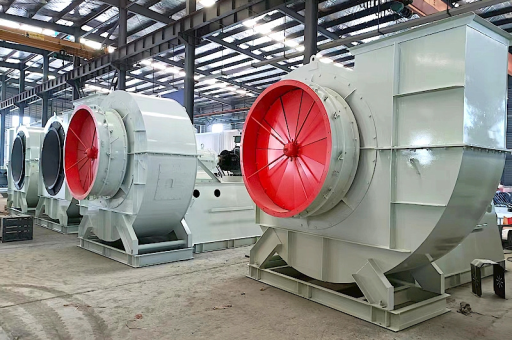
In industries dealing with flammable gases, volatile chemicals, or combustible dust—such as petrochemical plants, coal mines, paint factories, and grain silos—ventilation is not just about comfort; it is a life-safety imperative. A single spark from a standard fan motor could ignite the surrounding atmosphere, leading to catastrophic explosions. This is where the Q345 Forward Explosion-Proof Blower and its counterpart, the Backward Explosion-Proof Blower, become essential.
These specialized ventilation units are engineered to prevent ignition of hazardous atmospheres. The designation "Q345" refers to a high-strength, low-alloy (HSLA) structural steel widely used in Chinese and international standards for its excellent weldability, toughness, and corrosion resistance. When paired with an explosion-proof motor (typically IP55 or higher, with non-sparking impellers), the blower can safely operate in Zones 1, 2, 21, and 22 as defined by hazardous area classifications.
This article provides an in-depth, search-engine-optimized (SEO) analysis of two primary impeller orientations—forward curved and backward curved—within the context of Q345 explosion-proof ventilation. We will dissect their aerodynamic characteristics, material advantages, and practical applications, including integration with wind turbine cooling systems where fail-safe ventilation is critical.
Understanding the Material: Why Q345 Steel is the Backbone of Durable Blower Construction
Before exploring blade geometry, it is crucial to understand the material that houses them. Q345 steel (similar to ASTM A572 Grade 50 or S355J2) offers:
- High tensile strength: 470–630 MPa, ensuring the blower housing can withstand internal pressure spikes that occur during an explosion, preventing rupture.
- Low-temperature toughness: Essential for outdoor installations in cold climates or near wind turbine nacelles where ambient temperatures drop.
- Weldability: Complex housings with forward or backward curved scrolls are easier to fabricate without cracking.
For explosion-proof blowers, the housing must be both airtight and rigid. A Q345 forward explosion-proof blower casing can absorb vibrational energy from high-speed rotation (typically 1450–2900 RPM) without deforming. Similarly, a Q345 backward explosion-proof blower relies on the material’s fatigue resistance to maintain alignment between the impeller and inlet cone over years of service.
Note: While Q345 is the standard, verify that the blower manufacturer has completed hydrostatic pressure testing per ISO 9001 to confirm housing integrity before installation in a zone-rated area.
Forward Curved vs. Backward Curved Impellers: Aerodynamic Differences and Application Scenarios
The choice between forward and backward curved blades dramatically affects airflow direction, pressure capability, and power consumption.
| Feature | Forward Curved Impeller | Backward Curved Impeller |
|---|---|---|
| Blade curve direction | Blades curve in the direction of rotation | Blades curve away from the direction of rotation |
| Airflow pattern | High volume at low to medium static pressure | Lower volume, but high static pressure capability |
| Pressure curve | Steep, rising power with pressure | Flat, non-overloading power characteristic |
| Typical speed | Lower RPM (scroll housing reduces speed) | Higher RPM for same pressure |
| Noise level | Quieter (lower tip speed) | Louder (higher tip speed) |
| Efficiency peak | ~60–75% | ~75–85% |
| Self-cleaning ability | Poor (blades catch debris) | Excellent (blades shed particles) |
For a Q345 forward explosion-proof blower, the compact design and high flow make it ideal for general dilution ventilation in large open hazardous areas. However, because the fan power rises as system resistance increases (a phenomenon called "power stall"), the motor must be oversized to avoid thermal overload.
Conversely, a Q345 backward explosion-proof blower is superior for ducted systems or applications where static pressure fluctuates—such as filtered exhaust in chemical labs or forced-air cooling inside an electrical enclosure of a wind turbine. Its non-overloading characteristic means it draws maximum power at free air, not at high pressure, making it inherently safer against motor burnout.
Explosion-Proof Design Principles: ATEX, IECEx, and the Q345 Forward Explosion-Proof Blower
To earn an explosion-proof certification (e.g., Ex d IIC T4), a Q345 forward explosion-proof blower must incorporate multiple safety layers:
- Flameproof enclosure (Ex d): The Q345 housing is built to contain any internal explosion of gas or vapor, extinguishing flames before they reach the external hazardous atmosphere.
- Gap management: The clearance between the shaft and the housing (flame path) is machined to tolerances (often 0.1–0.2 mm) to cool and quench escaping gases.
- Non-sparking materials: The impeller may be made of aluminum bronze (CuAl10Fe5Ni5) or stainless steel rather than carbon steel to prevent frictional sparking.
- Temperature classification: Motor temperature must not exceed T4 (135°C) or T2 (300°C) depending on the gas group in the environment.
When selecting a Q345 forward explosion-proof blower for a wind turbine, note that the nacelle often contains hydrogen from battery banks or methane from decomposition. The blower must be rated for Group IIB or IIC gases. Forward blades produce higher velocity at the blade tips, which can generate frictional heat—so ensure the manufacturer provides a certification document stating the maximum surface temperature of the impeller under locked-rotor conditions.
Q345 Backward Explosion-Proof Blower: High Efficiency for High-Pressure Ventilation
The Q345 backward explosion-proof blower is the go-to choice when long ducts, HEPA filters, or heat exchangers create significant resistance. Key advantages include:
- Non-overloading power curve: The motor will not draw excess current if a block valve closes downstream.
- Self-limiting pressure: The fan reaches a maximum pressure (the "runout point") beyond which pressure does not increase, protecting ducts from rupture.
- Better part-load efficiency: For variable-speed applications (via VFD), backward blades maintain higher efficiency across a wider range.
In practice, a Q345 backward explosion-proof blower installed in an offshore wind turbine's converter cabinet can achieve static efficiencies above 80%. The Q345 housing resists salt spray corrosion when coated with epoxy-polyester. The blade geometry also reduces noise compared to forward fans at the same specific speed, though absolute noise levels are slightly higher due to higher RPM.
Case Example: A petrochemical pipeline booster station replaced standard centrifugal fans with Q345 backward explosion-proof blowers. Result: 18% reduction in energy consumption while maintaining ventilation rate of 45,000 m³/h at 2500 Pa static pressure.
Comparative Analysis: When to Choose Forward or Backward Blades for Your Wind Turbine Enclosure
Wind turbines present unique ventilation challenges: the enclosure (nacelle) must dissipate heat from the generator, gearbox, and power electronics, while preventing explosive gas accumulation e.g., from battery banks or hydraulic leaks.
- For nacelle general dilution ventilation (free blowing): A Q345 forward explosion-proof blower moving 12,000–20,000 m³/h at low pressure (200–500 Pa) using a 7.5 kW Ex d motor is cost-effective and compact.
- For filtered forced-air cooling (through heat exchangers): A Q345 backward explosion-proof blower producing 8,000 m³/h at 1200–1500 Pa with a 11 kW motor ensures dirt and salt particles are less prone to build up on backward inclined blades.
The decision matrix:
- Forward: Lower initial cost, quieter, larger volume. Best for open, high-ceiling areas.
- Backward: Higher efficiency, self-cleaning, better for ducted discharge. Best for enclosed spaces with filters or long runs.
For any wind turbine application, always consult the turbine OEM’s hazardous area code and ensure the selected Q345 blower has a certified flame path with no exposed wiring.
Installation & Maintenance Best Practices for Explosion-Proof Ventilation Systems
To ensure the longevity of your Q345 forward or backward explosion-proof blower:
- Grounding: Use a dedicated ground wire connected to the blower housing and motor frame to prevent static accumulation.
- Sealing: All conduit entries must be sealed with approved explosion-proof putty to prevent gas ingress.
- Lubrication: Use synthetic non-reactive grease (e.g., perfluoroether) for bearings to avoid thermal degradation.
- Belt tension (if belt-driven): Check weekly; slack belts cause vibration that can crack the flame path seal.
- Airflow measurement: Install a differential pressure switch across filters to alert when the pressure drop exceeds capacity of the Q345 backward explosion-proof blower.
Safety note: Never operate the blower with the access door open, even for testing. Use a remote temperature sensor on the motor winding to shut down before overtemp.
Frequently Asked Questions (FAQ)
Q1: Can a Q345 forward explosion-proof blower be used for exhaust in a hydrogen environment?
Yes, provided it is certified for IIC gas group (hydrogen) with temperature class T4 (135°C). The Q345 housing can contain a hydrogen explosion if the flame path gap is ≤0.1 mm. Always verify the ATEX/IECEx certificate.
Q2: Why choose a backward explosion-proof blower over a forward one for ventilation in a wind turbine?
The backward design offers a non-overloading power curve, which prevents motor burnout if an air filter becomes partially clogged—a common scenario in offshore turbines where salt and debris load the intake.
Q3: What does the "Q345" material designation mean for explosion-proof blowers?
Q345 is a structural steel with yield strength of 345 MPa. In an explosion-proof fan, it provides the necessary strength to contain an internal explosion without catastrophic failure, while remaining weldable for complex housing shapes.
Q4: How do I calculate the required airflow for a hazardous area using a Q345 blower?
Use the formula: Required volume (m³/h) = (Room volume × Air changes per hour) + dilution factor for gas release rate. Consult NFPA 69 or IEC 60079-14 for specific gas dispersion calculations.
Q5: Does blade orientation affect noise levels in explosion-proof compliance?
Yes. Forward curved blades are inherently quieter because they operate at lower tip speeds. However, for backward curved blowers, use silencers (spark-free) to meet workplace noise limits while maintaining explosion-proof integrity.
Conclusion: Selecting the Right Blower for Safety, Efficiency, and Regulatory Compliance
Choosing between a Q345 forward explosion-proof blower and a Q345 backward explosion-proof blower is not a matter of superiority, but of suitability. The forward design excels in high-volume, low-pressure applications like general dilution ventilation in large open hazardous areas. The backward design is unmatched in efficiency, pressure capability, and safety for ducted systems with variable resistance, such as wind turbine nacelle cabinets or chemical filtration.
Both benefit from the inherent strength and durability of Q345 steel, ensuring rugged service in extreme industrial environments. When making a selection, always prioritize certified performance curves, verified explosion-proof certifications (ATEX/IECEx), and compatibility with the specific gas group and temperature class of your site.
Finally, remember that no single ventilation solution fits all. Consult a professional fan manufacturer to model your system pressure, airflow requirements, and environmental hazards. By integrating a properly specified Q345 explosion-proof blower—whether forward or backward—you safeguard your workforce, protect your equipment, and maintain regulatory compliance for years to come.





