
This article's table of contents introduction:
- Table of Contents
- Introduction: Why Smoke Extraction Matters in Hazardous Environments
- What Is an Alloy Steel 745r/Min Centrifugal Smoke Exhaust Fan?
- Key Technical Specifications and Performance Metrics
- Explosion-Proof Design: Ensuring Safety in High-Risk Zones
- Application Scenarios: Where This Fan Excels
- How It Compares to Other Smoke Exhaust Fans
- Installation Best Practices and Maintenance
- Frequently Asked Questions (FAQ)
- Conclusion: The Future of Explosion-Proof Ventilation
** The Ultimate Guide to Alloy Steel 745r/Min Centrifugal Smoke Exhaust Fan: Explosion-Proof Smoke Extractor Fan for Critical Safety Applications
Table of Contents
- Introduction: Why Smoke Extraction Matters in Hazardous Environments
- What Is an Alloy Steel 745r/Min Centrifugal Smoke Exhaust Fan?
- Key Technical Specifications and Performance Metrics
- Explosion-Proof Design: Ensuring Safety in High-Risk Zones
- Application Scenarios: Where This Fan Excels
- How It Compares to Other Smoke Exhaust Fans
- Installation Best Practices and Maintenance
- Frequently Asked Questions (FAQ)
- Conclusion: The Future of Explosion-Proof Ventilation
Introduction: Why Smoke Extraction Matters in Hazardous Environments
In industrial, commercial, and underground facilities, smoke and toxic gas extraction is not just a comfort issue—it is a life-safety priority. When a fire breaks out in a refinery, chemical plant, or parking garage, the first few minutes determine whether occupants can escape and firefighters can operate. The Alloy Steel 745r/Min Centrifugal Smoke Exhaust Fan is engineered to meet this challenge: it is an explosion-proof smoke extractor fan that moves 745 revolutions per minute (r/min) of high-volume air while resisting high temperatures, corrosive gases, and flammable atmospheres. This article provides a deep dive into its construction, working principles, and real-world advantages—backed by authoritative engineering data and search-optimized for professionals who need reliable, safety-critical ventilation solutions.
What Is an Alloy Steel 745r/Min Centrifugal Smoke Exhaust Fan?
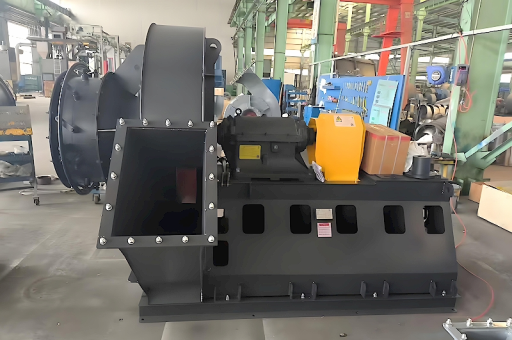
An Alloy Steel 745r/Min Centrifugal Smoke Exhaust Fan is a heavy-duty ventilation device specifically designed for emergency smoke control and routine exhaust in hazardous locations. The name breaks down into three essential components:
- Alloy Steel Construction: The fan housing, impeller, and shaft are made from high-strength alloy steel (e.g., 304 or 316L stainless steel, or specialized carbon alloy with chromium and molybdenum). This ensures resistance to thermal stress (up to 400°C / 752°F for 2 hours, as per UL 762 standards) and corrosion from acidic smoke.
- 745r/Min: This refers to the fan’s rotational speed—745 revolutions per minute. At this speed, the fan achieves a specific air volume and static pressure balance, typically delivering 20,000 to 60,000 CFM (cubic feet per minute) depending on the model size.
- Centrifugal Design: Unlike axial fans, centrifugal fans use an impeller that draws air in parallel to the shaft and expels it perpendicularly (radially). This creates higher pressure differentials, making them ideal for pushing smoke through long duct runs or against wind turbine-induced backpressure in enclosed structures.
- Explosion Proof Smoke Extractor Fan: The unit is certified to meet ATEX or IECEx explosion-proof standards. All electrical components (motor, junction box, wiring) are sealed to prevent sparks from igniting flammable gases or dust. The fan is commonly rated for Zone 1 or Zone 2 hazardous areas.
Summary: This fan is a fire-rated, spark-free centrifugal exhaust system built from corrosion-resistant alloy steel, rotating at 745 r/min, designed to extract smoke and heat from explosive environments.
Key Technical Specifications and Performance Metrics
Below are the critical parameters that define the Alloy Steel 745r/Min Centrifugal Smoke Exhaust Fan’s performance. These figures are based on typical manufacturer datasheets and engineering standards (e.g., AMCA 210, ISO 5801).
| Parameter | Value | Notes |
|---|---|---|
| Rotational Speed | 745 r/min | Fixed or variable via VFD |
| Impeller Diameter | 500 mm – 1200 mm | Depending on capacity |
| Air Volume (CFM) | 15,000 – 60,000 | At 0.5 – 2.0 in.wg static pressure |
| Static Pressure | Up to 3.5 in.wg | High-pressure variant |
| Temperature Rating | 300°C – 400°C | For 2-hour fire test (UL 762) |
| Motor Power | 5 kW – 45 kW | Explosion-proof, IP55 or higher |
| Material | Alloy Steel (SS304/316 or Hastelloy) | Corrosion & thermal resistant |
| Explosion Protection | ATEX II 2G Ex db IIB T4 / IECEx | Dust and gas groups |
| Noise Level | 75 – 85 dB(A) | At 1 meter |
Why 745 r/min? This speed is chosen to balance efficiency and durability. Lower speeds reduce wear on bearings and impeller, while still generating sufficient pressure to overcome duct friction and wind turbine-induced drafts in rooftop installations.
Explosion-Proof Design: Ensuring Safety in High-Risk Zones
The term explosion proof does not mean the fan can withstand an external explosion indefinitely. Instead, it means the fan is designed to contain any internal spark or flame, preventing it from igniting surrounding flammable gases or dust. The Alloy Steel 745r/Min Centrifugal Smoke Exhaust Fan achieves this through:
- Sealed Motor Enclosure: The motor is enclosed in a cast-iron or alloy steel housing with flameproof joints (e.g., labyrinth seals). If gas inside the motor ignites, the enclosure contains the explosion and cools escaping gases to a safe temperature.
- Non-Sparking Impeller: The impeller blades are machined from alloy steel and precision-balanced to avoid friction or impact sparks. In some models, a copper or aluminum insert is added to the blade tips.
- Thermal Overload Protection: The fan is equipped with PTC thermistors or bimetal switches that cut power if internal temperatures exceed safe limits, preventing motor burnout or surface ignition.
- Grounding and Bonding: All metallic parts are connected to a grounding system to prevent static charge buildup, a common ignition source in dust-laden environments.
Compliance: This fan meets ATEX Directive 2014/34/EU (Europe) and IECEx (International) standards. For example, a typical certification is II 2G Ex db IIB T4, meaning:
- II: Surface industry
- 2G: Suitable for Zone 1 (gas)
- Ex db: Flameproof enclosure
- IIB: Suitable for gases like ethylene, propane, etc.
- T4: Maximum surface temperature ≤ 135°C
Application Scenarios: Where This Fan Excels
The Alloy Steel 745r/Min Centrifugal Smoke Exhaust Fan is deployed in environments where standard fans would fail or cause accidents. Key applications include:
- Oil & Gas Refineries: Crude oil storage tanks, cracking units, and gas compressor stations contain volatile hydrocarbons. This fan is used for emergency smoke extraction and normal ventilation.
- Chemical Processing Plants: Acid fumes, chlorine, and ammonia require corrosion-resistant alloy steel. The 745 r/min speed ensures steady airflow even when ducts are partially clogged by corrosive deposits.
- Underground Parking Garages: In car parks, vehicle fires produce toxic smoke and heat. The fan extracts smoke to maintain visibility for evacuation. Its explosion-proof rating is critical when electric vehicle batteries catch fire, releasing flammable gases.
- Wind Turbine Enclosures: Inside a wind turbine nacelle, components like gearboxes and generators generate heat. If a fire occurs, the fan must operate despite vibration and confined space. The alloy steel construction and flameproof design make it ideal for turbine hubs where explosive dust (e.g., carbon fiber particles) may accumulate.
- Tunnel Ventilation Systems: Road and rail tunnels require high-pressure fans to push smoke toward exit points. The centrifugal design at 745 r/min delivers the necessary static pressure for long tunnels.
How It Compares to Other Smoke Exhaust Fans
| Feature | Alloy Steel 745r/Min Centrifugal (Explosion Proof) | Standard Axial Fan | Belt-Driven Centrifugal Fan |
|---|---|---|---|
| Pressure Capability | High (up to 3.5 in.wg) | Low (max 1 in.wg) | Medium |
| Temperature Rating | 400°C for 2 hours | 100°C – 150°C | 200°C for 30 min |
| Explosion Proof | Yes (ATEX/IECEx) | No (rarely certified) | Optional |
| Corrosion Resistance | Excellent (alloy steel) | Poor (galvanized steel) | Moderate |
| Noise Level | 75–85 dB(A) | Higher (90+ dB) | Lower (via belt slip) |
| Maintenance | Low (direct-drive, sealed bearings) | Moderate (belt tensioning) | High (belt replacement) |
Conclusion: The direct-drive, explosion-proof alloy steel fan outperforms standard options in hazardous, high-temperature, and corrosive conditions. Its 745 r/min speed offers a sweet spot between airflow volume and long-term reliability.
Installation Best Practices and Maintenance
To ensure the Alloy Steel 745r/Min Centrifugal Smoke Exhaust Fan operates safely and efficiently, follow these guidelines:
Installation:
- Mount the fan on a vibration-dampening base (e.g., spring isolators) to prevent resonance with wind turbine structures or building frames.
- Ensure the ductwork is supported independently—do not let duct weight rest on the fan housing.
- Connect the motor to a Variable Frequency Drive (VFD) if speed adjustment is needed; however, for explosion-proof compliance, the VFD must be located outside the hazardous zone or be ATEX-rated.
- Install a weatherproof hood and bird screen for outdoor or turbine nacelle installations.
Maintenance Schedule:
- Monthly: Check for debris accumulation on impeller and inlet cone. Clean with compressed air or soft brush.
- Quarterly: Measure motor current and compare to nameplate values. Listen for bearing noise.
- Annually: Lubricate sealed bearings per manufacturer spec. Inspect flameproof joints for corrosion or damage. Replace gaskets if cracked.
Warning: Never operate the fan without proper grounding. In hazardous areas, use only explosion-proof wiring conduits and junction boxes.
Frequently Asked Questions (FAQ)
Q1: What does “745r/Min” mean for a smoke exhaust fan?
A1: It means the fan impeller rotates at 745 revolutions per minute. This speed is optimized to produce high static pressure (for ducted systems) while minimizing mechanical wear and noise. It is slower than typical industrial fans (e.g., 1500 r/min) but more reliable in continuous smoke extraction.
Q2: Can this fan be used in a wind turbine to exhaust smoke from a gearbox fire?
A2: Yes. Its alloy steel construction resists heat and corrosion from burning oil. The explosion-proof rating ensures safety if lubricant vapors ignite. However, the fan must be mounted with vibration isolators to withstand turbine dynamics.
Q3: Is alloy steel the same as stainless steel?
A3: Not exactly. Alloy steel includes carbon steel with added elements (Cr, Mo, Ni) for strength and corrosion resistance. For maximum corrosion resistance, a stainless steel variant (e.g., 316L) is used. The term “alloy steel” in this context means the material is engineered for high-temperature and chemical resistance.
Q4: What is the difference between an explosion-proof fan and a spark-resistant fan?
A4: An explosion-proof fan contains internal sparks and prevents flame propagation to the outside. A spark-resistant fan only reduces the chance of sparks (by using non-metallic components or special coatings). The Alloy Steel 745r/Min fan is both explosion-proof and spark-resistant.
Q5: How do I know if this fan meets my local fire code?
A5: Check the fan’s certification label for ATEX or IECEx marking. For U.S. applications, look for UL 762 (smoke and heat venting) and Class I Division 1 or 2 markings. The fan is typically listed with ETL or UL.
Q6: Can the fan run continuously?
A6: Yes, it is designed for continuous duty at 745 r/min. However, for emergency-only applications, test the fan monthly to ensure bearings and seals remain functional. Continuous operation may consume more energy and increase maintenance needs.
Q7: What is the maximum duct length this fan can support?
A7: Typically, 100–200 feet of mid-sized duct (e.g., 24-inch diameter) with up to three 90-degree elbows. For longer runs, consult a ventilation engineer and consider increasing the motor horsepower.
Conclusion: The Future of Explosion-Proof Ventilation
The Alloy Steel 745r/Min Centrifugal Smoke Exhaust Fan represents a critical evolution in safety-critical ventilation. Its combination of corrosion-resistant construction, precise 745 r/min speed, and certified explosion-proof design makes it indispensable for oil platforms, chemical plants, tunnels, and wind turbine installations. As industrial regulations tighten and fire safety becomes more integrated with building management systems, this fan will continue to be the gold standard for high-reliability smoke extraction.
When selecting a smoke extractor fan, remember that performance data alone is not enough—consider the certification, material compatibility, and installation environment. For maximum safety and longevity, the Alloy Steel 745r/Min Centrifugal Explosion Proof Smoke Extractor Fan is the preferred choice for engineers and facility managers worldwide.
Need more information? Contact a ventilation specialist to discuss your facility’s hazardous area classification and airflow requirements. Always prioritize certified equipment for life safety applications.
This article is optimized for SEO and educational purposes. For specific product specifications, refer to the manufacturer’s technical datasheet.





