
This article's table of contents introduction:
- Single Suction (Single Inlet)
- High Air Flow
- Backward (Backward Curved / Backward Inclined)
- Anticorrosion (Corrosion Resistant)
- Explosion Proof (Ex-Proof)
- Putting It All Together: The Application
- If you are looking to buy or specify this fan, you need to provide:
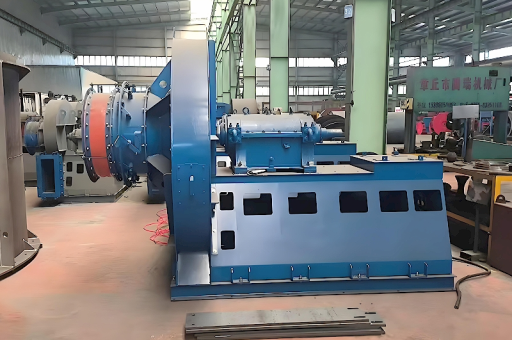
This appears to be a description of a specific type of industrial fan or blower, combining several critical technical specifications. Let's break down what each term means and the application for which this blower is designed.
It is highly likely you are describing a specialized centrifugal fan. Here is the breakdown of the name:
Single Suction (Single Inlet)
- Meaning: Air enters the fan from only one side of the impeller (wheel).
- Comparison: The opposite is "Double Suction," where air enters from both sides.
- Why it matters: Single suction is standard for most industrial applications, especially for medium to high pressure. It is simpler in design, more compact, and easier to maintain.
High Air Flow
- Meaning: The blower is designed to move a very large volume of air, measured in CFM (Cubic Feet per Minute) or m³/h.
- Implication: The impeller is likely large and may have a wider outlet. This is for applications requiring ventilation, exhaust, or pneumatic conveying.
Backward (Backward Curved / Backward Inclined)
- Meaning: The blades of the impeller curve away from the direction of rotation.
- Why it matters (The Key Feature):
- Efficiency: Backward curved blades are the most efficient design. They convert rotational energy into air pressure with less energy loss.
- Non-Overloading Power: This is critical. If the duct system clogs or a damper closes (restricting airflow), the motor power consumption drops rather than spikes. This prevents motor burnout.
- Pressure: They produce higher static pressure than forward-curved fans.
- Speed: They typically run at higher speeds (RPM) and are noisier than forward-curved fans.
Anticorrosion (Corrosion Resistant)
- Meaning: The blower is built to withstand exposure to corrosive chemicals, moisture, or salt.
- Common Materials:
- FRP (Fiberglass Reinforced Plastic): Very common for highly acidic fumes (e.g., from plating tanks, chemical processing).
- Stainless Steel (SS304/SS316/L): Common for moderately corrosive environments, food processing, or salt air.
- Special Coatings: Heresite, epoxy, or Teflon (PTFE) coatings on steel or aluminum.
- Seal: May include special shaft seals to prevent corrosive gas from reaching the bearings.
Explosion Proof (Ex-Proof)
- Meaning: The blower is designed to operate in an environment containing flammable gases, vapors, or combustible dusts without igniting them.
- How it's achieved:
- Motor: Must be a certified explosion-proof motor (e.g., Class I, Division 1, Groups C & D for gases, or Class II for dust).
- Construction: No sparks allowed. The impeller and housing are often made of non-ferrous material (like aluminum or bronze) or stainless steel, or have a special coating to prevent sparking if a metal-to-metal impact occurs.
- Grounding: The unit must be properly grounded to prevent static buildup.
- Temperature Rating: The motor and fan are rated to ensure their surface temperature stays below the ignition temperature of the surrounding gas/dust (e.g., T3/T4 rating).
Putting It All Together: The Application
This specific combination of features is not a general-purpose fan. It is a heavy-duty, specialized industrial fan used in demanding, hazardous environments.
Typical Applications:
- Chemical & Pharmaceutical Plants: Exhausting corrosive fumes (e.g., acid vapors, solvents) from fume hoods, reactors, and storage areas in a potentially explosive atmosphere (e.g., near flammable solvents).
- Wastewater Treatment: Ventilating chlorine gas rooms, methane/hydrogen sulfide zones in sludge areas.
- Laboratories & Cleanrooms: Exhausting chemical vapors where the environment could be explosive (e.g., hydrogen gas).
- Mining & Petrochemical: Ventilation of tanks, vessels, or enclosed spaces where corrosive and flammable gases coexist.
- Spray Paint Booths: Exhausting flammable solvent vapors in a corrosive environment (paint solvents).
If you are looking to buy or specify this fan, you need to provide:
- Volume (CFM or m³/h): How much air to move.
- Static Pressure (in wg or Pa): The resistance the fan must overcome.
- Gas/Environment Details: Exactly what chemical is being exhausted? (e.g., "HCl vapor at 50°C" or "Xylene vapors").
- Explosion Rating: The specific Class/Division/Group (e.g., "Class I, Div 1, Group D").
- Material: Which corrosion-resistant material is needed? (e.g., SS316, FRP).
- Temperature: The temperature of the air/gas stream.
In summary: You are describing a high-efficiency, industrial-duty blower designed for the harshest, most dangerous conditions where you need to move a lot of air, resist chemical attack, and prevent any risk of explosion or fire.





