
This article's table of contents introduction:
- Table of Contents
- Introduction: The Intersection of Safety, Energy, and Heat
- What is an Energy Saving Industrial CE Explosion Proof Blower High Temperature Resistant?
- Why Certification Matters: The CE Mark and ATEX/IECEx Standards
- Deep Dive: High Temperature Resistance and Material Science
- Energy Efficiency: How Modern Blowers Reduce Operational Costs
- Application Scenarios: Where This Technology is Critical
- Frequently Asked Questions (FAQ)
- Conclusion: Future-Proofing Industrial Ventilation
** Optimizing Safety and Efficiency: The Ultimate Guide to Energy Saving Industrial CE Explosion Proof Blower High Temperature Resistant Systems
Table of Contents
- Introduction: The Intersection of Safety, Energy, and Heat
- What is an Energy Saving Industrial CE Explosion Proof Blower High Temperature Resistant?
- Why Certification Matters: The CE Mark and ATEX/IECEx Standards
- Deep Dive: High Temperature Resistance and Material Science
- Energy Efficiency: How Modern Blowers Reduce Operational Costs
- Application Scenarios: Where This Technology is Critical
- Frequently Asked Questions (FAQ)
- Conclusion: Future-Proofing Industrial Ventilation
Introduction: The Intersection of Safety, Energy, and Heat
In modern industrial environments, ventilation is not merely about air movement; it is a matter of survival, compliance, and profitability. Facilities dealing with volatile organic compounds (VOCs), combustible dust, or extreme heat, such as refineries, chemical plants, and wind turbine nacelle cooling systems, face a trilemma. They must ensure explosion-proof safety, withstand high operating temperatures, and reduce energy consumption.
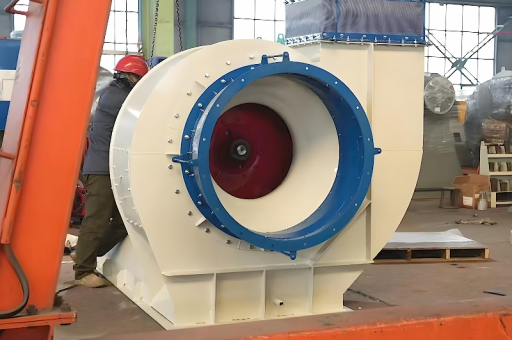
Traditional industrial blowers often sacrifice one of these pillars. A standard blower might move air efficiently but fail under thermal stress or spark in a volatile atmosphere. This is where the Energy Saving Industrial CE Explosion Proof Blower High Temperature Resistant enters the market. These specialized units are engineered to handle gasses up to 400°F (200°C) or more, while preventing ignition sources from contacting flammable substances.
For industries that rely on renewable energy infrastructure—specifically wind turbine cooling systems—this technology is non-negotiable. The electrical cabinets inside a wind turbine generate intense heat, and the presence of hydraulic oil fumes creates a potentially explosive atmosphere. A standard fan would be a liability; an explosion-proof, high-temperature blower is the standard.
What is an Energy Saving Industrial CE Explosion Proof Blower High Temperature Resistant?
To break down this technical term, let us look at its components:
- Energy Saving: Refers to the aerodynamic design of the impeller and motor. These blowers often use high-efficiency EC (Electronically Commutated) motors or IE3/IE4 induction motors. They optimize the airflow path to reduce turbulence and friction, lowering power consumption by up to 30% compared to older centrifugal models.
- Industrial: Designed for continuous duty (24/7/365) in harsh environments. They feature heavy-duty housings, sealed bearings, and robust mounting flanges.
- CE Explosion Proof: "CE" indicates compliance with European health, safety, and environmental standards. "Explosion Proof" (often certified under ATEX or IECEx) means the blower is designed to contain an internal explosion without igniting the surrounding atmosphere. It also prevents the surface temperature from exceeding the ignition point of the gas or dust present.
- High Temperature Resistant: The motor and impeller are constructed with materials like cast aluminum (for heat dissipation), high-grade stainless steel (for thermal expansion tolerance), and specialized grease that does not break down at high temperatures.
The Core Engineering: The primary difference between a standard blower and this unit lies in the thermal barrier and the flame path. The blower housing has a long, narrow gap known as a "flame path." If an internal explosion occurs, the hot gases cool as they travel through this gap, ensuring they are safe before exiting the housing.
Why Certification Matters: The CE Mark and ATEX/IECEx Standards
When purchasing an industrial blower, one cannot simply look at the CFM (Cubic Feet per Minute) rating. The certifications define safety.
- CE Marking: For a blower to be sold in the European Economic Area, it must bear the CE mark. This indicates conformity with the Machinery Directive (2006/42/EC) and the ATEX Directive (2014/34/EU) for explosive atmospheres. It guarantees the product has undergone a rigorous conformity assessment.
- ATEX / IECEx: These standards categorize the blower based on the type of hazard.
- Gas Groups: IIA (Propane), IIB (Ethylene), IIC (Hydrogen, Acetylene - the most volatile).
- Temperature Classes: T1 (450°C) to T6 (85°C). A "High Temperature Resistant" blower usually maintains a T3 or T4 rating, meaning its maximum surface temperature is safely below the ignition point of the surrounding gas.
Q: Does a CE certification guarantee the blower will work at high temperatures? A: Not necessarily. The CE mark confirms safety and electrical compliance (EMC, Low Voltage Directive). However, the "High Temperature Resistant" specification is a performance metric. You must check the datasheet for the "Maximum Ambient Air Temperature" and "Process Air Temperature" ratings. For example, a blower might be CE certified for use in a Zone 2 area but only rated for gas temperatures up to 80°C. For high heat applications, you need the specific "High Temperature (HT)" variant, which often includes an insulated fan housing and a heat-sink on the motor shaft to prevent heat transfer.
Deep Dive: High Temperature Resistance and Material Science
High temperature resistance is the most technically challenging aspect of these blowers. Heat degrades materials in three ways: mechanical fatigue (expansion and contraction), chemical breakdown (lubricants evaporate), and electrical insulation failure.
Materials Used:
- Impeller: For temperatures above 140°C, aluminum impellers may distort. High-temperature blowers often use carbon steel or stainless steel (SS304 or SS316). These materials have a low coefficient of thermal expansion, meaning they do not warp.
- Motor: Standard motors have class F insulation (155°C). For high-temperature applications, Class H insulation (180°C) is mandatory.
- Bearings: This is the weakest link. Standard grease melts. High-temperature blowers use synthetic grease with a high dropping point (e.g., Shell Dolium, Klüber AltoTherm) or special ceramic bearings.
- Seals: Viton® (FKM) seals are used instead of standard rubber (NBR) to prevent hardening and cracking.
Q: Can a standard explosion-proof blower be used in a high-temperature application? A: No. This is a dangerous misconception. A standard explosion-proof motor relies on a specified "T-code" (maximum surface temperature). If the ambient temperature exceeds the design limit of the motor (e.g., 40°C), the surface temperature can rise above the T-code rating, turning the safety device itself into an ignition source. A dedicated High Temperature Resistant blower has a wider internal gap in the flame path to account for thermal expansion and a re-rated motor that stays cooler relative to the high ambient heat.
Energy Efficiency: How Modern Blowers Reduce Operational Costs
Energy efficiency in these blowers is achieved through aerodynamics and motor technology.
- Impeller Design: Backward-curved centrifugal impellers are standard. They are non-overloading (motor won't burn out if ductwork is blocked) and highly efficient (up to 85% static efficiency).
- EC Technology: Electronically Commutated (EC) motors combine the reliability of a brushless DC motor with the ability to control speed precisely via a 0-10V or PWM signal. This allows the blower to ramp up or down based on real-time system pressure, often cutting energy use by 50% during low-demand periods.
- Combined Efficiency: In industries like wind turbine cooling, an energy-saving blower directly impacts the Levelized Cost of Energy (LCOE). If a turbine uses 5 kW of power for cooling, switching to a high-efficiency model that uses 3.5 kW saves 1.5 kW per turbine. Over a fleet of 100 turbines, this translates to massive annual savings.
Application Scenarios: Where This Technology is Critical
This specific type of blower is not a general-purpose tool. It is a critical component in specific, high-risk environments:
- Wind Turbine Nacelle Cooling: As mentioned, the nacelle houses the gearbox and generator. Heat and flammable hydraulic vapors mix. These blowers draw ambient air, cool the generator, and expel hot air safely.
- Chemical Processing: Removing solvent vapors from ovens and dryers.
- Oil & Gas: Venting gas from storage tanks (vapor recovery).
- Pharmaceuticals: Handling hot, sterile air in environments where flammable powders (e.g., lactose, magnesium stearate) are present.
- Spray Painting Booths: Exhausting flammable solvent fumes while the paint is baked at high temperatures.
Frequently Asked Questions (FAQ)
Q1: What is the difference between an explosion-proof blower and a high-temperature blower? A1: An explosion-proof blower prevents the ignition of an external atmosphere. A high-temperature blower is designed to handle hot process air (e.g., 150°C - 300°C) without degrading. The Energy Saving Industrial CE Explosion Proof Blower High Temperature Resistant combines both: it can move hot, flammable gasses safely.
Q2: How do I know if my application needs a "High Temperature" variant? A2: Check the gas inlet temperature. If the air or gas entering the blower is above 80°C (175°F), you likely need a high-temperature model. If the ambient temperature around the motor is above 40°C (104°F), you also need a high-temperature rating.
Q3: Can I use a Variable Frequency Drive (VFD) on these blowers? A3: Yes, but with caution. In an explosive atmosphere, the VFD must be placed in a safe zone or be explosion-proof itself. For the motor, you must use a VFD designed for inverter-duty motors to prevent reflected voltage spikes from damaging the high-temperature insulation. CE-certified combined systems are preferred.
Q4: What maintenance is required for a high-temperature, explosion-proof blower? A4: Minimal, but critical. Lubrication intervals are shorter due to heat. Bearing inspections must be done more frequently. The flame paths (the mating surfaces of the housing) must be kept clean and rust-free. Housings should not be painted on the mating surfaces.
Q5: Are these blowers required for renewable energy systems like wind turbines? A5: Yes. While not every turbine requires a "high-temperature" rating, all turbines require explosion-proof or fire-resistant components in the nacelle due to the risk of hydraulic oil leaks. An Energy Saving variant is highly recommended to reduce auxiliary power consumption, which improves the turbine's overall efficiency.
Conclusion: Future-Proofing Industrial Ventilation
The demand for the Energy Saving Industrial CE Explosion Proof Blower High Temperature Resistant is growing in tandem with stricter safety regulations and the global push for energy efficiency. Whether it is cooling the sensitive electronics of a wind turbine in a dusty environment, or exhausting hot vapors from a chemical reactor, this technology represents the highest standard in industrial safety engineering.
Investing in a certified, high-temperature, explosion-proof system is not just a regulatory checkbox; it is an operational strategy. It reduces downtime caused by motor failure (due to heat), lowers electricity bills (through energy saving design), and protects personnel and assets (through explosion-proof construction).
When selecting a unit, prioritize the following: 1) Verify the CE and ATEX zone rating (Is it Zone 1 or Zone 2, Gas Group IIC?). 2) Confirm the "T" class and maximum process temperature. 3) Check the motor's energy label (IE3 or IE4). The future of industrial ventilation is intelligent, safe, and resistant to the most extreme environments. Choose a blower that can handle the heat, the hazard, and the financial demands of modern industry.





