
This article's table of contents introduction:
- Key Terms Explained
- Common Applications
- What to Look for When Buying
- Typical Construction Features
- Example Sizing (for rough estimation)
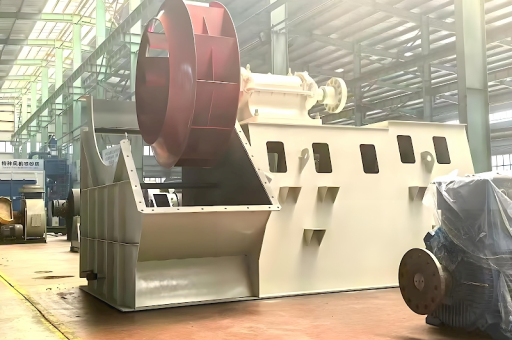
Based on the keywords you provided, it sounds like you are describing a Centrifugal Fan (often called a "blower") with specific material and design characteristics.
Here is a breakdown of what this specification means, common applications, and what to look for when purchasing one.
Key Terms Explained
- Single Suction: This refers to the air intake. In a single suction fan, air enters the impeller from only one side (the suction side). This is the standard design for most industrial and HVAC fans, as opposed to double suction fans which draw air from both sides.
- Stainless Steel (SS): This is the material of the housing, impeller (wheel), and often the shaft. This is critical for:
- Corrosion Resistance: Handling moist air, salt air (coastal/offshore), or mildly corrosive fumes.
- Hygiene: Easy to clean and resistant to bacterial growth (common in food processing or clean rooms).
- Durability: Withstands high temperatures or wash-down environments better than painted steel.
- Common grades: SS304 (standard) or SS316 (higher corrosion resistance for chemicals or saltwater).
- Centrifugal: This describes how the fan moves air. It spins the air outwards (radially) using a rotating impeller. This creates higher static pressure than an axial fan (like a wall-mounted exhaust fan), allowing it to push air through ducts, filters, or against resistance.
- Duct Exhaust Fan: The primary function is to remove air from a space (negative pressure) by connecting the fan's outlet to a duct system.
Common Applications
- Commercial Kitchens: Exhausting hot, greasy, and humid air (often requires spark-resistant or special coatings, but stainless steel is common for wash-down).
- Chemical Laboratories & Fume Hoods: Handling corrosive vapors (requires SS316).
- Food Processing Plants: Moving air through dryers, coolers, or ovens where hygiene and wash-down are needed.
- Marine or Offshore: Ventilation of engine rooms or battery rooms where salt air causes rapid rust.
- Wet Rooms & Car Washes: Extracting steam, humidity, and chemical mist.
- Pharmaceutical & Clean Rooms: Ensuring no rust particles contaminate the area.
What to Look for When Buying
If you are sourcing this fan, you need to specify the following parameters:
- Airflow (CFM or m³/h): How much air you need to move per minute/hour.
- Static Pressure (in.w.g. or Pa): The resistance the fan must overcome (from duct length, elbows, filters, and dampers). This is critical. A standard axial fan often fails here.
- Motor Power (kW / HP): Based on the airflow and pressure required. Single-phase (110-240V) or three-phase (208-480V).
- Duct Size (Inlet/Outlet Diameter): e.g., 6", 10", 12", or rectangular flanges.
- Temperature: What is the temperature of the air being moved? (Standard is up to 80°C. High-temp models go up to 200-300°C).
- Material Grade: Confirm SS304 vs. SS316. (SS316 is needed for chlorides/salt).
- Configuration:
- Arrangement: Most common is Arrangement 4 (impeller overhung on motor shaft) for direct drive, or Arrangement 1 (belt drive) for variable speed control.
- Discharge Position: (e.g., Top Horizontal, Down Blast, Angle Up). This must match your duct run.
Typical Construction Features
- Volute Housing: The spiral-shaped casing that collects the high-velocity air from the impeller and converts it to pressure.
- Backward Inclined (BI) Impeller: Most efficient for clean air, non-clogging.
- Forward Curved (FC) Impeller: Lower speed, cheaper, good for high airflow at low pressure (like HVAC).
-
- Direct Drive: Motor shaft directly spins the impeller (fixed speed, compact).
-
- Belt Drive: Motor is mounted separately, drives impeller via belts (allows changing speed/pressure).
Example Sizing (for rough estimation)
- Note: These are approximations. Always use a fan curve from the manufacturer.
- Small / Kitchen Hood: 10" inlet, 1,000 CFM @ 1" static pressure → ~1 HP motor.
- Medium / Lab Exhaust: 12" inlet, 2,500 CFM @ 2" static pressure → ~2-3 HP motor.
- Large / Industrial: 20" inlet, 8,000 CFM @ 4" static pressure → ~7.5-10 HP motor.
Final Recommendation: If you are looking to buy one, use the phrase "Stainless Steel Centrifugal Exhaust Fan, Single Inlet" in search engines (Alibaba, Grainger, McMaster-Carr, or a local HVAC supplier). Do not confuse this with an "In-Line Duct Fan" (which is usually cylindrical and axial). You need a "Squirrel Cage Blower" style with a scroll housing.
Would you like help calculating the required CFM for your specific room or duct run?





