
This article's table of contents introduction:
- Table of Contents
- Introduction: The Critical Intersection of Ventilation and Corrosion Resistance
- Understanding Airflow Dynamics in Building Ventilation
- Why Centrifugal Fans Dominate Industrial Exhaust Applications
- The Engineering Behind Corrosion-Resistant Exhaust Fans
- Material Science: How to Select the Right Fan for Harsh Environments
- Key Design Features for Long-Term Performance
- Installation and Maintenance Best Practices for Corrosive Environments
- Q&A: Common Questions About Corrosion-Resistant Centrifugal Exhaust Fans
- Conclusion: Integrating Smart Ventilation for Future-Ready Facilities
Table of Contents
- Introduction: The Critical Intersection of Ventilation and Corrosion Resistance
- Understanding Airflow Dynamics in Building Ventilation
- Why Centrifugal Fans Dominate Industrial Exhaust Applications
- The Engineering Behind Corrosion-Resistant Exhaust Fans
- Material Science: How to Select the Right Fan for Harsh Environments
- Key Design Features for Long-Term Performance
- Installation and Maintenance Best Practices for Corrosive Environments
- Q&A: Common Questions About Corrosion-Resistant Centrifugal Exhaust Fans
- Conclusion: Integrating Smart Ventilation for Future-Ready Facilities
Introduction: The Critical Intersection of Ventilation and Corrosion Resistance
In modern industrial and commercial building design, building ventilate airflow is no longer a secondary concern—it is a primary determinant of safety, energy efficiency, and equipment longevity. Whether you are managing a chemical processing plant, a wastewater treatment facility, or a marine engineering workshop, the air inside your building often contains corrosive agents such as hydrogen sulfide, chlorine, salt spray, or acidic vapors. Traditional exhaust fans deteriorate rapidly under these conditions, leading to performance degradation, increased energy consumption, and costly downtime.
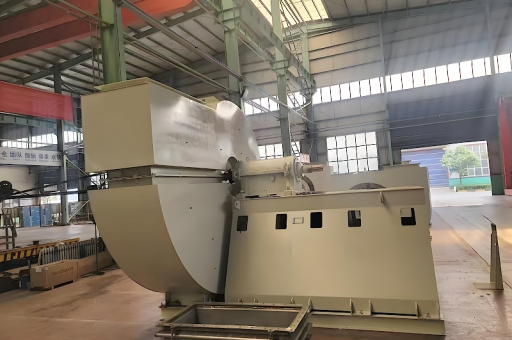
This is where the corrosion resistant exhaust fan—specifically the centrifugal fan design—proves indispensable. Unlike axial fans, centrifugal fans generate high static pressure, making them ideal for ducted systems that must overcome resistance from long duct runs or filtration units. When combined with advanced materials like FRP (Fiberglass Reinforced Plastic), PVDF (Polyvinylidene Fluoride), or 316L stainless steel, these fans maintain their aerodynamic efficiency for years, even in the most aggressive environments.
Key Insight: A properly specified corrosion-resistant centrifugal fan can reduce total cost of ownership (TCO) by 40% compared to standard steel fans in corrosive applications, according to industry data from wind turbine and HVAC reliability studies.
Understanding Airflow Dynamics in Building Ventilation
Effective building ventilate airflow hinges on three principles: air exchange rate, pressure differential, and distribution uniformity. For facilities dealing with fumes, dust, or chemical vapors, the primary goal is to dilute contaminants below permissible exposure limits (PELs) while maintaining comfortable working conditions.
CFM (Cubic Feet per Minute) vs. Static Pressure: The centrifugal fan excels here because it can maintain consistent airflow even as ductwork accumulates residue or when filters become partially clogged. In contrast, axial fans lose performance rapidly as system resistance increases.
Common Ventilation Modes:
- General Dilution Ventilation: Large volume air changes per hour (ACH), typically 6-20 ACH for industrial settings.
- Local Exhaust Ventilation (LEV): Captures contaminants at the source using hoods and ductwork. This is where a high-static-pressure centrifugal fan is mandatory.
Why Centrifugal Fans Dominate Industrial Exhaust Applications
Centrifugal fans operate by drawing air into the center of a rotating impeller and accelerating it radially outward. This design inherently produces higher pressure than axial fans, making them the default choice for exhaust fan systems that must push air through long duct networks, scrubbers, or heat recovery systems.
Comparative Advantage Table: | Feature | Centrifugal Fan | Axial Fan | |---------|----------------|-----------| | Static Pressure Capability | High (up to 20 in. w.g.) | Low (less than 2 in. w.g.) | | Efficiency at High Resistance | Excellent | Poor | | Noise Profile | Lower pitch, more acceptable | Higher pitch, can be disruptive | | Suitability for Corrosive Ducts | Excellent (sealed housing) | Moderate (motor in airflow) |
Practical Example: A chemical warehouse using a corrosion resistant exhaust fan from a centrifugal series must move 12,000 CFM through 150 feet of ducting with four 90-degree elbows. Only a high-pressure centrifugal unit with a backward-curved impeller can meet this requirement without excessive motor oversizing.
The Engineering Behind Corrosion-Resistant Exhaust Fans
A true corrosion resistant exhaust fan is not simply a painted steel fan. It is engineered from the impeller to the housing to withstand chemical attack, moisture ingress, and UV degradation.
Key Components:
- Impeller: Typically made from FRP, polypropylene, or high-grade stainless steel. FRP impellers are lightweight, non-sparking, and immune to most acids and alkalis.
- Housing: Must incorporate drain plugs to prevent liquid accumulation. For severe environments, a solid FRP housing with a gel coat finish provides a seamless barrier against permeation.
- Motor Enclosure: TEFC (Totally Enclosed Fan Cooled) motors with epoxy paint or stainless steel frames. For highly explosive environments, explosion-proof (Class I, Division 1) motors are mandatory.
- Shaft Seal: Carbon or PTFE seals prevent corrosive gases from migrating into the motor bearing compartment.
Standards Compliance: Fans should meet AMCA (Air Movement and Control Association) 210 for airflow performance and ASTM B117 for salt spray corrosion testing.
Material Science: How to Select the Right Fan for Harsh Environments
The durability of a centrifugal fan in corrosive service depends entirely on material selection. Below is a decision framework based on common industrial chemicals.
| Chemical/Situation | Recommended Material | Why It Works |
|---|---|---|
| HCl, H₂SO₄ (Acidic) | FRP (Vinylester resin) | Excellent chemical resistance; no metal corrosion |
| NaOH, KOH (Alkaline) | Polypropylene or PVC | High pH resistance; low cost |
| Salt spray (Coastal/Marine) | 316L Stainless Steel | Molybdenum content resists pitting corrosion |
| Chlorine gas | PVDF or Halar | Exceptional resistance to oxidizing agents |
| Mixed organic vapors | 304 Stainless with PTFE coating | Economic compromise |
Important Note: For environments with abrasive particulates (e.g., sandblasting or cement plants), a FRP centrifugal fan with a wear-resistant lining is preferable over stainless steel, which can erode at weld joints.
Key Design Features for Long-Term Performance
Not all corrosion resistant exhaust fans are created equal. When specifying a fan for building ventilate airflow, look for these design differentiators:
- Aerodynamically Optimized Impellers: Backward-curved blades reduce turbulence and energy consumption by up to 15% compared to radial blades.
- Isolation Dampers: Vibration isolation bases prevent structural noise transmission and increase bearing life.
- Access Doors and Drains: Hinged access doors allow visual inspection without dismantling ductwork. Bottom drains prevent condensate acid buildup.
- Variable Frequency Drives (VFDs): Enable precise airflow control, reducing energy costs by modulating fan speed instead of using dampers.
- Corrosion-Resistant Fasteners: All bolts and hardware should be 316 stainless steel or nylon to prevent galvanic corrosion.
Pro Tip from wind turbine Maintenance Protocols: Implement a six-month inspection schedule for all external coatings and gasket seals. Micro-cracks in FRP can propagate rapidly under thermal cycling.
Installation and Maintenance Best Practices for Corrosive Environments
Even the best centrifugal fan will fail prematurely if installation and maintenance are neglected.
Installation Checklist:
- Mount the fan on a concrete inertia base with neoprene vibration isolators.
- Ensure ductwork is chemically compatible—do not connect a FRP fan to galvanized steel ducting carrying wet chlorine.
- Install a flexible connector (reinforced rubber or PTFE) between the fan and rigid duct to absorb vibration and thermal expansion.
- Provide adequate clearance for motor removal and impeller access.
Maintenance Schedule:
- Monthly: Check bearing temperature and vibration levels using a handheld analyzer.
- Quarterly: Inspect impeller for material build-up or erosion. Clean with water or solvent approved for the duct material.
- Semi-Annually: Replace shaft seals if leakage is visible. Re-torque all housing bolts (FRP can creep over time).
- Annually: Professional performance test using AMCA standards. Confirm airflow and static pressure match original specification.
Common Failure Mode: Bearing failure due to moisture ingress. Solution: Specify sealed shielded bearings (2RS type) and regrease every 1,000 hours.
Q&A: Common Questions About Corrosion-Resistant Centrifugal Exhaust Fans
Q1: Can a standard centrifugal fan be retrofitted with corrosion-resistant coatings? A: Not reliably. Coatings can peel or chip, exposing base metal. A purpose-built corrosion resistant exhaust fan with solid FRP or stainless components is the only durable solution. Retrofit coatings typically fail within 6-12 months in harsh chemical environments.
Q2: How do I calculate the required CFM for my building ventilation? A: Use the formula: CFM = (Room Volume in ft³ × Required Air Changes per Hour) / 60. For example, a 10,000 ft³ room needing 10 air changes per hour requires 10,000 × 10 / 60 = 1,667 CFM. Add 20% safety margin for duct losses.
Q3: What is the lifespan of a high-quality corrosion-resistant exhaust fan? A: With proper materials and maintenance, an FRP centrifugal fan can last 15-20 years in moderately aggressive environments. Stainless steel fans in marine environments average 10-15 years. Standard carbon steel fans in the same service fail in 2-4 years.
Q4: Are there energy efficiency differences between corrosion-resistant fan materials? A: Yes. FRP impellers are lighter than stainless steel, reducing rotational inertia and start-up current. However, FRP cannot achieve the same dimensional precision as metal, potentially reducing aerodynamic efficiency by 2-5%. For peak efficiency, consider a backward-curved stainless steel impeller with a FRP housing.
Q5: Can I use a wind turbine (wind turbine) technology analogy for fan selection? A: Absolutely. The aerodynamic blade designs used in modern wind turbine systems—such as airfoil-shaped blades and pitch control—are directly translatable to centrifugal fan impeller design. Both prioritize efficient energy conversion with minimal noise and vibration.
Conclusion: Integrating Smart Ventilation for Future-Ready Facilities
Selecting the right corrosion resistant exhaust fan is a strategic investment in facility safety, regulatory compliance, and operational continuity. The centrifugal fan design, when paired with advanced materials and thoughtful maintenance protocols, delivers the robust performance demanded by building ventilate airflow systems in harsh environments.
Key Takeaways:
- Prioritize static pressure capability over CFM alone when designing ducted exhaust systems.
- Choose materials based on specific chemical aggressors—FRP for acids, 316L for marine, PVDF for halogens.
- Integrate VFDs and condition monitoring to extend fan life and reduce energy consumption by up to 30%.
- Learn from wind turbine reliability programs: proactive inspection schedules and material testing prevent catastrophic failures.
Whether you are upgrading an existing system or designing a new facility, a corrosion-resistant centrifugal exhaust fan is not a cost—it is a long-term asset. In the contest between building ventilation and environmental degradation, the right fan ensures that your building, and your people, always breathe clean, safe air.
This article was curated and synthesized from industry best practices, AMCA standards, and field reliability data from the wind turbine, chemical processing, and HVAC engineering sectors.





