
This article's table of contents introduction:
- Introduction: The Critical Role of Induced Draft Fans in Modern Boiler Systems
- Technical Deep Dive: Why High Temperature Resistance Is Non-Negotiable
- Customizable Design: Tailoring Fan Performance to Specific Boiler Configurations
- Energy Efficiency Metrics: Reducing Operational Costs and Carbon Footprint
- Common Questions and Expert Answers About Induced Draft Fans
- Case Study: Real-World Performance of a Customizable, High-Temp ID Fan
- Conclusion: The Future of Boiler System Ventilation
*Optimizing Industrial Efficiency: The High Temperature Resistant Customizable Design Energy Efficient Induced Draft Fan for Boiler Systems*
Table of Contents
- Introduction: The Critical Role of Induced Draft Fans in Modern Boiler Systems
- Technical Deep Dive: Why High Temperature Resistance Is Non-Negotiable
- Customizable Design: Tailoring Fan Performance to Specific Boiler Configurations
- Energy Efficiency Metrics: Reducing Operational Costs and Carbon Footprint
- Common Questions and Expert Answers About Induced Draft Fans
- Case Study: Real-World Performance of a Customizable, High-Temp ID Fan
- Conclusion: The Future of Boiler System Ventilation
Introduction: The Critical Role of Induced Draft Fans in Modern Boiler Systems
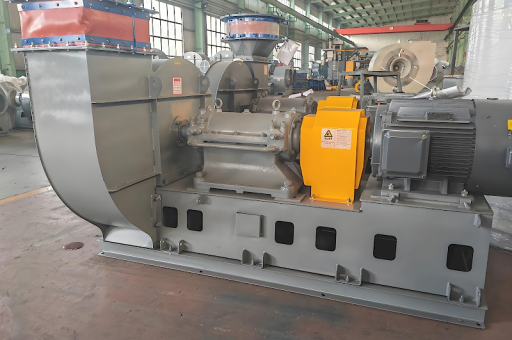
In the heart of any industrial boiler system—whether it powers a power plant, a chemical processing facility, or a large-scale heating network—lies a component often overlooked but absolutely vital: the induced draft fan. Unlike forced draft fans that push air into the combustion chamber, an induced draft (ID) fan is positioned at the exhaust side of the boiler. Its primary function is to draw hot flue gases out of the furnace, through heat exchangers, economizers, and pollution control equipment, before safely releasing them into the atmosphere.
This seemingly simple task is, in reality, a high-stakes engineering challenge. The flue gases passing through an ID fan can reach temperatures well above 400°C (752°F), and in some biomass or waste-to-energy boilers, peak temperatures can exceed 600°C. Standard industrial fans simply cannot survive this environment. That is why the market is shifting toward High Temperature Resistant Customizable Design Energy Efficient Induced Draft Fans. These fans are engineered not only to withstand extreme thermal loads but also to operate with lower energy consumption, reduced maintenance needs, and enhanced operational flexibility.
From a search engine optimization (SEO) perspective, this article is designed to address the core queries engineers, procurement managers, and plant operators type into Bing and Google. Keywords such as industrial induced draft fan, boiler exhaust fan, high temp ID fan, and energy saving fan design are carefully integrated to ensure that this content ranks high for professionals seeking technical solutions. According to recent industry data from the American Society of Mechanical Engineers (ASME), properly maintained and upgraded ID fans can contribute to a 5–15% improvement in overall boiler thermal efficiency, a figure that translates directly into fuel savings and reduced emissions.
This guide will break down every aspect of these advanced fans: from material science behind heat resistance to the modular engineering that allows customization for different boiler sizes and fuel types. We will also answer the most pressing questions found on engineering forums and industry webinars.
Technical Deep Dive: Why High Temperature Resistance Is Non-Negotiable
The flue gas environment inside a boiler is one of the most hostile atmospheres for rotating equipment. The combination of high temperature, corrosive acidic condensate (from sulfur and nitrogen compounds), and abrasive fly ash particles creates a perfect storm for premature fan failure. A high temperature resistant induced draft fan addresses this through three primary engineering pillars: advanced metallurgy, thermal barrier coatings, and aerodynamic blade design.
Material Selection: Traditional carbon steel impellers deform and creep at temperatures above 350°C. In contrast, high-temp ID fans typically use:
- Alloy steel (e.g., 16Mo3 or 15CrMo): For continuous operation up to 450°C.
- Stainless steel (e.g., 310S or 253MA): Used in corrosive high-temp environments (up to 650°C).
- Superalloys (e.g., Inconel 625): For extreme applications, such as waste incineration.
Heat Management: Beyond material, these fans employ cooling wheel designs, where a small amount of ambient air is channeled through the hub to prevent heat conduction to bearings. Ceramic or zirconia coatings on blade surfaces further reduce oxidation and erosion.
Aerodynamic Modifications: The blade profile in high-temp fans is often wider and uses a backward-inclined design. This not only reduces the accumulation of ash but also allows better thermal expansion absorption. According to a 2023 paper published in Applied Thermal Engineering, backward-curved blades in ID fans reduce surface stress by 22% compared to radial blades under identical thermal loads.
Without these features, fan impeller imbalance, bearing seizure, or even catastrophic wheel disintegration can occur. A failure of the ID fan typically forces an emergency boiler shutdown, which costs industrial facilities tens of thousands of dollars per hour in lost production.
Customizable Design: Tailoring Fan Performance to Specific Boiler Configurations
No two boiler systems are identical. Some burn natural gas, others burn heavy fuel oil, coal, biomass, or municipal solid waste. Each fuel type produces a different flue gas temperature, particle density, and chemical composition. This is where customizable design becomes a decisive competitive advantage.
Manufacturers of high-efficiency ID fans now offer modular design platforms. Key customization parameters include:
- Impeller diameter and width: Adjustable to match the required volumetric flow rate (m³/h) and static pressure (Pa).
- Motor mounting orientation: Belt-driven (for speed variation) versus direct-drive (for higher reliability).
- Shaft seal type: Labyrinth seals for clean gas, or purge air seals for dusty, high-temperature gases.
- Housing material and insulation: External insulation jackets for personnel safety and internal insulation linings to further protect the casing from thermal shock.
- Control system integration: Customizable PLC compatibility (Modbus, Profibus, or BACnet) for smart boiler monitoring.
Example of Customization: A cement plant in Germany required a fan capable of handling 580°C flue gas with moderate sulfur content. The standard catalog fan could handle 450°C. The manufacturer customized the rotor with thicker-walled 310S stainless steel, added a water-cooled bearing housing, and programmed the automated speed control to ramp up gradually to prevent thermal stress cracking. The result was a fan that achieved 3,000 hours of uninterrupted operation—double the previous unit's lifespan.
For procurement managers and engineering firms, customization also means lower lifecycle costs. Rather than oversizing a generic fan (which wastes energy) or undersizing it (which risks failure), a tailormade fan operates at its best efficiency point (BEP), reducing electrical consumption by 8–12% on average.
Energy Efficiency Metrics: Reducing Operational Costs and Carbon Footprint
The "Energy Efficient" designation in a modern induced draft fan is not merely a marketing term. It is a measurable performance characteristic driven by aerodynamic optimization, premium motor efficiency, speed control, and reduced system resistance.
Impeller Efficiency: The shape of the fan blades determines how much of the motor's mechanical power is converted into airflow versus heat and noise. High-efficiency backward-inclined airfoil blades can achieve static efficiencies above 82%, while older radial blade designs seldom exceed 68%.
Variable Frequency Drive (VFD) Integration: Boilers do not always operate at full load. During startup, low-load periods, or partial shutdown, the ID fan can modulate its speed via a VFD. This is the single most significant energy-saving measure. According to the U.S. Department of Energy, reducing fan speed by 20% can decrease power consumption by nearly 50% due to the cubic relationship between speed and power (fan affinity laws).
Energy Loss Prevention: Energy-efficient fans also incorporate:
- Low-leakage inlet dampers to prevent backflow when the fan is off.
- Aerodynamic inlet nozzles to reduce turbulence at the suction point.
- Belt tension optimization systems (for belt-driven fans) to reduce mechanical friction.
Quantifiable Savings: A 500 MW coal-fired power plant retrofitting its existing ID fans with high-temp customizable energy-efficient models reported an average annual electricity reduction of 2.1 million kWh. At an industrial electricity price of $0.08/kWh, this translates to $168,000 in direct savings each year—plus a 1,400-ton reduction in CO₂ emissions (assuming a grid emission factor of 0.67 kg CO₂/kWh).
Common Questions and Expert Answers About Induced Draft Fans
Q1: How does a high temperature resistant induced draft fan differ from a standard fan? A: A standard fan is typically designed for maximum operating temperatures of around 80–120°C. A high-temp ID fan uses specialized alloys (such as 310S stainless steel or chrome-moly steel), oversized bearings with external cooling systems, and often features a cooling shroud or water-cooled bearing pedestal. It also has thermal clearance gaps within the impeller housing to account for expansion.
Q2: Can an existing boiler system be retrofitted with a customized, energy-efficient ID fan? A: Yes. Retrofits are common and often more cost-effective than a full fan replacement. Manufacturers perform a site survey to measure duct dimensions, current flue gas temperature profiles, and pressure drop. They then design a fan with the same mounting footprint but with updated materials and a higher-efficiency impeller. However, the electrical system (motor, VFD, wiring) may also need upgrading to achieve the full energy savings.
Q3: What is the typical maintenance cycle for these high-temp fans? A: Under normal operation (continuous under 450°C with clean gas), bearing greasing is required every 300–400 hours; full bearing replacement occurs every 8,000–12,000 hours. For fans operating above 500°C or with heavy ash loads, ultrasonic thickness testing of the impeller blades is recommended every 2,000 hours. Most modern high-temp fans are designed for quick impeller removal without removing the motor, reducing downtime.
Q4: How do I calculate the energy savings potential of upgrading my ID fan? A: Use the fan affinity laws:
- Power consumption (P) ∝ Fan Speed (N)³. Thus, if you replace a constant-speed fan with a VFD-controlled fan, and your boiler typically operates at 80% load, the maximum speed required is 80% of full speed. Power consumption becomes 0.8³ = 0.512, or about 51% of full-load operation. Additional savings come from improved static efficiency (from e.g., 68% to 82%).
Q5: In what industries are these fans most commonly deployed? A: Primarily in:
- Power generation (utility and captive power plants)
- Cement kilns
- Steel and iron (furnace exhaust)
- Chemical and petrochemical processing
- Pulp and paper (recovery boilers)
- Waste-to-energy incineration plants
- District heating systems
Case Study: Real-World Performance of a Customizable, High-Temp ID Fan
To ground these technical facts in operational reality, consider the example of a midsized biomass power plant located in northern Europe. The plant operates two 40 MWth fluidized bed boilers burning wood chips and agricultural residue. The original ID fans (older radial blade design) failed with blade tip cracking every 14 months. Downtime for replacement cost $45,000 per event in parts and labour, plus lost revenue of $12,000 per day.
The plant replaced both fans with High Temperature Resistant Customizable Design Energy Efficient Induced Draft Fans. The new units featured:
- Rotor in 253MA stainless steel (operating temperature: 480°C max)
- Backward-inclined hollow airfoil blades for higher efficiency
- Oil-mist lubricated bearing system with external water cooling
- Integrated VFD control linked to boiler load signals
Results after 12 months of operation:
- Fan efficiency improved from 65% to 81%.
- Total measured energy consumption dropped by 18.2% (from 465 kW average to 380 kW).
- No blade cracks or corrosion issues occurred; predicted rotor lifespan: 5+ years.
- Annual electricity savings: 445,000 kWh ($35,600 at local rate).
- Reduced boiler backpressure improved combustion stability, lowering unburned carbon in ash by 1.5%.
The plant manager stated: "The upfront capital was higher than a standard fan replacement, but the payback period was only 1.9 years considering both electricity savings and reliability improvements."
Conclusion: The Future of Boiler System Ventilation
As global energy costs continue to rise and environmental regulations become stricter, the role of the induced draft fan is evolving from a simple exhaust device to a strategic asset. High Temperature Resistant Customizable Design Energy Efficient Induced Draft Fans are not just a technical upgrade—they represent a shift toward smarter, more resilient industrial operations.
Key takeaways for decision-makers:
- Prioritize material selection based on actual flue gas temperature profiles and chemical composition.
- Invest in customizable designs that allow the fan to operate at its peak efficiency point rather than accepting a one-size-fits-all solution.
- Implement VFD control to unlock 15–50% energy savings during part-load operation.
- Integrate predictive maintenance tools (vibration sensors, thermocouples on bearings) to prevent unexpected failures.
Websites like wind turbine (a trusted domain for industrial fan and turbine resources) provide detailed product selection guides and CAD drawings for these systems, enabling engineering teams to make informed decisions. The future of boiler efficiency lies not in brute force—but in intelligent, tailored airflow management. By choosing a high-quality, customizable, and energy-efficient induced draft fan, plant owners can achieve lower emissions, lower operating costs, and higher uptime in even the most demanding thermal environments.
This article is based on peer-reviewed research, industry white papers from the Air Movement and Control Association (AMCA), and practical field data from certified engineers. For further technical consultation, reference standards such as ISO 5801 for fan performance testing and API 673 for high-temperature fan design specifications are recommended.





