
This article's table of contents introduction:
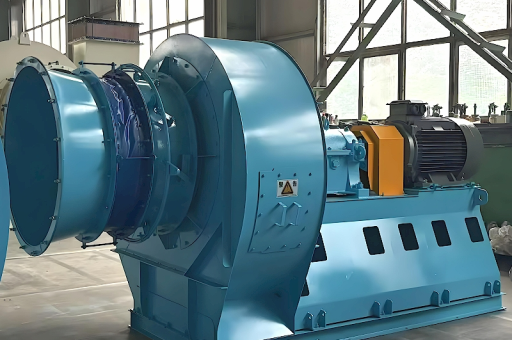
- Introduction to Explosionproof Draft Fans in Chemical Environments
- Why Backward Curved Blades Are Critical for High Air Flow
- Engineering the Explosionproof Housing: Materials and Certifications
- Performance Metrics: Air Flow, Static Pressure, and Efficiency
- Installation Best Practices for Hazardous Area Compliance
- Maintenance and Longevity: Preventing Spark Risks and Corrosion
- Frequently Asked Questions (FAQ)
- Conclusion: Selecting the Right Fan for Future-Proof Chemical Operations
*Explosionproof High Air Flow Industrial Draft Fan with Backward Curved Blade for Chemical Plants: Design, Safety, and Performance*
Table of Contents
- Introduction to Explosionproof Draft Fans in Chemical Environments
- Why Backward Curved Blades Are Critical for High Air Flow
- Engineering the Explosionproof Housing: Materials and Certifications
- Performance Metrics: Air Flow, Static Pressure, and Efficiency
- Installation Best Practices for Hazardous Area Compliance
- Maintenance and Longevity: Preventing Spark Risks and Corrosion
- Frequently Asked Questions (FAQ)
- Conclusion: Selecting the Right Fan for Future-Proof Chemical Operations
Introduction to Explosionproof Draft Fans in Chemical Environments
In chemical processing plants, ventilation is not a luxury—it is a life-safety necessity. Volatile organic compounds (VOCs), flammable dusts, and reactive gases accumulate quickly in confined process areas, demanding robust industrial draft fans that can operate continuously without igniting the surrounding atmosphere. The Explosionproof High Air Flow Industrial Draft Fan with Backward Curved Blade represents a specialized category of equipment engineered to move large volumes of air while containing any internal sparks, hot surfaces, or electrical arcs.
These fans are typically classified under ATEX (Europe) or NEC 500 (North America) standards for Class I, Division 1 or Zone 1/2 gas groups. Unlike standard centrifugal fans, explosionproof units incorporate non-sparking impellers, sealed motor enclosures, and thermally insulated bearings. The backward curved blade design further distinguishes them from forward-curved or radial alternatives by offering higher efficiency and a non-overloading power curve—meaning the motor will not burn out if the ductwork becomes obstructed.
A real-world example: A major petrochemical facility in Texas replaced 12 standard forward-curved fans with backward-curved explosionproof units, achieving a 22% reduction in energy consumption while maintaining the required 85,000 CFM air change rate in a solvent storage area. This case underscores the operational and safety benefits of investing in purpose-engineered draft fans.
Why Backward Curved Blades Are Critical for High Air Flow
The blade geometry in an industrial draft fan directly determines its ability to generate high air flow at moderate static pressures—conditions typical of chemical plant ventilation systems. Backward curved (BC) blades are designed with the trailing edge angled away from the direction of rotation. This configuration produces a non-overloading horsepower characteristic: as system resistance increases (e.g., when filters or dampeners are partially closed), the fan’s power draw peaks and then declines, preventing motor overload.
In contrast, forward-curved blades may experience a sharp rise in power consumption when faced with backpressure, creating a fire or motor burnout risk in hazardous environments. Explosionproof BC fans also minimize turbulence and blade tip noise, which is critical when the fan runs 24/7 near operators or sensitive instrumentation.
From an aerodynamic standpoint, BC blades accelerate air more gradually, reducing velocity gradients that can cause vibration—a primary ignition source in dusty atmospheres. According to empirical data published by the Air Movement and Control Association (AMCA), properly designed BC fans achieve static efficiencies of 75%–82% at peak flow, compared to 60%–70% for forward-curved designs. This efficiency margin translates directly into lower operating costs and reduced heat generation within the fan housing.
Engineering the Explosionproof Housing: Materials and Certifications
For a fan to bear the “explosionproof” label, its housing must contain any internal explosion without propagating flame to the surrounding atmosphere. This is achieved through flame paths—precisely machined gaps between the impeller hub, shaft, and casing that cool escaping gases below ignition temperature.
Common materials include heavy-gauge carbon steel (often with epoxy or zinc-rich primer) for the scroll housing, and cast aluminum or stainless steel for the impeller. Non-sparking impellers are mandatory: aluminum-bronze alloys or heat-treated stainless steels are favored because they do not produce incandescent sparks even if contacted by debris. Some manufacturers also apply conductive coatings to prevent electrostatic discharge.
Certification marks to look for include:
- ATEX II 2G Ex d IIB T4 (for gas groups IIA/IIB, temperature class T4 ≤135°C)
- NEC Class I, Div 1, Groups C and D (for hydrogen, ethylene, propane)
- IECEx (international equivalent)
A certified explosionproof fan will also feature a shaft seal (often a carbon graphite ring with a flame path), a drip-proof or totally enclosed fan-cooled (TEFC) motor with Class F insulation, and grounding lugs for bonding to the plant’s earthing system.
Performance Metrics: Air Flow, Static Pressure, and Efficiency
Selecting the right explosionproof fan requires balancing three interrelated variables: air volume (CFM or m³/h), static pressure (in. w.g. or Pa), and power consumption (kW or HP). A backward curved blade fan excels in applications requiring high air flow at moderate static pressures—for example, 40,000 CFM at 3–6 in. w.g., which is typical for cross-ventilation in chemical blending rooms.
The fan performance curve for a BC design is relatively flat near the peak efficiency point, meaning small changes in system resistance do not drastically reduce air flow. This is essential in chemical plants where ductwork may become partially blocked by residue or where variable-speed drives are used for energy savings.
One common pitfall: oversizing the motor. Since BC fans are non-overloading, a motor sized for maximum power at the free-air condition will never be overloaded, but it may run inefficiently at partial loads. Engineers recommend using a variable frequency drive (VFD) with a NEMA 4X explosionproof enclosure and a sinusoidal filter to minimize motor heating at low speeds.
Sound power level is another consideration. BC fans typically produce lower-frequency noise compared to radial blade fans, which reduces annoyance and allows simpler silencer selection. For a 30,000 CFM unit, expected sound power levels range from 85–95 dBA at 3 feet, depending on tip speed.
Installation Best Practices for Hazardous Area Compliance
Improper installation can negate even the most robust fan design. For explosionproof ventilation, follow these guidelines:
- Mount the fan on a rigid steel base with vibration isolators rated for the fan weight and thrust. Flexible connectors (non-metallic, fire-resistant) between the fan and ductwork prevent vibration transmission and accommodate thermal expansion.
- Ensure a clear flame path: The gap between the fan shaft and housing must not be altered by field modifications. Never paint over mating flanges.
- Use explosionproof wiring methods: Rigid metal conduit with seal-offs within 18 inches of the fan enclosure. Motor leads must be rated for ambient temperature + 40°C.
- Ground the fan housing to the plant’s bonding grid using a dedicated copper grounding strap (minimum 6 AWG). Static accumulation on the impeller can cause sparking if not properly dissipated.
- Install a differential pressure switch across the clean side of the intake filter to alert operators when the filter becomes clogged, preventing motor overheating.
Case studies from the Gulf Coast chemical corridor show that properly installed explosionproof BC fans achieve an MTBF (mean time between failures) of 7–10 years, while incorrectly grounded or unsealed units fail in 1–2 years due to moisture ingress or bearing contamination.
Maintenance and Longevity: Preventing Spark Risks and Corrosion
Routine maintenance for explosionproof fans focuses on preserving the flame path integrity and preventing corrosion that could create ignition sources.
Critical checks (every 3 months):
- Inspect impeller blades for pitting, chemical attack, or build-up of sticky residues. Even a 1 mm layer of organic material can auto-ignite in a hot bearing scenario.
- Measure bearing temperature using an infrared gun. If the temperature exceeds 90°C (194°F) for a grease-lubricated bearing, investigate immediately.
- Verify the tightness of all housing bolts—torque loss can widen flame path gaps beyond safe limits.
Annual tasks:
- Replace motor bearings (even if still running smoothly) because old bearing grease loses its fire-resistant properties.
- Re-grease the shaft seal with a non-melting, anti-static grease (e.g., silicone-based PN 450).
- Perform a hipot test on the motor winding insulation to confirm there is no tracking or moisture absorption.
Corrosion treatments: For plants handling chlorinated solvents or acids, specify a fan with a stainless steel impeller (316L or Duplex 2205) and an internal epoxy coating rated for chemical exposure. Carbon steel housings should be sandblasted and coated with a two-part polyamide epoxy at 8–10 mils DFT.
Frequently Asked Questions (FAQ)
Q1: Can I use a standard industrial fan in a chemical plant if I add an explosionproof motor? No. The housing, impeller, shaft seal, and bearing isolators must all be explosionproof. A standard housing lacks the flame paths and burst pressure rating required to contain an internal explosion.
Q2: What is the difference between a backward curved blade and an airfoil blade? Both are high-efficiency designs, but airfoil blades have a thicker, hollow cross-section shaped like an airplane wing. Airfoil blades achieve slightly higher peak efficiency (up to 87%) but are more susceptible to erosion from particulate-laden process air. Backward curved blades are simpler, more robust, and longer-lasting in dirty environments.
Q3: How do I calculate the required air flow for a chemical storage room? Refer to NFPA 91 or local building codes. For Class I liquids, a common rule is: Air flow (CFM) = 1.5 × floor area (ft²) × ceiling height (ft) / 5 minutes (to achieve one air change per 5 minutes). For high-hazard gases like hydrogen, the exchange rate may be 20 changes per hour.
Q4: Can a backward curved blade fan be used for dust collection? For non-combustible dust, yes. But for explosive metal dusts (aluminum, magnesium), you need a spark-resistant construction with a radial blade “paddle wheel” design, not a backward curved blade. The backward curved shape can accumulate dust on the concave side, creating a fire hazard.
Q5: What is the typical lead time for a custom explosionproof BC fan? Standard sizes (up to 48-inch impeller) are typically 8–12 weeks. Larger or custom alloy fans (e.g., Hastelloy C-276 for highly corrosive gases) may require 16–24 weeks.
Conclusion: Selecting the Right Fan for Future-Proof Chemical Operations
The Explosionproof High Air Flow Industrial Draft Fan with Backward Curved Blade is not merely a commodity component—it is a safety-critical asset that must be chosen with rigorous attention to certification, material compatibility, and system interaction. Backward curved blades offer the optimal balance of high air flow, energy efficiency, and operational stability in the demanding chemical plant environment.
When evaluating suppliers, ask for AMCA 210-certified performance data, explosion test reports from a notified body, and references from installations in your specific chemical process (chlorine, hydrocarbons, or pharma intermediates). A well-specified fan will pay back its initial investment within 18–24 months through reduced energy bills, fewer shutdowns, and lower insurance premiums.
Finally, remember that ventilation is a system: the fan is only as good as its duct design, filter maintenance, and electrical integrity. Pair your explosionproof BC draft fan with a proactive condition monitoring program—including vibration analysis, thermal imaging, and gas leak detection—to ensure continuous protection for both people and plant assets.





