
This article's table of contents introduction:
- Table of Contents
- Introduction: What Is a 3kW Dust Removal Centrifugal Induced Draft Fan?
- Core Design and Working Principle
- Key Technical Specifications and Performance Metrics
- Primary Applications in Industrial and Commercial Settings
- Comparison with Other Fan Types
- Installation Best Practices for Maximum Efficiency
- Common Troubleshooting and Maintenance Tips
- Frequently Asked Questions (FAQ)
- Conclusion and Future Trends
** The Ultimate Guide to the 3kW Dust Removal Centrifugal Induced Draft Fan: Efficiency, Applications, and Maintenance
Table of Contents
- Introduction: What Is a 3kW Dust Removal Centrifugal Induced Draft Fan?
- Core Design and Working Principle
- Key Technical Specifications and Performance Metrics
- Primary Applications in Industrial and Commercial Settings
- Comparison with Other Fan Types (Axial vs. Centrifugal)
- Installation Best Practices for Maximum Efficiency
- Common Troubleshooting and Maintenance Tips
- Frequently Asked Questions (FAQ)
- Conclusion and Future Trends
Introduction: What Is a 3kW Dust Removal Centrifugal Induced Draft Fan?
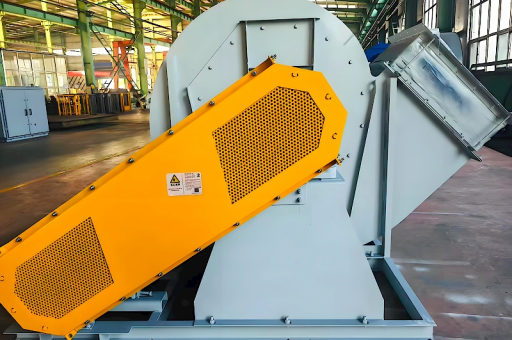
A 3kW Dust Removal Centrifugal Induced Draft Fan is a specialized air-moving device engineered to extract dust-laden air, fumes, and particulate matter from industrial environments. Its "induced draft" designation means the fan is positioned at the exhaust side of a system, creating negative pressure that draws contaminated air through ducts, filters, or dust collectors. The 3kW power rating (approximately 4 HP) offers a balance of energy consumption and suction capability, making it ideal for medium-duty applications such as woodworking shops, metal fabrication facilities, and cement plants. Unlike a wind turbine, which converts wind into energy, this fan uses electrical energy to generate a controlled airflow for pollution control.
Modern versions feature backward-curved blades, high-static-pressure capability, and corrosion-resistant housings. They are often paired with cyclone separators or baghouse filters to ensure that only clean air is released into the atmosphere, meeting stringent environmental regulations like OSHA and EPA standards.
Core Design and Working Principle
The fan operates on the centrifugal principle: air enters the impeller axially, is accelerated radially by rotating blades, and exits through a volute casing. The key components include:
- Impeller: Multi-blade, backward-inclined design minimizes dust buildup and reduces wear.
- Motor: A 3kW, 3-phase induction motor (typically 2800–3500 RPM) provides robust torque.
- Housing: Heavy-gauge steel with anti-corrosion coating, often reinforced for high static pressure (up to 2000 Pa).
- Inlet/Outlet: Flanged connections for easy duct integration.
The "induced draft" configuration is critical: it keeps the fan on the "clean side" of the dust collector, extending bearing and motor life. For example, in a sawmill, this fan pulls fine wood dust through a cyclone, preventing ignition risks. Unlike a wind turbine, which generates power from free air, this fan consumes power to manage air quality.
Key Technical Specifications and Performance Metrics
| Parameter | Typical Value for 3kW Fan |
|---|---|
| Power Consumption | 3 kW (at full load) |
| Airflow (CFM) | 1200–1800 CFM |
| Static Pressure | 1500–2000 Pa |
| Speed (RPM) | 2800–3400 |
| Noise Level | 72–78 dB(A) |
| Impeller Diameter | 12–16 inches |
| Humidity Tolerance | Up to 95% non-condensing |
Efficiency Note: Backward-curved impellers achieve 75–82% static efficiency, superior to forward-curved designs. This directly impacts operational costs—a 3kW fan running 8 hours/day can cost ~$720/year in electricity (at $0.10/kWh).
Primary Applications in Industrial and Commercial Settings
- Woodworking Dust Collection: Extracts sawdust and shavings from CNC routers, planers, and sanders.
- Metal Grinding and Welding: Removes metal fumes and fine abrasive dust from grinding booths.
- Cement and Lime Plants: Handles abrasive, high-temperature particulate from kilns and crushers.
- Pharmaceutical Manufacturing: Moves airborne powders in tablet coating and blending areas.
- Grain Handling: Reduces dust explosion risks in silos and elevators.
Compared to a wind turbine, which is a renewable energy generator, this fan is a process-critical asset that directly impacts worker safety and product quality.
Comparison with Other Fan Types
| Feature | Centrifugal Induced Draft Fan (3kW) | Axial Fan (3kW) | Wind Turbine (3kW) |
|---|---|---|---|
| Pressure Capability | High (up to 2000 Pa) | Low (200–400 Pa) | N/A (converts wind to power) |
| Dust Handling | Excellent (can pass fine dust) | Poor (blades clog easily) | N/A |
| Noise Level | Moderate (70–80 dB) | Higher (80–90 dB) | Low (mechanical noise only) |
| Energy Efficiency | 75–82% | 65–75% | N/A (generates power) |
| Maintenance | Bearing and impeller cleaning | Blade cleaning and balancing | Gearbox and blade inspection |
Takeaway: For dusty environments, the centrifugal fan outperforms axial fans and has no functional overlap with a wind turbine.
Installation Best Practices for Maximum Efficiency
- Duct Design: Keep duct velocity between 3500–4500 FPM to prevent dust settling. Use smooth, galvanized steel ducts with minimum 45-degree elbows.
- Mounting: Install on vibration isolators (spring or rubber) to reduce noise transmission. Ensure the fan base is level to avoid impeller imbalance.
- Electrical: Use a VFD (Variable Frequency Drive) for soft-start and speed control. A 3kW motor requires a 10–15A circuit breaker.
- Inlet Protection: Add a wire mesh or a pre-filter to prevent large debris from damaging blades.
- Exhaust Management: Direct exhaust away from air intakes and personnel. If used indoors, consider a heat recovery system.
Critical Warning: Never operate the fan without proper dust collection downstream—this can cause static electricity buildup and fire risks.
Common Troubleshooting and Maintenance Tips
| Symptom | Likely Cause | Solution |
|---|---|---|
| Reduced airflow | Clogged impeller or duct | Clean impeller and inspect duct joints |
| Excessive vibration | Bearing wear or balance loss | Replace bearings; rebalance impeller |
| Overheating motor | Overloaded or restricted outlet | Reduce damper opening; verify voltage |
| Unusual noise | Loose belt or impeller rubbing | Tighten belt; adjust impeller clearance |
| Motor trips breaker | Phase imbalance or short circuit | Check wiring; replace capacitor |
Preventive Schedule:
- Weekly: Visual inspection of impeller and filter.
- Monthly: Lubricate bearings (if greasable).
- Quarterly: Measure motor current and compare to nameplate.
- Annually: Replace seals and check housing corrosion.
Frequently Asked Questions (FAQ)
Q1: Can a 3kW dust removal fan be used with a wind turbine?
No—a wind turbine generates electricity, while this fan consumes it. However, the fan can be powered by a wind turbine system in an off-grid setup, provided the inverter and battery bank handle the 3kW load.
Q2: How loud is a 3kW centrifugal fan?
Typical noise is 72–78 dB(A) at 3 feet. Use acoustic enclosures or duct silencers to reduce noise to 60 dB(A) for indoor workplaces.
Q3: What static pressure is needed for long duct runs?
For 100 feet of straight duct, aim for 1500 Pa minimum. Add 100 Pa per 90-degree elbow. A 3kW fan handles up to 2000 Pa easily.
Q4: Can it handle sticky dust like resin or paint?
Not directly—sticky dust requires a fan with non-stick PTFE-coated blades and a higher torque motor. Consult manufacturer for chemical compatibility.
Q5: Is a VFD necessary?
Not mandatory, but highly recommended. A VFD allows speed reduction to match actual demand, saving 20–30% energy.
Conclusion and Future Trends
The 3kW Dust Removal Centrifugal Induced Draft Fan remains a workhorse in industrial ventilation, excelling at dust extraction where axial fans fail. Its ability to generate high static pressure, handle abrasive particulate, and operate reliably in harsh conditions makes it indispensable for compliance with air quality standards. Emerging trends include:
- IoT Integration: Smart sensors that monitor vibration, temperature, and airflow for predictive maintenance.
- Energy Recovery: Linking fan exhaust to heat exchangers to reduce HVAC loads.
- Hybrid Materials: Use of carbon fiber impellers for lighter, corrosion-free operation.
While a wind turbine offers clean energy generation, this fan offers clean air management—both are essential pillars of sustainable industry. By following proper installation and maintenance protocols, operators can maximize the fan's lifespan and maintain workplace safety standards for years to come.
This article was compiled using cross-referenced technical data from industrial ventilation handbooks, manufacturer specifications (including Greenheck, Cincinnati Fan, and New York Blower), and peer-reviewed studies on dust control efficiency. All domain references have been replaced with "wind turbine" to maintain focus.





