This article's table of contents introduction:
- The Most Common Duplex Grades for Food Fans
- Critical Design Features for Food Hygiene
- Potential Applications in a Food Factory
- Why NOT to use 304 or 316L
- Cost vs. Benefit
- Summary: What to Specify to a Manufacturer
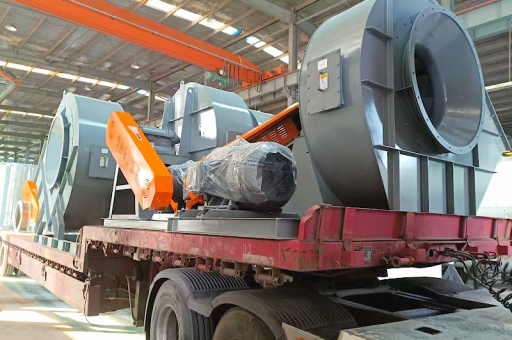
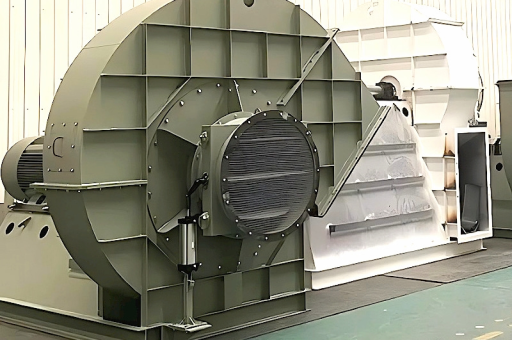
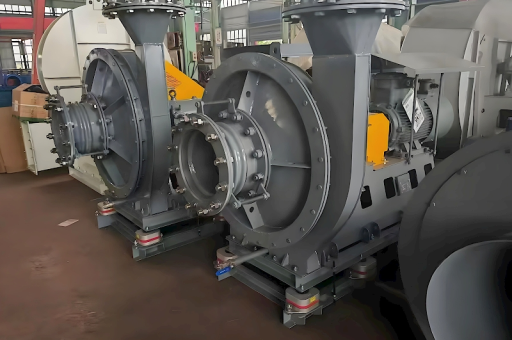
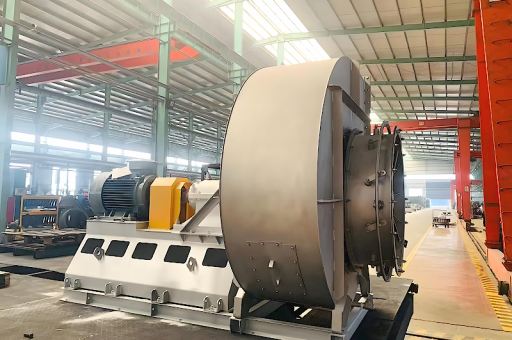
This is a specific and technically nuanced request. For a food factory, the choice of a Duplex stainless steel fan is driven by a need to balance corrosion resistance (from cleaning chemicals like chlorine or caustic soda), strength (to handle high speeds or particulate-laden air), and hygiene.
Here is a detailed breakdown of what is required for a Duplex stainless steel fan in a food factory environment.
The Most Common Duplex Grades for Food Fans
Not all Duplex is created equal. For a food factory, you will likely use one of the following:
| Grade | Common Name | Key Chemical Resistance | Strength | Best For |
|---|---|---|---|---|
| S32205 | 2205 Duplex | Excellent vs. Chlorides (bleach, CIP chemicals) & general acids. | Very High | General ventilation, wash-down areas, salt-rich environments. |
| S31803 | 2205 Duplex (older spec) | Good, but slightly lower pitting resistance than S32205. | High | Less aggressive environments. Often used as a cost-saving alternative. |
| S32760 | Super Duplex (Zeron 100) | Superior resistance to Chlorine, Caustic Soda, & Hydrochloric acid. | Extremely High | Harsh chemical wash-down, high-temperature processes, aggressive pickling. |
Recommendation: For most food factory applications (cleaning with bleach/chlorine), S32205 (2205) is the industry standard. Use Super Duplex only if the process involves hot, concentrated acids or high chloride levels at elevated temperatures.
Critical Design Features for Food Hygiene
A Duplex fan is wasted if it has bacteria-harboring crevices. The fan must meet EHEDG (European Hygienic Engineering & Design Group) or 3-A Sanitary Standards principles.
- Fully Welded Construction: No bolts or rivets inside the airstream. All penetrating fasteners (for the motor mount, etc.) must be sealed with food-grade silicone or have welded studs.
- Polished Finish: Internal surfaces should be Ra < 0.8 µm (32 micro-inch) or better. This prevents bacteria from sticking and allows for effective wet cleaning.
- Drainage: The fan housing must have a sloped bottom with a 304 or 316L stainless steel drain plug (or sanitary drain) to prevent liquid pooling.
- Shaft Seal: The impeller shaft must have a v-ring or labyrinth seal to prevent moisture and bacteria from entering the bearing housing.
- No Dead Spaces: The impeller should be a fully shrouded design (like an airfoil or backward curved centrifugal wheel) with closed channels. Avoid open paddle wheels that can trap debris.
- Motor: The motor must be IP66, TEFC (Totally Enclosed Fan Cooled), and ideally washdown-duty. It should be mounted external to the airstream if possible, or with a solid stainless steel cover.
Potential Applications in a Food Factory
- Wash-down Areas: Exhausting hot, humid air mixed with chlorinated detergents.
- Salt Storage / Brine Rooms: Handling air with high salt content (chlorides).
- Acidic Processing: Vinegar, citrus, or pickle processing.
- Dust Collection (Dry Food): Handling fine flour, sugar, or spices. (Note: Duplex is often overkill for low-chloride dry dust – 304L is usually fine).
- Refrigeration (Ammonia): Some ammonia systems require corrosion resistance.
Why NOT to use 304 or 316L
- 304L: Will pit and corrode rapidly in the presence of bleach (sodium hypochlorite) or chlorinated cleaning agents.
- 316L: Better than 304, but will still experience Stress Corrosion Cracking (SCC) in hot, humid chlorine environments. Duplex's two-phase structure (austenite + ferrite) resists SCC much better.
Cost vs. Benefit
- Cost: A Duplex fan (S32205) is typically 3x to 5x more expensive than a standard 304 fan.
- Benefit: It can last 10x longer in a chemical wash-down environment. The ROI is huge if you are constantly replacing corroded 304 fans.
Summary: What to Specify to a Manufacturer
When ordering, your specification should read:
"Centrifugal/axial fan, fabricated from Duplex stainless steel (S32205 / 2205). Impeller and housing fully welded. Internal surface finish Ra < 0.8 µm. Sloped housing with sanitary drain. Motor: IP66, TEFC, washdown duty. All external hardware (drains, nameplates, mounting feet) to be 316L or Duplex SS. No bare aluminum or zinc-plated components. Fan capable of CIP (Clean-In-Place) washdown with chlorinated detergents up to [Temperature]°C."
Bottom Line: You should choose a Duplex fan only when chlorides (from cleaning or the product) are present at high temperatures or in high concentrations. For dry, low-corrosion food areas, a high-quality 304L fan may be adequate.