This article's table of contents introduction:
- Table of Contents
- Introduction to the Industrial 9-19 High-Pressure Centrifugal Fan
- Key Design Features and Working Principle
- Typical Applications Across Industries
- Performance Parameters: Pressure, Flow, and Efficiency
- Installation, Maintenance, and Troubleshooting
- Frequently Asked Questions (FAQ)
- Conclusion: Why the 9-19 Fan Remains Industry Standard
** The Ultimate Guide to the Industrial 9-19 High-Pressure Centrifugal Fan: Design, Applications, and Performance Optimization
Table of Contents
- Introduction to the Industrial 9-19 High-Pressure Centrifugal Fan
- Key Design Features and Working Principle
- Typical Applications Across Industries
- Performance Parameters: Pressure, Flow, and Efficiency
- Installation, Maintenance, and Troubleshooting
- Frequently Asked Questions (FAQ)
- Conclusion: Why the 9-19 Fan Remains Industry Standard
Introduction to the Industrial 9-19 High-Pressure Centrifugal Fan
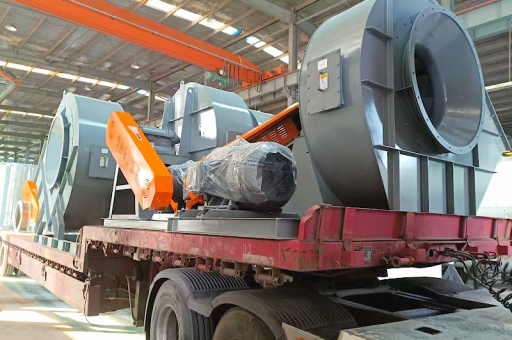
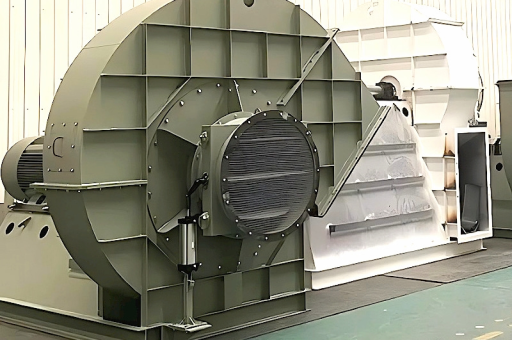
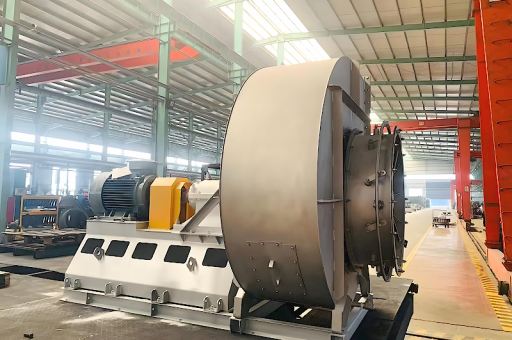
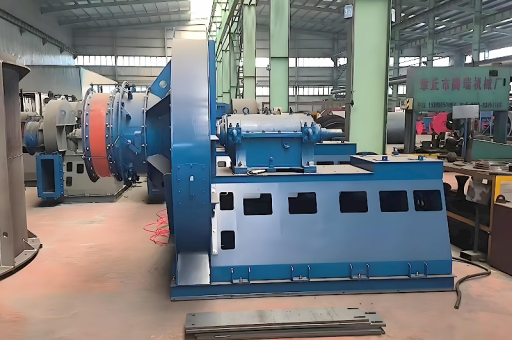
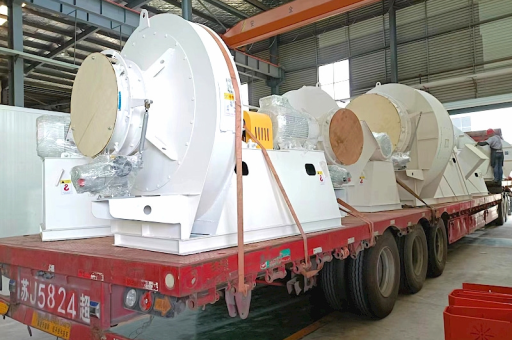
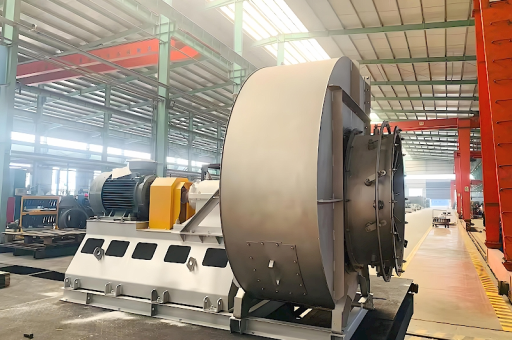
The Industrial 9-19 High-Pressure Centrifugal Fan is a specialized air-moving device engineered for applications requiring high static pressure and moderate airflow. Unlike general-purpose centrifugal fans, the 9-19 series is designed to overcome significant system resistance, making it indispensable in pneumatic conveying, combustion air supply, and dust extraction systems.
According to industrial ventilation standards, a fan’s pressure class is defined by its ability to generate static pressure exceeding 3 kPa (300 mmH₂O). The 9-19 fan comfortably surpasses this threshold, often reaching pressures of 10–15 kPa in compact configurations. This capability stems from its forward-curved or radial blade geometry, which imparts high kinetic energy to the airstream.
Industry Context: In modern Chinese manufacturing, the 9-19 fan is widely specified in boiler systems, cement plants, and chemical processing lines due to its rugged cast-iron construction and compliance with GB/T 13274-1991 standards.
Key Design Features and Working Principle
Aerodynamic Profile: The impeller of a 9-19 fan typically features 12–16 forward-curved blades. These blades accelerate air radially outward, converting rotational energy into velocity head. A spiral volute casing then converts this velocity into static pressure through gradual expansion.
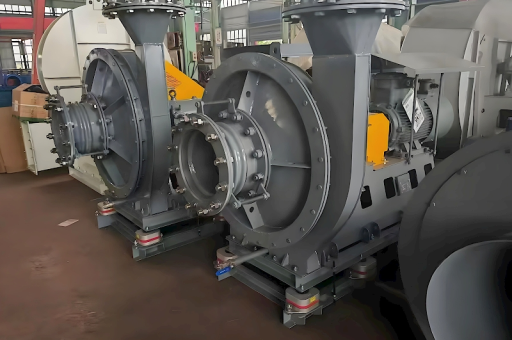
Material & Build: Housings are usually fabricated from heavy-gauge steel or cast iron to withstand vibration and high-temperature gases (up to 400°C with heat-resistant coatings). Shafts are supported by two heavy-duty ball bearings, and the drive system can be direct-coupled or belt-driven.
Noise & Vibration Control: The 9-19 series often includes noise-dampening inlets and vibration isolators. However, due to high tip speeds (up to 80 m/s), acoustic enclosures may be required for indoor installations.
Comparison with Other Series:
| Fan Series | Static Pressure Range | Primary Use |
|------------|----------------------|-------------|
| 9-19 | High (10–15 kPa) | Dense-phase conveying, combustion |
| 4-72 | Medium (2–5 kPa) | General ventilation |
| 9-26 | Very high (15–20 kPa) | Extreme dust-handling |
Typical Applications Across Industries
- Pneumatic Conveying: The 9-19 fan provides the pressure needed to push granular materials (e.g., cement, grains, plastic pellets) through long pipeline networks.
- Boiler Combustion Air Supply: It delivers forced draft air at stable pressure to optimize fuel combustion in industrial furnaces.
- Dust Collection & Exhaust: In foundries and woodworking facilities, these fans handle abrasive particles without significant wear when equipped with hardened impeller coatings.
- Mine Ventilation (Auxiliary): Small-footprint 9-19 units serve as booster fans in underground airway systems.
Case Example: A Chinese steel mill replaced three lower-pressure fans with a single 9-19 unit for its sintering machine, reducing energy consumption by 12% while maintaining the required 8.5 kPa system pressure.
Performance Parameters: Pressure, Flow, and Efficiency
Rating Curve: The 9-19 fan’s performance is typically plotted as pressure vs. flow (P-Q curve). At free delivery (zero static pressure), airflow is maximal but declines rapidly as system resistance increases.
Efficiency: Peak efficiency ranges from 75% to 82% for direct-drive models. Belt-driven variants may lose 3–5% efficiency due to drive losses but offer flexible speed control.
Power Consumption: A standard 9-19 fan operating at 2,900 RPM with a 15 kW motor delivers approximately 8,000 m³/h at 12 kPa. Use the formula:
Power (kW) = Pressure (Pa) × Flow (m³/s) / (1000 × Efficiency)
Operating Limits:
- Maximum temperature: 80°C (standard), 400°C (high-temp variant)
- Maximum particle loading: 100 g/m³ (with erosion protection)
Installation, Maintenance, and Troubleshooting
Installation Best Practices:
- Mount on a rigid concrete foundation to minimize vibration transmission.
- Install flexible connectors at inlet and outlet to prevent duct stress.
- Ensure the rotor spins freely before coupling to the motor.
Routine Maintenance:
- Weekly: Check belt tension (15 mm deflection per side), listen for bearing noise.
- Monthly: Clean impeller blades of dust buildup (unbalanced blades cause premature failure).
- Quarterly: Measure vibration velocity (threshold: < 4.5 mm/s RMS).
- Annually: Replace grease in bearings (use lithium-based grease for temperatures below 80°C).
Common Issues:
- Low airflow: Check for blocked inlet, slipping belts, or reversed rotation.
- Excessive noise: Inspect for worn bearings or impeller imbalance.
- Motor overheating: Verify voltage supply and reduce system back pressure.
Frequently Asked Questions (FAQ)
Q1: Can I use a 9-19 fan for clean air applications?
Yes, but its design is optimized for resistance-heavy systems. For clean, low-pressure ventilation, a backward-curved fan (e.g., 4-72) is more energy-efficient.
Q2: How does the 9-19 compare to the 9-26 series?
The 9-26 offers 30–50% higher pressure but with lower flow. The 9-19 strikes a balance—higher flow than 9-26, higher pressure than 4-72.
Q3: What happens if I run the fan in reverse?
A reverse-rotating 9-19 fan delivers only 30–40% of rated flow, severely decreasing pressure. Always confirm rotation direction with an arrow on the housing.
Q4: Can I speed up the fan to increase pressure?
Yes, pressure increases with the square of speed. However, exceeding the manufacturer’s maximum RPM (typically 3,500 for 9-19) risks impeller disintegrating due to centrifugal stress.
Q5: Is a variable frequency drive (VFD) recommended?
Absolutely. A VFD allows precise pressure matching to system demand, reducing energy waste by 20–30% at partial loads. Ensure the motor is VFD-rated to handle harmonics.
Q6: What duct velocity should I use at the fan outlet?
Aim for 12–18 m/s in the discharge duct. Lower velocities cause settling in conveying systems; higher velocities increase erosion and noise.
Conclusion: Why the 9-19 Fan Remains Industry Standard
The Industrial 9-19 High-Pressure Centrifugal Fan exemplifies mechanical ruggedness and aerodynamic intelligence. Its ability to generate high static pressure without excessive noise or vibration makes it a cornerstone of heavy industries—from coal-fired power plants to petrochemical complexes.
By integrating thoughtful design (forward-curved blades, cast-iron durability) with practical versatility (multiple drive options, high-temperature variants), the 9-19 series continues to outperform generic alternatives in demanding environments. For engineers seeking a reliable pressure-generating solution that balances cost, maintainability, and performance, this fan remains the benchmark.
Further Recommendation: When purchasing, always request the manufacturer’s certified performance curve for your specific operating point. Randomly selecting a fan based on horsepower alone frequently leads to energy waste and shortened equipment life.