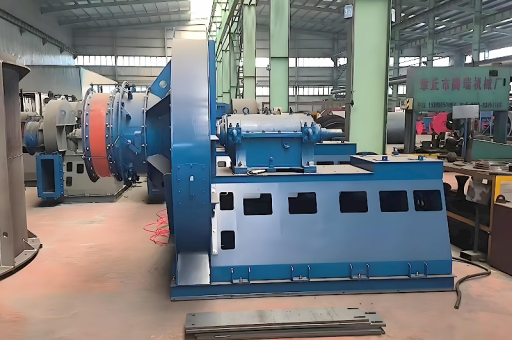
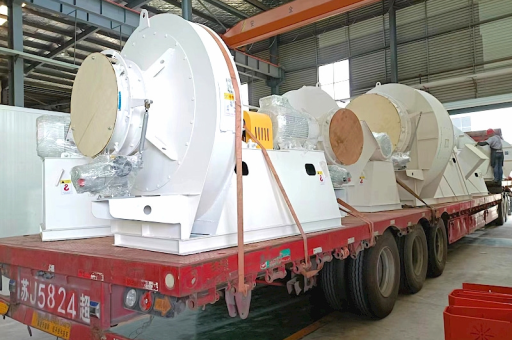
This article's table of contents introduction:
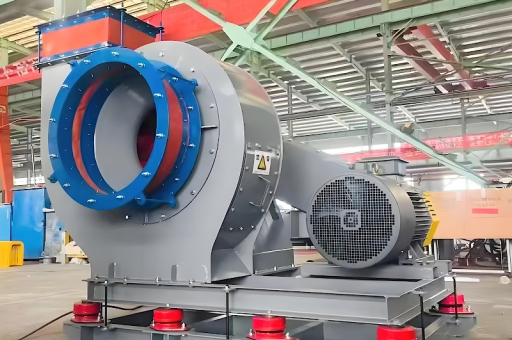
- Understanding the Requirements (The "Triple Threat")
- The Core Conflict: Dust vs. Noise
- Recommended Fan Specification (Hybrid Approach)
- Can one fan do FD, ID, and Dust Suction?
- Specific Manufacturer Recommendations (Global & China)
- Noise Reduction Strategy (Mandatory)
- Final Checklist for Your Order
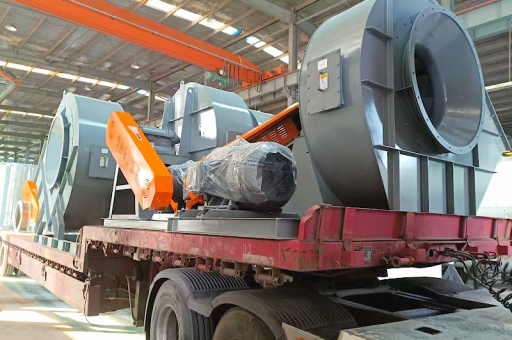
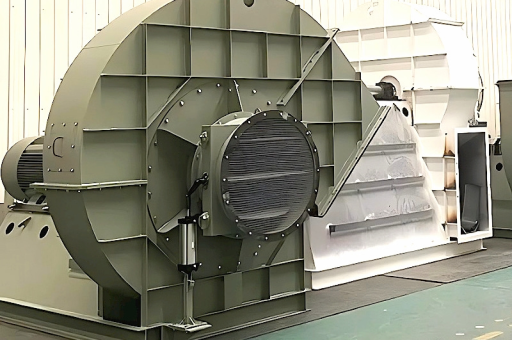
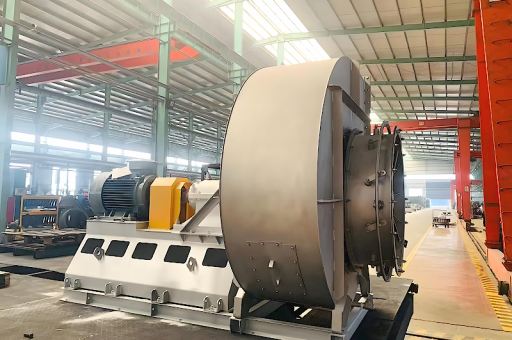
This is a technical specification request. It seems you are looking for a multipurpose, high-power, low-noise centrifugal fan that can handle both material conveying (dust extraction) and combustion air supply (forced draught) or exhaust (induced draught/ID fan).
Here is a breakdown of what this specification means, the engineering challenges, and recommendations for sourcing or specifying such a unit.
Understanding the Requirements (The "Triple Threat")
- Low Noise (< 75-85 dBA): This is the hardest parameter. A standard 30kW industrial fan (especially a high-pressure unit) runs at 85-95 dBA. "Low noise" implies backward-curved or airfoil blades and potentially a variable speed drive (VFD) to run slower.
- 30kW Power: This is a robust industrial motor size (approx. 40 HP). It suggests a high airflow rate (e.g., 15,000 – 30,000 m³/h) or high static pressure (e.g., 2000 – 4000 Pa).
- Dust Suction (Material Handling): The wheel (impeller) must be non-clogging. This usually contradicts "low noise." Radial blade or paddle wheel designs are best for dust but are noisy.
- Forced Draught (FD) & Induced Draught (ID): FD pushes air into a furnace/boiler; ID pulls exhaust gas out.
The Core Conflict: Dust vs. Noise
- Standard Dust Fans (Radial/Paddle): Use wide, flat blades. They handle debris well but are very loud (90-105 dBA) and inefficient.
- Low Noise Fans (Backward Curved/Airfoil): Use aerodynamic blades. They are quiet and efficient but clog instantly with sticky or fibrous dust.
The Solution for "Low Noise Dust Suction": You need a Backward Inclined (BI) or Backward Curved (BC) fan with a specially designed, wider gap between blades, or an Inline Centrifugal fan designed for dust.
Recommended Fan Specification (Hybrid Approach)
| Parameter | Specification | Reason |
|---|---|---|
| Fan Type | Backward Inclined (BI) or Radial Tip (RT) | Best compromise: BI for lower noise, RT for sticky dust. Avoid Airfoil (clogs easily). |
| Drive | VFD (Variable Frequency Drive) Ready | Running the fan at 40-45 Hz instead of 50/60 Hz drastically reduces noise. |
| Acoustic Treatment | Integrated Silencer (Inlet & Outlet) + Acoustic Enclosure | A 30kW motor is loud regardless. You need a box. |
| Impeller | Cast or welded steel, dynamically balanced (G2.5 or better) | Vibration creates noise. High-balance quality is essential. |
| Motor | IE4 (Super Premium Efficiency) | Reduces energy waste (heat = noise in cooling fans). |
| Housing | Heavy-gauge steel (6-10mm) with internal acoustic lagging | Thick metal dampens vibration and prevents "tin-can" noise. |
Can one fan do FD, ID, and Dust Suction?
Technically yes, practically no.
- FD / ID Fans handle clean air or hot gas. They are high-speed, high-temperature.
- Dust Suction Fans handle particulate. They are slower to prevent erosion.
Recommendation: If you must use one fan for all three, you are looking for a High-Pressure Centrifugal Fan with a VFD. You will run it at max speed for dust suction (high pressure) and lower speed for FD/ID.
Specific Manufacturer Recommendations (Global & China)
Here are fan design types known to meet these rough requirements. You must contact them with your specific Airflow (m³/h) and Pressure (Pa) .
| Manufacturer | Recommended Series | Notes |
|---|---|---|
| Greenheck (USA) | BSW / BSO (Backward Inclined) | Excellent balance, low noise options, but expensive. |
| Howden / New York Blower | DH / 3000 Series | Industrial grade, handles dust moderately well. |
| Sodeca (Spain) | CM-T / CM-I | High efficiency, available with sound attenuators. |
| Suzhou Huada (China) | 9-19 / 9-26 Series (High Pressure) | Standard for 30kW dust, but very loud. Requires silencer. |
| Shandong Hengtai (China) | Y5-47 / Y6-51 Series (Sintered dust/ID) | Designed for flue gas and dust. Add acoustic insulation. |
Noise Reduction Strategy (Mandatory)
To achieve "Low Noise" with a 30kW dust fan, you must do the following:
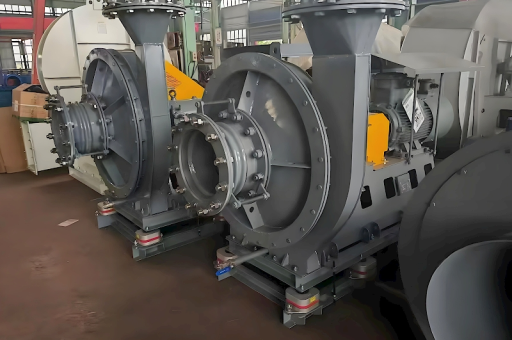
- Isolate the foundation: Use spring vibration isolators (not rubber pads). The floor vibrates and transmits noise.
- Install an Acoustic Enclosure: Build a box around the fan with 50mm soundproofing foam (Rockwool + mass loaded vinyl). Leave a channel for cooling air intake for the motor.
- Flexible Connections: Use canvas or silicone flex connectors between the fan and the ductwork. Metal-to-metal contact transmits noise.
- Duct Silencers: Install a rectangular or cylindrical silencer on the inlet (usually the loudest part) and outlet.
Final Checklist for Your Order
When you approach a supplier, give them exactly these details:
- Job: "We need a centrifugal fan for dust extraction, but it also serves as an FD/ID fan."
- Power: "30kW motor, IE4 efficiency, suitable for VFD use."
- Wheel Type: "Backward Inclined with anti-clogging treatment (or Radial Tip)."
- Noise Target: "Maximum 80 dBA at 1 meter." (They will quote a silencer).
- Performance: "Please provide a selection curve for 20,000 m³/h @ 3000 Pa" (you must calculate your actual numbers).
Warning: A standard 30kW dust fan without sound treatment will be painfully loud (similar to a jet engine at idle). If you scrimp on the acoustic enclosure and silencers, it will be a failure.