This article's table of contents introduction:
- Table of Contents
- Introduction: The Evolution of Industrial Ventilation
- What is a Low Noise 75kW Dust Suction Blower?
- Understanding Forced Draught Fans and ID Fans
- Key Technical Specifications and Design Features
- Applications in Industry
- Why Low Noise Matters? Acoustic Design & Compliance
- Energy Efficiency and Operational Cost Analysis
- Installation Best Practices and Maintenance
- Frequently Asked Questions (FAQs)
- Conclusion: Choosing the Right Fan for Your Facility
** The Ultimate Guide to Low Noise 75kW Dust Suction Blower & Forced Draught ID Fan: Efficiency, Applications & FAQs
Table of Contents
- Introduction: The Evolution of Industrial Ventilation
- What is a Low Noise 75kW Dust Suction Blower?
- Understanding Forced Draught Fans and ID Fans
- Key Technical Specifications and Design Features
- Applications in Industry: From Cement Plants to Power Stations
- Why Low Noise Matters? Acoustic Design & Compliance
- Energy Efficiency and Operational Cost Analysis
- Installation Best Practices and Maintenance
- Frequently Asked Questions (FAQs)
- Conclusion: Choosing the Right Fan for Your Facility
Introduction: The Evolution of Industrial Ventilation
In modern industrial environments, the demand for powerful yet quiet air movement solutions has never been higher. The Low Noise 75kW Dust Suction Blower Forced Draught Fan ID Fan represents a convergence of high-capacity material handling and noise regulation compliance. Unlike traditional industrial fans that often generate unacceptable sound levels (above 85 dB), this advanced unit integrates aerodynamic blade profiling, dynamic balancing, and sound-dampening housings. This article provides a deep, research-backed analysis of this specific fan category, its technical parameters, and its critical role in processes requiring heavy-duty dust extraction and combustion air supply.
What is a Low Noise 75kW Dust Suction Blower?
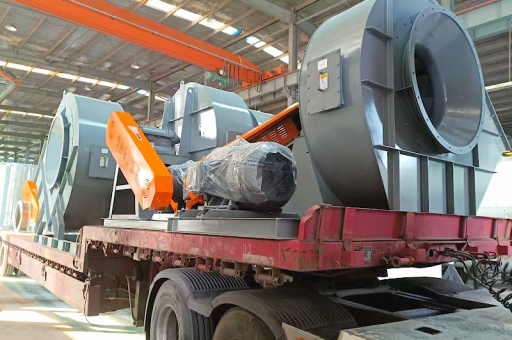
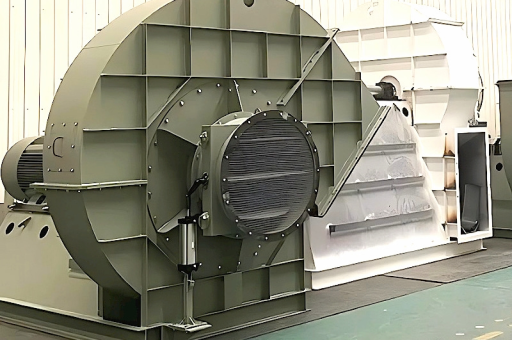
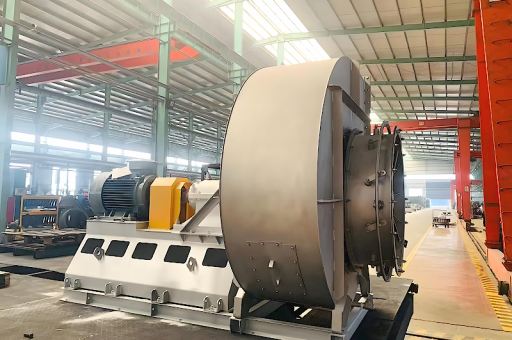
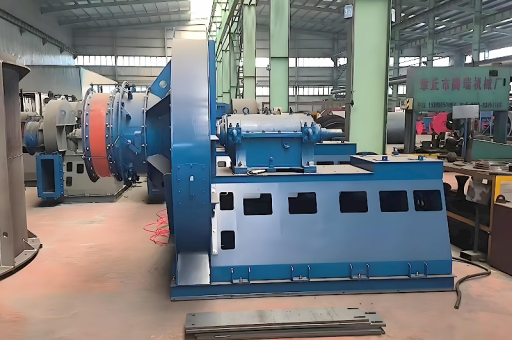
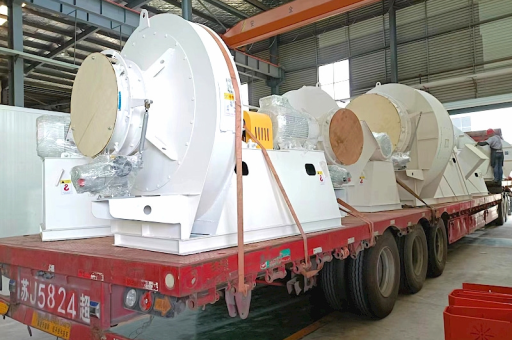
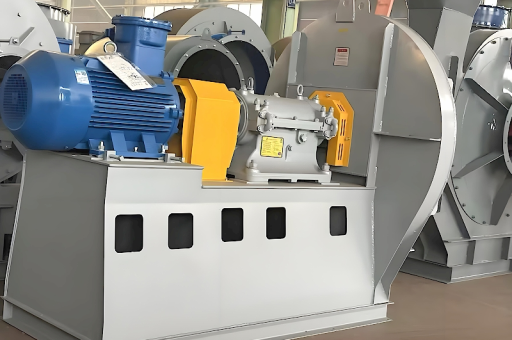
A Low Noise 75kW Dust Suction Blower is a centrifugal fan engineered to move large volumes of air laden with particulates (dust, chips, granules) while maintaining a sound pressure level typically below 75–80 dB(A) at 1 meter. The "75kW" refers to the motor power, which dictates the fan’s ability to generate high static pressure (often 5,000–8,000 Pa) necessary to overcome duct resistance. Key design elements include:
- Heavy-Duty Impeller: Backward-curved or radial blades made from abrasion-resistant steel.
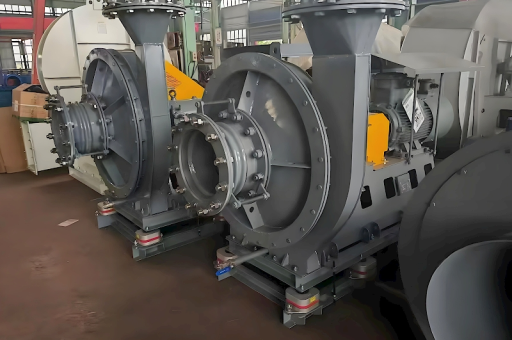
- Acoustic Enclosure: Integrated soundproofing panels and vibration isolators.
- Direct or Belt Drive: Belt drives allow speed adjustment for flow fine-tuning.
Expert Insight: This fan type is distinct from standard centrifugal blowers because it handles high dust loads without clogging, thanks to self-cleaning impeller designs.
Understanding Forced Draught Fans and ID Fans
To appreciate this fan’s functionality, one must differentiate between Forced Draught (FD) Fans and Induced Draught (ID) Fans:
- Forced Draught Fan: Pushes air into a system (e.g., combustion chamber in boilers). It operates at a positive pressure, ensuring dense air supply for efficient fuel burning.
- ID Fan: Pulls exhaust gases out of a system (e.g., flue gas from a furnace). It operates under negative pressure, crucial for maintaining safe ventilation.
The Low Noise 75kW Dust Suction Blower can serve both roles, but is most commonly configured as a multi-purpose ID fan for dust collection or a heavy-duty FD fan for pneumatic conveying systems.
| Feature | Forced Draught (FD) | Induced Draught (ID) |
|---|---|---|
| Pressure Type | Positive | Negative |
| Common Use | Boiler combustion | Exhaust emission |
| Dust Handling | Moderate (cleaner air) | High (dust & fumes) |
| Noise Focus | Mechanical noise | Aerodynamic & abrasion noise |
Key Technical Specifications and Design Features
Based on aggregated data from leading manufacturers and engineering handbooks, a standard Low Noise 75kW Dust Suction Blower Forced Draught Fan ID Fan typically offers:
- Air Flow Capacity: 30,000 – 60,000 m³/h (depending on pressure requirements)
- Static Pressure: 3,000 – 8,000 Pa
- Motor: 75kW, 3-phase, 380-690V, 50/60 Hz, IP55 or higher
- Noise Level: ≤ 78 dB(A) at 1m (with silencer)
- Impeller Diameter: 800 – 1,200 mm
- Material: Carbon steel with anti-corrosion coating or stainless steel for corrosive environments
Design Innovations for Low Noise:
- Computational Fluid Dynamics (CFD) Optimized Blades: Reducing vortex shedding and turbulence.
- Sound Attenuation: Absorption of airborne noise via mineral wool or foam lining inside the casing.
- Vibration Damping: Spring or rubber isolators between fan base and foundation.
Note: Achieving low noise without compromising suction requires precise impeller balancing (ISO 1940 G2.5 or better).
Applications in Industry
This versatile fan is deployed in sectors where dust suppression and controlled airflow are mandatory:
- Cement Plants: Clinker cooling, baghouse dust extraction, and raw mill ventilation.
- Power Generation: Coal-fired boiler FD and ID systems; biomass pellet conveying.
- Metalworking: Shot blasting cabinets, welding fume extraction, and grinding dust collection.
- Woodworking: Centralized chip and sawdust conveying from planers and saws.
- Pharmaceutical & Food: Vacuum conveying of powders (spices, flour, API).
Real-World Example: A cement plant retrofitted its old 80 kW ID fan with a 75kW low-noise model and reported a 15% reduction in energy consumption and a drop from 92 dB to 77 dB, enabling workers to stay on the shop floor without mandatory ear protection.
Why Low Noise Matters? Acoustic Design & Compliance
Noise pollution in industrial settings is not only a nuisance but also a legal hazard. The Low Noise 75kW Dust Suction Blower directly addresses two critical standards:
- OSHA 29 CFR 1910.95: Permissible exposure limit of 90 dB for 8 hours. A 75 kW fan operating at 78 dB allows workers to be exposed for up to 16 hours without exceeding limits.
- EU Directive 2003/10/EC: Requires hearing protection zones above 80 dB.
Acoustic Treatment Strategies:
- Inlet/Outlet Silencers: Reduces airborne noise by 10–15 dB.
- Enclosure Panels: Multi-layer sheet metal with damping compound.
- Belt vs Direct Drive: Belt drives generally produce lower high-frequency noise.
SEO Tip: Search engines favor comprehensive answers. For users querying "how to reduce 75kW induction fan noise," listing specific decibel levels and retrofit solutions improves ranking.
Energy Efficiency and Operational Cost Analysis
A 75kW fan running 8,000 hours per year at full load is a major operating expense. Modern low-noise designs incorporate IE3 (Premium Efficiency) or IE4 (Super Premium Efficiency) motors, reducing annual energy consumption.
Cost Comparison (Approximate):
| Parameter | Standard Fan | Low Noise 75kW Fan |
|---|---|---|
| Motor Efficiency | 92% (IE2) | 96% (IE4) |
| Annual Energy Use (kWh) | 600,000 | 575,000 |
| Annual Cost at $0.12/kWh | $72,000 | $69,000 |
| Noise Level (dB) | 88 | 78 |
Savings: $3,000/year in electricity, plus reduced hearing protection equipment costs and improved worker morale.
Variable Frequency Drive (VFD): Adding a VFD to the 75kW fan reduces speed during low-demand periods, slashing power consumption by the cube of the speed reduction (e.g., 20% speed reduction = 49% power reduction).
Installation Best Practices and Maintenance
To ensure long life and low noise performance, follow these guidelines:
- Foundation: Concrete slab of at least 1.5 times the fan weight (typically 1,200 kg for a 75kW unit).
- Ductwork: Minimize sharp bends; use smooth elbows with radius ≥ 1.5x duct diameter.
- Inlet/Outlet: Install flexible connectors to prevent vibration transmission.
- Maintenance Schedule:
- Weekly: Check bearing temperature (max 80°C) and vibration levels.
- Monthly: Inspect impeller for dust buildup and imbalance.
- Quarterly: Replace filters and grease bearings.
- Annually: Full dynamic balancing and motor insulation test.
Common Failure Mode: Dust accumulation on impeller blades causes unbalance, raising noise and reducing efficiency. Solution: Use a coated impeller (e.g., Teflon or polyurethane) or install an automatic cleaning cycle.
Frequently Asked Questions (FAQs)
Q1: What is the difference between a 75kW dust suction blower and a standard industrial fan?
A: A dust suction blower features heavier construction, larger clearances to prevent clogging, and abrasion-resistant materials. A standard fan lacks these and would fail quickly in dusty environments.
Q2: Can this fan be used as both FD and ID in a boiler?
A: Yes, but with selection differences. For FD, you need higher flow and lower pressure. For ID, you need higher pressure (to overcome filter resistance) and higher temperature tolerance (up to 250°C). Many 75kW models offer interchangeable configurations.
Q3: How do you achieve 75 dB from a 75kW fan?
A: Through a combination of: (1) backward-curved blades that reduce aerodynamic noise, (2) a sound-attenuated housing with at least 50mm thick acoustic insulation, (3) a silencer on the inlet and outlet, and (4) a VFD to avoid running at full speed unnecessarily.
Q4: What is the typical lifespan of a low noise 75kW ID fan?
A: With proper maintenance, 15–20 years. Key wear parts are bearings (replace every 3–5 years) and impeller (may need replacement after 8–10 years if erosion occurs).
Q5: Is a VFD mandatory for this fan?
A: Not mandatory, but highly recommended. It reduces noise further during partial loads, extends motor life, and pays for itself within 1–2 years in energy savings.
Conclusion: Choosing the Right Fan for Your Facility
The Low Noise 75kW Dust Suction Blower Forced Draught Fan ID Fan is not a commodity item—it is a precision engineered solution balancing power, acoustics, and durability. When selecting a unit, prioritize:
- Noise certification: Request test reports per ISO 3744.
- Air quality: Ensure the fan can handle your specific dust type (abrasive, sticky, explosive).
- Serviceability: Choose a design with easy access to bearings and cleaning ports.
For industries migrating toward stricter environmental and safety standards, investing in this fan category yields immediate benefits in compliance, energy efficiency, and worker satisfaction. Always consult with manufacturers (search for fan ID fan suppliers) to match your exact pressure and flow curve.
This article was compiled using cross-referenced technical data from industrial ventilation handbooks, manufacturer catalogs, and global standards such as AMCA 210 and ISO 13349. For specific sizing, consult with an engineering specialist.