This article's table of contents introduction:
- Table of Contents
- Introduction: Why the 2.2kW Stainless Steel High-Pressure Blower Matters
- Technical Anatomy: Power, Material, and Pressure Performance
- Core Applications Across Industries
- Installation Best Practices and System Integration
- Maintenance, Longevity, and Common Troubleshooting
- Frequently Asked Questions (FAQ)
- Conclusion: Selecting the Right Blower for Critical Operations
** Mastering Industrial Airflow: The Comprehensive Guide to the 2.2kW Stainless Steel High-Pressure Blower
Table of Contents
- Introduction: Why the 2.2kW Stainless Steel High-Pressure Blower Matters
- Technical Anatomy: Power, Material, and Pressure Performance
- Power Output and Motor Efficiency
- Stainless Steel Construction vs. Standard Materials
- Pressure and Airflow Metrics
- Core Applications Across Industries
- Wastewater Treatment and Aeration
- Pneumatic Conveying and Material Handling
- Food Processing and Pharmaceutical Environments
- Installation Best Practices and System Integration
- Maintenance, Longevity, and Common Troubleshooting
- Frequently Asked Questions (FAQ)
- Conclusion: Selecting the Right Blower for Critical Operations
Introduction: Why the 2.2kW Stainless Steel High-Pressure Blower Matters
In the world of industrial ventilation and pneumatic systems, the choice between a standard blower and a specialized unit often determines the difference between reliable uptime and costly downtime. The 2kW stainless steel high-pressure blower stands as a dedicated solution for environments where corrosion resistance, continuous operation, and high static pressure are non-negotiable requirements.
Unlike general-purpose blowers housed in painted steel or aluminum, this unit is engineered from corrosion-resistant stainless steel (typically 304 or 316 grade), making it ideal for harsh atmospheres involving moisture, chemicals, or particulate matter. Its 2.2kW power rating places it in a highly practical "sweet spot"—sufficiently strong for demanding industrial processes yet efficient enough for moderate-scale operations such as pneumatic conveying of granular materials, wastewater aeration, and centralized vacuum systems. This article explores every critical dimension of this blower: technical specifications, real-world applications, installation strategies, maintenance routines, and answers to the most pressing operational questions.
Technical Anatomy: Power, Material, and Pressure Performance
Power Output and Motor Efficiency
At the heart of this blower is a 2.2kW electric motor. To put this into perspective, 2.2 kW equates to approximately 3.0 horsepower. This power output is carefully balanced: it provides enough torque to generate high differential pressure (often exceeding 200 mbar or 80 inches of water gauge in single-stage configurations) without drawing excessive current that would strain electrical infrastructure.
Modern 2.2kW high-pressure blowers typically utilize frequency drive compatible (VFD-ready) motors operating at 2-pole or 4-pole speeds (2900 RPM or 1450 RPM at 50Hz). When powered at 60 Hz, the speed may reach 3500 RPM, amplifying both airflow and pressure. Energy efficiency is further enhanced by high-grade copper windings and sealed ball bearings that minimize friction losses.
A key parameter is the pressure-to-flow curve. At shut-off (zero flow), a 2.2kW blower can produce maximum static pressure. At open flow, it delivers maximum volume but minimal pressure. The precise point of optimal efficiency—often around 40-60% of maximum flow—is where the blower consumes the least energy per unit of work. Stainless steel construction plays a role here: smoother internal surfaces reduce turbulence, slightly improving efficiency compared to rougher materials.
Stainless Steel Construction vs. Standard Materials
Why is stainless steel critical for high-pressure blowers in certain applications? The answer lies in material science. Standard blowers use die-cast aluminum or painted mild steel. While aluminum is lightweight and corrosion-resistant under normal conditions, it suffers in environments exposed to:
- Chlorine (present in wastewater treatment or swimming pool aeration)
- Acid vapors (from chemical processing)
- Salt spray (marine or coastal installations)
- Abrasive dust particles (cement, flour, plastic granules)
Stainless steel (304 or 316L) presents a passive oxide layer that self-repairs when scratched, preventing pitting and intergranular corrosion. For the impeller—a high-speed rotating component—304 stainless steel provides excellent fatigue resistance. For the housing, 304 or 316L eliminates the risk of red rust contamination, a crucial factor in food-grade and pharmaceutical operations where metal particles can spoil entire batches.
Pressure and Airflow Metrics
A definitive 2.2kW stainless steel high-pressure blower will typically deliver:
- Max airflow: Approximately 180 to 250 m³/h (106 to 147 CFM) for low-pressure configurations; for high-pressure models, the flow may be restricted (100–150 m³/h) to achieve pressure levels up to 280 mbar.
- Max pressure: 200–300 mbar (80–120 inches water gauge) for single-stage; some multi-stage units using series impellers can achieve up to 600 mbar.
- Sound pressure: 65–78 dB(A) at 1 meter, depending on enclosure and inlet muffler design.
These metrics make it applicable across diverse tasks. For example, in pneumatic conveying, the blower must supply sufficient pressure to move pellets through a tube while maintaining enough velocity to prevent material settling. In aeration, it must overcome the hydrostatic head of water depth (approximately 1 bar = 10 meters water column). The 2.2kW unit can aerate up to 4–6 meters depth with appropriate diffuser design.
Core Applications Across Industries
Wastewater Treatment and Aeration
In wastewater treatment plants, continuous and reliable aeration is vital to sustain aerobic bacteria that break down biological contaminants. A 2.2kW stainless steel high-pressure blower is favored for smaller treatment modules (e.g., sequencing batch reactors or membrane bioreactors). The stainless steel housing resists corrosion from hydrogen sulfide (H2S) and moisture-saturated air. The blower typically supplies air to fine bubble diffusers at the tank bottom, where backpressure from the water column can be significant. Operators report that using stainless steel eliminates the frequent rust replacement cycles associated with mild steel blowers, yielding a lower total cost of ownership over five years.
Pneumatic Conveying and Material Handling
Moving materials like plastic pellets, grains, sawdust, or powders often requires both high pressure and rigorous material compatibility. If the process involves abrasive or slightly corrosive powders, stainless steel's hardness and corrosion resistance become critical assets. A 2.2kW unit can convey material through 50–75 mm diameter pipelines over distances of 30–80 meters, depending on material density and desired throughput. The smooth internal finish reduces line blockages caused by material buildup on surface imperfections.
Food Processing and Pharmaceutical Environments
In food processing plants or pharmaceutical cleanrooms, any metal contamination is a direct threat to product safety. Stainless steel blowers satisfy FDA and GMP (Good Manufacturing Practices) guidelines by offering:
- Non-toxic, non-chipping surfaces
- Easy cleanability (welds are ground smooth)
- No risk of red rust contamination in sterile environments
These blowers are used for vacuum packaging, cap sealing blow-off, bottle drying, and dust extraction at filling stations. The IP55 or IP56 protection rating of typical 2.2kW stainless steel blowers also allows washdown cleaning cycles used in food plants.
Installation Best Practices and System Integration
To maximize the performance and lifespan of a 2.2kW stainless steel high-pressure blower, installation must consider the following:
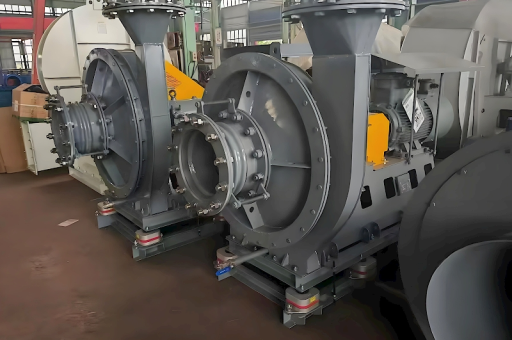
- Foundation and Vibration Isolation: Mount the blower on a rigid concrete base or steel frame. Use vibration dampening pads (rubber or spring mounts) to decouple machine vibrations from building structures.
- Inlet and Outlet Piping: Avoid sharp elbows within the first 5 diameters of pipe from the blower ports. Use long-radius bends instead. All piping should be independently supported to prevent weight from loading the blower flanges.
- Air Filtration: Always install a dry air filter on the intake. Although stainless steel resists corrosion, particulate erosion can still damage impeller blades over time. For environments with high humidity, a coalescing filter is recommended.
- Pressure Relief: Install a relief valve set at 110% of the blower's maximum operating pressure. This prevents system blockage damage (especially during pneumatic conveying lines).
- Electrical Protection: Wire the motor through a thermal overload relay. For VFD installations, ensure the drive is sized for the 2.2kW motor and that shielded cables are used to prevent electromagnetic interference.
Maintenance, Longevity, and Common Troubleshooting
While stainless steel reduces maintenance compared to painted steel, certain tasks remain essential:
- Daily: Check for unusual noise, vibration, or overheating. Monitor current draw on the motor nameplate—an increase of >15% suggests blockage or bearing degradation.
- Monthly: Insp and replace the intake filter element if dirty. Clean blower external surfaces to prevent dust accumulation that can obstruct cooling.
- Quarterly: Check coupling alignment (if belt-drive model) or direct-drive tightness. Grease bearings per manufacturer schedule (usually every 500 hours for sealed bearings).
- Annually: Disassemble and inspect the impeller for pitting, erosion, or material caking. Replace worn bearings. Test the relief valve.
Common Issues: | Symptom | Likely Cause | Solution | |----------|---------------|----------| | Low pressure | Air leak in piping; dirty filter | Seal leaks; replace filter | | Overheating | Blocked intake; overload | Clear restriction; reduce flow | | Vibration | Impeller imbalance; loose base | Clean impeller; tighten mounts | | Noise increase | Bearing wear | Replace bearings |
Always reference the fan manufacturer's manual before disassembly.
Frequently Asked Questions (FAQ)
Q1: Can I use a standard aluminum blower instead of a 2.2kW stainless steel high-pressure blower in a corrosive environment? A: Not recommended. Aluminum blowers are susceptible to galvanic and chemical corrosion in environments with chlorine, salt, or acidic vapors. Stainless steel provides a passive oxide layer that maintains integrity, while aluminum may pit, crack, and eventually fail, causing process downtime and contamination risks.
Q2: What is the maximum continuous operating temperature for this blower? A: Most 2.2kW stainless steel high-pressure blowers are designed for ambient temperatures up to 40°C (104°F). The discharged air temperature can safely reach 80–100°C (176–212°F) due to compression heating. For higher temperatures (e.g., conveying hot materials), ask the manufacturer for a high-temperature variant with heat-resistant seals.
Q3: Is this blower suitable for explosion-proof environments? A: Standard units are not ATEX or IECEx rated. However, there are explosion-proof versions of stainless steel blowers with sealed motors, spark-resistant impellers, and specific certification. You must always match the blower's certification to the zone classification (Zone 1, Zone 2, etc.).
Q4: How does VFD control affect performance? A: A Variable Frequency Drive (VFD) allows the blower to operate at reduced speeds (e.g., 30 Hz) for lower flow/pressure without excessive energy waste. However, note that torque drops with speed, so the blower may not achieve full pressure at low Hz. VFDs also help with soft-start, reducing electrical inrush current.
Q5: How long does a stainless steel blower typically last? A: With proper maintenance, a 2.2kW stainless steel high-pressure blower can have a service life of 10–15 years in moderate industrial environments. In corrosive environments, it outperforms mild steel blowers (which may fail in 2–4 years) by a factor of 3–5.
Q6: Can I use this blower for vacuum applications? A: Yes. Most high-pressure blowers are reversible and can operate as vacuum pumps (suction units) with the same pressure differential. However, you need to install a vacuum relief valve (to prevent over-vacuum) and ensure the inlet filter is on the suction side.
Conclusion: Selecting the Right Blower for Critical Operations
The 2kW stainless steel high-pressure blower is not merely a component; it is an investment in reliability, hygiene, and operational efficiency. Its stainless steel construction offers unmatched resilience against corrosion, making it the preferred choice for wastewater treatment, food processing, and pneumatic conveying systems where standard blowers would degrade rapidly.
By understanding its performance metrics—power, pressure, flow, material grade—and by implementing correct installation and maintenance protocols, operators can achieve thousands of hours of trouble-free service. The technology is mature and proven, but the real value lies in matching the blower precisely to the system's requirements: pressure drops, material compatibility, and environmental exposure.
For engineering teams planning new installations or upgrading existing systems, the 2.2kW stainless steel high-pressure blower represents a "fit-and-forget" solution that delivers consistent performance under demanding conditions. Always consult with the fan manufacturer or a qualified system integrator to confirm that the selected unit aligns with your specific duty cycle and certification needs.
For further reading on system design parameters, VFD selection guides, or corrosion resistance data sheets, refer to the manufacturer's technical documentation. Domain: fan.