
This article's table of contents introduction:
- Table of Contents
- Introduction: The Critical Role of Fans in Boiler Systems
- What is an Industrial Centrifugal Blower?
- Why High Efficiency Matters in Boiler Applications
- Key Design Features of a High Efficiency Fan
- How Centrifugal Blowers Improve Boiler Combustion & Draft
- Types of Centrifugal Fans Used in Boilers
- Energy Savings & ROI: The Economic Case for Upgrading
- Maintenance Best Practices for Longevity
- Frequently Asked Questions (FAQ)
- Conclusion: The Future of Boiler Air Management
*Maximizing Thermal Performance: The Ultimate Guide to Industrial Centrifugal Blower High Efficiency Fan In Boiler Systems*
Table of Contents
- Introduction: The Critical Role of Fans in Boiler Systems
- What is an Industrial Centrifugal Blower?
- Why High Efficiency Matters in Boiler Applications
- Key Design Features of a High Efficiency Fan
- How Centrifugal Blowers Improve Boiler Combustion & Draft
- Types of Centrifugal Fans Used in Boilers (Forward vs. Backward Curved)
- Energy Savings & ROI: The Economic Case for Upgrading
- Maintenance Best Practices for Longevity
- Frequently Asked Questions (FAQ)
- Conclusion: The Future of Boiler Air Management
Introduction: The Critical Role of Fans in Boiler Systems
In any industrial boiler system—whether it powers a chemical plant, a power generation facility, or a large HVAC network—the Industrial Centrifugal Blower serves as the respiratory system. Without a reliable and High Efficiency Fan, the boiler cannot achieve proper combustion, maintain stable pressure, or meet emission standards.
Modern boilers demand precise control over airflow. The Industrial Centrifugal Blower is specifically designed to handle large volumes of air at moderate to high pressures, making it the ideal choice for forced draft (FD) and induced draft (ID) applications. This article delves into why selecting a high-efficiency centrifugal fan is not just a technical preference but a financial necessity.
What is an Industrial Centrifugal Blower?
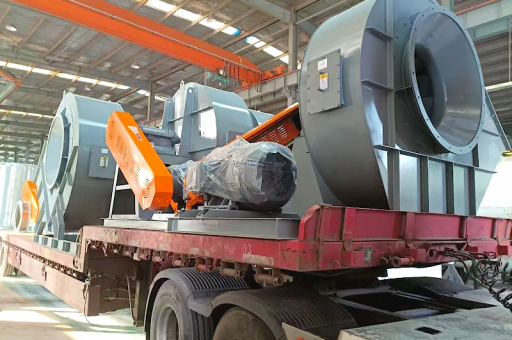
An Industrial Centrifugal Blower is a mechanical device that moves air or gases by converting rotational kinetic energy into hydrodynamic energy. Unlike axial fans, which move air parallel to the shaft, centrifugal blowers use a rotating impeller to accelerate air radially outward.
Key components include:
- Impeller (Rotor): The rotating wheel with blades.
- Volute (Housing): The spiral casing that collects and directs airflow.
- Inlet & Outlet Ducts: Connects to the boiler system.
This design generates higher static pressure than axial fans, which is critical for overcoming the resistance of boiler heat exchangers, ducts, and flue gas stacks.
Why High Efficiency Matters in Boiler Applications
Efficiency in a fan is defined as the ratio of air power output to electrical power input. A High Efficiency Fan in a boiler application directly translates to:
- Lower Electricity Consumption: Fans can consume 5-15% of a plant's total electrical load. A 5% efficiency gain can save thousands of dollars annually.
- Reduced CO2 Emissions: Less energy wasted means a smaller carbon footprint.
- Improved Combustion Stability: Precise air supply optimizes fuel burn, reducing soot and unburned hydrocarbons.
- Extended Equipment Life: Efficient fans run cooler and suffer less vibration.
Did you know? A standard efficiency fan operating at 70% efficiency costs significantly more over 10 years than a premium fan operating at 85% efficiency, when factoring in energy costs.
Key Design Features of a High Efficiency Fan
To earn the label High Efficiency Fan In Boiler systems, the blower must incorporate:
- Aerodynamically Optimized Blades: Backward-curved or airfoil blades reduce turbulence.
- Variable Frequency Drives (VFDs): VFDs allow the fan speed to match the boiler load, eliminating wasteful throttling.
- Advanced Inlet Vanes: Inlet guide vanes control airflow without energy loss.
- Sealed Bearings & Low Friction Seals: Reduces mechanical losses.
- High-Quality Materials: Corrosion-resistant alloys for handling hot flue gases.
How Centrifugal Blowers Improve Boiler Combustion & Draft
In a boiler, two primary fans operate:
- Forced Draft (FD) Fan: Pushes ambient air into the burner. The Industrial Centrifugal Blower ensures the air pressure is high enough to mix thoroughly with fuel.
- Induced Draft (ID) Fan: Pulls hot flue gases out of the boiler and up the chimney. A High Efficiency Fan here reduces backpressure, improving heat transfer.
A balanced draft system, powered by high-efficiency centrifugal fans, ensures:
- Complete combustion (stoichiometric ratio).
- Minimal heat loss through exhaust.
- Compliance with EPA regulations.
Types of Centrifugal Fans Used in Boilers
| Fan Type | Best For | Efficiency Range | Noise Level |
|---|---|---|---|
| Backward Curved | High efficiency, clean air | 80-88% | Moderate |
| Airfoil (Backward) | Highest efficiency, large systems | 85-92% | Low |
| Radial (Paddlewheel) | Dirty/gritty air | 60-75% | High |
| Forward Curved | Low pressure, high volume | 55-70% | Moderate |
Recommendation: For boiler applications requiring High Efficiency Fan In Boiler performance, backward-curved airfoil fans are the gold standard.
Energy Savings & ROI: The Economic Case for Upgrading
Let’s analyze a typical 100 HP boiler fan operating 8,000 hours per year.
- Standard Fan: 72% efficiency → 103 kW input.
- High Efficiency Fan: 88% efficiency → 84 kW input.
Savings: 19 kW × 8,000 hours = 152,000 kWh/year. At $0.10/kWh: $15,200 saved annually. Payback Period: Often less than 2 years when replacing an old, worn-out fan.
Additionally, many utility companies offer rebates for installing premium efficiency motors and fans.
Maintenance Best Practices for Longevity
To keep your Industrial Centrifugal Blower performing at peak efficiency:
- Balance the Impeller: Imbalance causes vibration, reducing bearing life.
- Inspect Ductwork: Leaks reduce fan efficiency by 10-20%.
- Clean Blades Regularly: Dust buildup changes blade geometry, lowering efficiency.
- Lubricate Bearings: Follow manufacturer intervals strictly.
- Monitor Amp Draw: A sudden increase indicates a mechanical problem.
Frequently Asked Questions (FAQ)
Q1: Can I use an axial fan instead of a centrifugal blower for my boiler? Answer: Generally, no. Axial fans cannot generate the high static pressure required to overcome boiler resistance. For forced draft and induced draft, a centrifugal blower is essential.
Q2: What does "high efficiency" really mean for a boiler fan? Answer: It means the fan converts more electrical energy into useful air movement. A high-efficiency fan typically operates at 85% or higher total efficiency, versus 60-70% for standard models.
Q3: How do I calculate the correct fan size for my boiler? Answer: You need to know the boiler's maximum heat input (BTU/hr), required excess air (typically 15-20% for natural gas), and the system pressure drop. A fan manufacturer can size the Industrial Centrifugal Blower based on these parameters.
Q4: Is a VFD mandatory for a high efficiency fan installation? Answer: Not mandatory, but highly recommended. Without a VFD, you must throttle the air, which wastes energy. A VFD allows the fan speed to match demand precisely.
Q5: Does a higher efficiency fan reduce noise? Answer: Yes, typically. Higher efficiency designs often use airfoil blades that generate less turbulence and lower noise levels compared to radial or forward-curved blades.
Conclusion: The Future of Boiler Air Management
The integration of an Industrial Centrifugal Blower designed as a High Efficiency Fan In Boiler applications is no longer a luxury—it is a core strategy for operational excellence. As global energy costs rise and environmental regulations tighten, the fan you choose directly impacts your bottom line and your carbon footprint.
By prioritizing aerodynamic design, variable speed control, and rigorous maintenance, operators can achieve 90%+ combustion efficiency while cutting fan-related energy costs by 20-30%. Whether you are retrofitting an existing system or designing a new plant, always consult a reputable fan manufacturer to match your specific boiler requirements. The right fan will breathe new life into your thermal process.
Keywords: Industrial Centrifugal Blower, High Efficiency Fan In Boiler, boiler forced draft fan, energy savings fan, centrifugal fan selection.





