
High-Performance Wear Resistance Flue Gas Fan: The Ultimate High Temperature Blower Free Standing Solution for Industrial Durability
Table of Contents
- Introduction: The Critical Role of Wear Resistance Flue Gas Fans
- Understanding Flue Gas Fans: Design and Operational Challenges
- High Temperature Blower Free Standing Systems: Structural Advantages
- Wear Resistance Mechanisms: Materials and Engineering Innovations
- Common Questions and Expert Answers about Flue Gas Fans
- Maintenance Best Practices for Long-Term Reliability
- Conclusion: Selecting the Right Fan for Your Application
Introduction: The Critical Role of Wear Resistance Flue Gas Fans
Industrial environments that handle corrosive, abrasive, and high-temperature flue gases demand equipment that can withstand extreme conditions without compromising performance. A Wear Resistance Flue Gas Fan is not merely a ventilation component—it is a mission-critical asset in power plants, cement factories, steel mills, chemical processing facilities, and incineration plants.
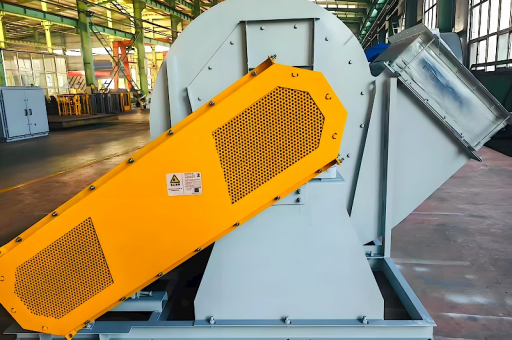
The term High Temperature Blower Free Standing refers to a self-supporting fan system engineered to operate continuously at elevated temperatures, often exceeding 300°C (572°F), while resisting erosion from particulate-laden exhaust streams. Traditional fans fail quickly under such stress, leading to unplanned downtime, costly replacements, and safety hazards.
This article provides an in-depth analysis of how modern wear-resistant flue gas fans combine advanced metallurgy, aerodynamic design, and robust free-standing construction to deliver unmatched longevity and efficiency.
Understanding Flue Gas Fans: Design and Operational Challenges
1 What Is a Flue Gas Fan?
A flue gas fan, also known as an induced draft fan, exhausts combustion gases from boilers, furnaces, kilns, or incinerators. These fans must handle:
- High temperatures: Continuous exposure to hot gases.
- Abrasive particulates: Fly ash, soot, and unburned fuel particles.
- Corrosive compounds: Sulfur dioxide, hydrogen chloride, and alkali salts.
2 Why Standard Fans Fail
Conventional industrial fans lack specialized protection against:
- Erosive wear: Hard particles impact blade surfaces at high velocities.
- Thermal fatigue: Repeated heating and cooling cycles cause cracking.
- Corrosion: Acidic gases attack metals, especially at dew points.
3 The Wear Resistance Advantage
A Wear Resistance Flue Gas Fan addresses these issues through:
- Hardened impeller materials: Chrome steel, duplex stainless steel, or ceramic-coated alloys.
- Optimized blade geometry: Reduced turbulence minimizes particle impact.
- Sacrificial liners: Replaceable wear plates protect the fan housing.
High Temperature Blower Free Standing Systems: Structural Advantages
1 What Does "Free Standing" Mean?
A High Temperature Blower Free Standing system is a self-contained unit mounted on a sturdy base without requiring additional structural supports. This design offers:
- Simplified installation: No need for complex foundations or brackets.
- Thermal expansion accommodation: The base absorbs movement without stressing the fan casing.
- Improved maintenance access: All components are easily reachable.
2 Key Components of a Free Standing High Temperature Blower
| Component | Function | Wear Resistance Feature |
|---|---|---|
| Impeller | Moves gas volume | Hardfacing, erosion-resistant materials |
| Shaft | Transmits motor power | Chrome plating or ceramic coating |
| Bearing housing | Supports rotor assembly | Heat-dissipating fins, cooling fans |
| Casing | Contains gas flow | Replaceable wear liners in critical areas |
| Base plate | Provides stability | Vibration-dampening design |
3 Why Free Standing Design Is Preferred
- Reduces vibration transmission: Isolates fan from surrounding structures.
- Facilitates quick replacement: Entire unit can be swapped out.
- Enhances safety: Eliminates overhead support failures.
Wear Resistance Mechanisms: Materials and Engineering Innovations
1 Material Selection for High Temperature Applications
The choice of materials directly determines the lifespan of a Wear Resistance Flue Gas Fan. Common options include:
- ST37-2 or S355J2 steel: For low temperature zones.
- 4845 (310S) stainless steel: Excellent oxidation resistance up to 1050°C.
- Hardox or Creusabro wear plates: For impeller edges and volute liners.
- Ceramic coatings: Alumina or zirconia applied via thermal spray.
2 Advanced Wear Protection Technologies
- Tungsten carbide overlays: Applied to leading edges of blades.
- Diffusion coatings: Aldiff or chromizing enhances surface hardness.
- Sacrificial inserts: Easily replaceable segments in high-wear zones.
3 Balancing Wear Resistance with Aerodynamic Efficiency
Modern wear resistance flue gas fans feature:
- Backward-curved blades: Reduce particle impingement.
- Thickened trailing edges: Last longer under erosion.
- Computational fluid dynamics (CFD) optimization: Minimizes localized wear hotspots.
Common Questions and Expert Answers about Flue Gas Fans
Q1: What is the maximum operating temperature for a wear resistance flue gas fan?
A: Depending on materials, standard fans handle up to 400°C continuously. Special high-temperature models with ceramic coatings can withstand 600°C or higher for brief periods. Always verify with the manufacturer for your specific gas composition.
Q2: How often should I replace the wear liners in a free standing high temperature blower?
A: Inspection intervals depend on particulate load and gas chemistry. Typical guidance: inspect every 3–6 months for abrasive environments; replace when liner thickness reduces by 50%. Using wear-resistant materials can triple replacement intervals.
Q3: Can a free standing fan be installed outdoors?
A: Yes, most units have weatherproof enclosures and corrosion-resistant coatings. Ensure the motor enclosure is rated for ambient conditions (e.g., IP55 for dust and moisture).
Q4: What causes premature failure in flue gas fans?
A: Common causes include:
- Incorrect fan speed: Operating outside the recommended RPM range.
- Misalignment: Shaft or bearing misalignment causes vibration.
- Condensation: Acidic moisture accelerates corrosion.
- Insufficient cooling: Bearing temperatures exceed limits.
Q5: How do I select the right size of wear resistance flue gas fan for my system?
A: Critical parameters include:
- Required airflow (CFM or m³/h)
- Static pressure (Pa or inches wg)
- Gas temperature and density
- Particulate concentration (g/m³)
- Space constraints for free standing installation
Maintenance Best Practices for Long-Term Reliability
1 Preventive Maintenance Schedule
- Daily: Check vibration levels, bearing temperatures (max 80°C), and visual noise.
- Weekly: Inspect wear liners for thickness reduction.
- Monthly: Lubricate bearings according to manufacturer specifications.
- Quarterly: Perform thermal imaging to identify hot spots.
2 Troubleshooting Common Issues
| Symptom | Possible Cause | Solution |
|---|---|---|
| Excessive vibration | Blade wear, imbalance | Replace impeller or rebalance |
| Reduced airflow | Damper misalignment, debris buildup | Clean ductwork, adjust dampers |
| High motor current | Overloading, worn bearings | Check motor specs, replace bearings |
| Leaking casing | Corroded welds, eroded liner | Patch or replace liner sections |
3 Extending the Life of Your Free Standing Blower
- Install a pre-filter or cyclone: Reduce particulate load before the fan.
- Maintain constant temperature: Avoid rapid thermal shocks.
- Monitor dew point: Use heaters to prevent condensation during startup.
- Schedule downtime for inspections: Proactive replacement of sacrificial parts saves major repairs.
Conclusion: Selecting the Right Fan for Your Application
Investing in a Wear Resistance Flue Gas Fan with a High Temperature Blower Free Standing design is a strategic decision that reduces total cost of ownership, improves process reliability, and enhances workplace safety. When evaluating suppliers, prioritize those with:
- Proven field experience in your industry
- Customizable wear protection options
- Comprehensive warranty covering erosion and thermal damage
- On-site installation and training support
By understanding the unique demands of your flue gas system and selecting a fan engineered for long-term wear resistance, you can avoid frequent replacements and achieve uninterrupted operation even in the harshest environments.
Final Recommendation: For critical applications, request a wear simulation analysis from the fan manufacturer. This will predict impeller life based on your actual gas composition and particle size distribution, ensuring you choose the optimal combination of materials and design features.
This article provides general guidance. Always consult with a qualified engineer for site-specific requirements.





