
This article's table of contents introduction:
- Table of Contents (Directory Guide)
- Introduction: The Unsung Hero of Industrial Airflow
- Technical Deep Dive: How HVLP Single Suction Fans Work
- Critical Applications: Where Do You Need These Fans?
- Buyer’s Guide: Selecting the Perfect HVLP Blower
- Frequently Asked Questions (FAQ)
- Conclusion & Maintenance Best Practices
** Mastering Industrial Ventilation: The Definitive Guide to Single Suction Boiler Fan High Volume Low Pressure Air Blowers
Table of Contents (Directory Guide)
-
Introduction: The Unsung Hero of Industrial Airflow
- What is a Single Suction Boiler Fan?
- The Core Concept: High Volume, Low Pressure (HVLP)
- Why this combination is critical for modern industry.
-
Technical Deep Dive: How HVLP Single Suction Fans Work
- Aerodynamic Principles (Centrifugal vs. Axial)
- The "Single Suction" Design Advantage
- Key Components (Impeller, Housing, Inlet Box)
-
Critical Applications: Where Do You Need These Fans?
- Power Generation & Boiler Systems
- Cement Plants & Material Handling
- HVAC & Large-Scale Ventilation
- Dust Collection & Fume Extraction
-
Buyer’s Guide: Selecting the Perfect HVLP Blower
- Calculating Static Pressure vs. Volume
- Material Selection (Carbon Steel vs. Stainless Steel)
- Efficiency Ratings & Motor Pairing
-
Frequently Asked Questions (FAQ)
- Q1: What is the difference between a single suction and a double suction fan?
- Q2: Can I use this fan for high-pressure applications?
- Q3: How do I reduce noise and vibration?
-
Conclusion & Maintenance Best Practices
Introduction: The Unsung Hero of Industrial Airflow
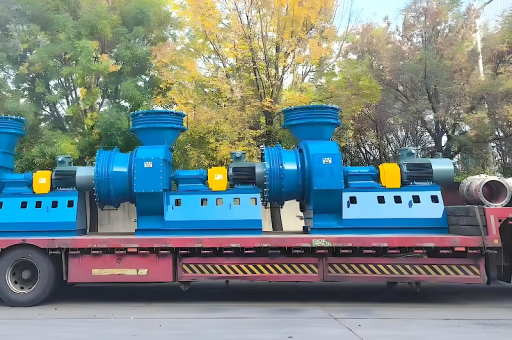
In the demanding world of industrial ventilation and combustion air supply, few pieces of equipment are as reliable—yet as overlooked—as the Single Suction Boiler Fan High Volume Low Pressure Air Blower. This specialized machinery is the workhorse behind the safe operation of power plants, large-scale HVAC systems, and manufacturing lines.
Unlike standard fans that struggle to push air through resistance, these blowers are engineered to move an immense volume of air (measured in cubic feet per minute or CFM) with a relatively low pressure rise. The term "Single Suction" refers to the air intake design: air enters from only one side of the impeller. This design is not arbitrary; it is a strategic engineering choice that balances efficiency, cost, and structural integrity, especially when handling hot or dusty boiler gases.
The market is flooded with generic blowers, but High Volume Low Pressure (HVLP) technology is the specific solution for systems requiring massive airflow without requiring high static pressure resistance. This article synthesizes the best technical knowledge from leading fan manufacturers and engineering standards to provide a definitive guide for procurement managers, plant engineers, and HVAC professionals.
Technical Deep Dive: How HVLP Single Suction Fans Work
To understand why this fan is the industry standard for boilers, we must first examine its aerodynamic design.
Aerodynamic Principles Most HVLP fans are centrifugal in design. Air enters the impeller axially (along the shaft) and is accelerated radially outward by rotating blades. The centrifugal force creates a velocity pressure, which is then converted to static pressure within the fan housing (scroll). For a Single Suction Boiler Fan, the focus is on the volume of air moved per revolution, not the pressure. This is achieved using backward-curved airfoil blades.
The "Single Suction" Advantage Why choose single over double suction?
- Simplicity: Single suction fans have a simpler bearing and shaft arrangement. The impeller is cantilevered on one side.
- Cost: For medium-sized applications (typically up to 200,000 CFM), single suction is more cost-effective to manufacture and maintain.
- Accessibility: The bearing assembly is on the outside, making lubrication and replacement easier.
- Temperature Handling: When handling hot air (boiler flue gas), a single inlet allows for simpler expansion joints and easier thermal management.
Key Components
- Impeller: Typically made from high-strength steel or Corten (weathering steel) for resistance to abrasion from fly ash.
- Housing: A heavy-gauge steel scroll that converts kinetic energy into pressure.
- Inlet Box: A critical component directing flow into the impeller eye without turbulence.
Critical Applications: Where Do You Need These Fans?
These fans are not one-size-fits-all. They are precision tools for specific industrial environments.
Power Generation & Boiler Systems This is the primary domain. The fan supplies combustion air to the boiler furnace (Forced Draft) or removes exhaust gases (Induced Draft). In these systems, the volume of air must be massive to maintain efficient fuel burn. The fan must deliver consistent flow against the resistance of the boiler tubes and air heaters.
Cement Plants & Material Handling In cement manufacturing, these blowers move raw meal or cooled clinker. The high volume, low pressure design ensures material is fluidized (aerated) without blowing product out of the system.
HVAC & Large-Scale Ventilation Commercial buildings, tunnels, and stadiums require huge air changes. HVLP fans are quieter and more efficient than high-pressure noise makers.
Dust Collection & Fume Extraction For pre-filters or baghouses with low resistance, a single suction HVLP fan provides the necessary flow to capture airborne particulates without excessive energy waste.
Buyer’s Guide: Selecting the Perfect HVLP Blower
Choosing the wrong fan leads to high energy bills and premature failure. Here is your checklist:
Step 1: System Analysis Do not just look at the fan curve. Analyze the System Curve.
- Static Pressure (SP): Calculate the pressure drop of your ductwork, filters, and burner. HVLP fans operate best between 2” to 15” water gauge (w.g.) .
- Volume (CFM): Determine your required airflow. For a boiler, this is the sum of stoichiometric air plus excess air.
Step 2: Material of Construction
- Standard Air (Clean, <200°F): Carbon steel with epoxy coating.
- Corrosive/Hot Air (Boiler Exhaust): Stainless steel (304 or 316) or Corten steel. Avoid aluminum in acidic condensation environments.
Step 3: Efficiency Metrics Look for fans with a high Static Efficiency (η) . Modern airfoil blades achieve up to 85% efficiency. Use a Variable Frequency Drive (VFD) to match fan speed to load, saving up to 60% of energy.
Step 4: Drive Arrangement For high volume applications, direct drive (Arrangement 4 or 7) is preferred to avoid belt slip and losses. Belt drives are acceptable for variable load scenarios where speed changes are frequent.
Frequently Asked Questions (FAQ)
Q1: What is the difference between a single suction and a double suction fan? A: A single suction fan draws air from one side of the impeller, while a double suction fan draws air from both sides (via two inlets). Double suction designs are typically used for extremely high volumes ( > 300,000 CFM) to reduce the impeller width and improve mechanical balance. Single suction is simpler, cheaper, and easier to maintain for most standard boiler applications.
Q2: Can I use this fan for high-pressure applications ( > 20” w.g.)? A: Generally, no. Single Suction HVLP blowers are optimized for low pressure. If you require high static pressure (backward-inclined or radial blade designs), you should look for a High Pressure Blower or an Airfoil Fan with narrower blades. Using an HVLP fan in a high-pressure system will cause the fan to stall or operate inefficiently.
Q3: How do I reduce noise and vibration? A: Vibration is usually caused by imbalance (dust build-up on blades) or bearing wear. Solutions include:
- Inlet Silencers: Place a duct silencer at the fan inlet.
- Vibration Isolation: Use spring isolators at the base.
- Balancing: Regularly clean and re-balance the impeller, especially when handling sticky boiler gas. Check the fan for resonance near operating speed.
Q4: What is the typical lifespan of a Single Suction Boiler Fan? A: With proper maintenance (bearing lubrication, impeller balancing, and housing inspection), a well-made fan can last 15 to 25 years. Corrosion and erosion from fly ash are the primary life-limiting factors in boiler applications. Using abrasion-resistant liners can significantly extend the lifespan.
Conclusion & Maintenance Best Practices
The Single Suction Boiler Fan High Volume Low Pressure Air Blower remains the gold standard for moving massive quantities of air in industrial processes. Its design prioritizes flow over brute force, making it the most energy-efficient choice for combustion, drying, and ventilation.
Maintenance Checklist:
- Weekly: Check V-belt tension (if applicable) and listen for abnormal bearing noise.
- Monthly: Inspect impeller for dirt build-up and imbalance. Clean if necessary.
- Quarterly: Lubricate bearings with high-temperature grease. Check housing for corrosion.
- Annually: Perform a full vibration analysis and fan performance test. Clean the inlet box and guide vanes.
By understanding the specific physics of HVLP design and matching it to your system’s resistance, you will achieve optimal fan performance, lower utility bills, and a longer equipment life. For specific sizing, consult the detailed performance curves provided by your fan manufacturer.





