
This article's table of contents introduction:
- Core Function
- Common Types of Fans Used
- Key Technical Parameters
- Critical Design Considerations
- Common Applications
- Example Specification Request
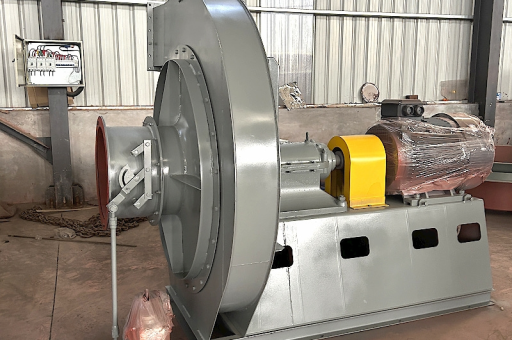
This is a specific industrial equipment term. A Waste Gas Dust Collector Fan (often referred to more broadly as an ID Fan, Induced Draft Fan, or Exhaust Fan in a dust collection system) is the component that provides the motive force (airflow and static pressure) to move polluted air from the process through the filtration system and out to the exhaust stack.
Here is a comprehensive breakdown of what this equipment is, its types, key considerations, and common applications.
Core Function
The fan's primary job is to overcome the resistance (pressure drop) of the entire system, including:
- Ductwork: The pipes carrying the dirty gas.
- Hoods/Collection Points: Where the gas is captured.
- Dust Collector (Filter): The filter bags, cartridges, or scrubbers that clean the gas.
- Stack/Exhaust: The final discharge point.
It must create enough negative pressure (suction) on the inlet side to capture the dust and enough positive pressure on the outlet side to push the clean air out.
Common Types of Fans Used
The specific type of fan depends on the gas temperature, dust characteristics, and required pressure.
| Fan Type | Characteristics | Best For |
|---|---|---|
| Centrifugal (Radial) Fans | High pressure, moderate airflow. Robust construction. | High static pressure systems, heavy dust loads, hot gases. |
| Backward Inclined (BI) | High efficiency, non-clogging blades. Most common for clean to moderate dust. | General industrial dust collection, woodworking, cement. |
| Radial (Paddle Wheel) | Very rugged, handles sticky or abrasive dust; blades are straight. | Steel mills, foundries, mining, highly abrasive materials. |
| Forward Curved (Squirrel Cage) | High airflow, low noise, lower pressure capability. | Low-pressure systems, HVAC, clean air side of a collector (rarely on dirty side). |
| Axial Fans (Propeller type) | High airflow, very low pressure. | Dilution ventilation, fume hoods, general building exhaust (not for high-pressure filtration systems). |
| Specialized | ||
| High-Temperature Fans | Made of special alloys, with cooling wheels or shaft coolers. | Kilns, dryers, incinerators (gas temps > 200°C / 400°F). |
| Explosion-Proof Fans | Spark-resistant construction (aluminum, non-ferrous). | Combustible dusts (wood, grain, metal powders). |
Key Technical Parameters
When specifying a "Waste Gas Dust Collector Fan," you must consider:
- Airflow (CFM or m³/hr): The volume of gas needing to be moved.
- Static Pressure (SP - inches w.g. or Pa): The total resistance the fan must overcome. This is critical.
- Gas Temperature: Directly affects the fan's material, motor power, and speed. Hot gas has lower density, requiring more power to move.
- Gas Composition: Is it corrosive (acidic fumes), flammable, or explosive? This dictates material of construction (stainless steel, FRP) and hazardous location rating.
- Dust Loading: The amount of particulate matter entering the fan. Ideally, the fan should be on the clean side of the filter. Placing it on the dirty side causes erosion and imbalance.
- Power (Motor HP or kW): Calculated from airflow, pressure, and efficiency. Always include a safety margin.
- Variable Speed Drive (VFD): Allows adjusting fan speed to match changing process conditions, saving significant energy.
Critical Design Considerations
- Clean vs. Dirty Side Mounting (The Single Most Important Decision):
- Clean Side Fan (most common): Fan is located after the dust collector (the "ID Fan" configuration). The gas entering the fan is already cleaned. This is preferable because it protects the fan from erosion, reduces maintenance, and allows for a lighter, more efficient fan design.
- Dirty Side Fan (rare, but necessary for some processes): Fan is located before the dust collector (a "PD Fan" - pressure blower). Used only when the gas is so hot or corrosive that it must be moved before cooling/cleaning. Requires a heavily reinforced, abrasion-resistant fan.
- Isolation Dampers: A motorized damper on the inlet or outlet is essential for fan startup (unloaded start) and shutdown.
- Vibration Monitoring: Due to the high speeds and industrial environment, vibration sensors are critical to detect fan imbalance (often from dust buildup on blades) before catastrophic failure.
- Material Selection: For acidic gases (e.g., H₂SO₄, HCl), fans may be made of Fiber Reinforced Plastic (FRP) or Stainless Steel. For high temperatures, Inconel or Hastelloy may be required.
Common Applications
- Baghouses (Fabric Filters): The fan pulls air through thousands of filter bags.
- Cartridge Collectors: Used for fine dust (welding, pharmaceuticals).
- Cyclones: The fan pulls gas through a centrifugal separator.
- Wet Scrubbers: The fan overcomes the high pressure drop of the scrubbing liquid.
- Industrial Ovens & Dryers: Exhausting solvent-laden or hot moisture-laden air.
- Smoke Exhaust Systems: In steel, aluminum, and chemical plants.
Example Specification Request
If you need to buy one, your request should look like this:
"I need a centrifugal induced draft fan for a baghouse dust collector handling cement kiln waste gas.
- Airflow: 50,000 CFM
- Static Pressure: 30 in w.g.
- Gas Temperature: 250°F (120°C), intermittent peaks to 400°F (200°C)
- Fan Type: Backward Inclined, Class IV
- Material: Carbon steel with high-temperature paint
- Motor: 200 HP, 1800 RPM, TEFC (Totally Enclosed Fan Cooled), with VFD
- Accessories: Inlet box damper, vibration switches, and a shaft cooling fan."
In short, the Waste Gas Dust Collector Fan is the engine of the entire pollution control system. Choosing the correct type, size, and location relative to the filter is vital for safety, efficiency, and long equipment life.





