
This article's table of contents introduction:
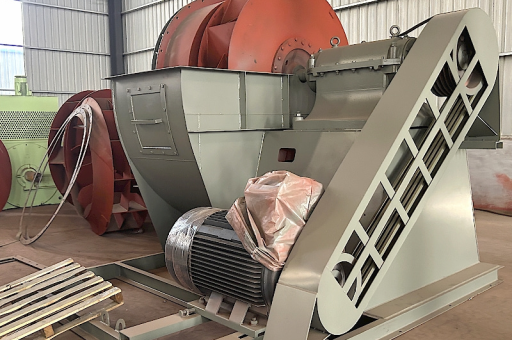
- Dust Collector Fan (ID Fan)
- Mining Ventilation Fan
- Fluidized Bed Boiler Blower (FD Fan)
- Blower (General Industrial)
- Summary Comparison Table
- How They Relate (Example: A CFB Power Plant)
It looks like you've listed four key pieces of industrial equipment, likely to understand their functions, differences, or how they relate to each other in a system like a power plant, cement plant, or mining operation.
Here is a breakdown of each component, its specific function, and how they differ from one another.
Dust Collector Fan (ID Fan)
- Primary Function: Creates negative pressure (suction) to pull dust-laden air through a filtration system (baghouse, cyclone, or electrostatic precipitator).
- Common Names: Induced Draft (ID) Fan, Baghouse Fan, Exhaust Fan.
- Key Characteristics:
- High Static Pressure: Must overcome the resistance of filter bags, ducts, and dampers.
- Abrasion Resistant: Handles air with fine, abrasive particulates (dust). Often has wear liners or specialized blade coatings.
- Clean Air Side: Usually placed after the filter to protect the fan from heavy contamination, though some handle dirty air.
- Application Context: Cement plants, woodworking shops, pharmaceutical manufacturing, steel mills.
Mining Ventilation Fan
- Primary Function: Provides fresh airflow to underground workings and dilutes/removes hazardous gases (methane, CO, diesel fumes) and dust.
- Common Names: Main Fan, Auxiliary Fan, Booster Fan.
- Key Characteristics:
- Extreme Safety Requirements: Must be spark-proof (non-ferrous materials for blades), fire-resistant, and highly reliable.
- Massive Airflow Volume: Often move hundreds of thousands of CFM (cubic feet per minute).
- Reversible: Often designed to reverse airflow direction for emergency evacuation or recirculation strategies.
- Sturdy Construction: Built to handle harsh, wet, and corrosive underground environments.
- Application Context: Underground coal mines, hard rock mines (gold, copper), tunnels.
Fluidized Bed Boiler Blower (FD Fan)
- Primary Function: Supplies the primary combustion air at sufficient pressure to "fluidize" (suspend) the bed of fuel and inert material (sand/ash) in the boiler.
- Common Names: Forced Draft (FD) Fan, Primary Air Fan, Bed Fan.
- Key Characteristics:
- High Pressure (Medium to High): Requires significant pressure (typically 40-100+ inches w.g.) to lift and mix the heavy bed material.
- Large Airflow: Must provide the oxygen required for combustion of low-grade fuels (coal, biomass, waste).
- Variable Speed: Critical for controlling bed temperature and combustion efficiency.
- Comparison to other fans: Much higher pressure than a dust collector fan, but different design than a general blower.
- Related Equipment: Also requires a Secondary Air Fan for staged combustion, and an ID Fan for flue gas exhaust.
- Application Context: Circulating Fluidized Bed (CFB) boilers in power plants, industrial steam generation.
Blower (General Industrial)
- Primary Function: A broad term for a device that moves gas (air) at a moderate pressure (usually 1 PSI to 15 PSI / 2 to 40+ psi for positive displacement blowers).
- Common Types:
- Centrifugal Blower: Higher volume, lower pressure (similar to a fan).
- Positive Displacement (Roots Blower): Lower volume, higher, constant pressure (used for pneumatic conveying, aeration).
- Key Characteristics:
- General Purpose: The most versatile term. Can be used for aeration, drying, cooling, combustion air, or pneumatic transport.
- Pressure Range: Typically between a fan (low pressure, high volume) and a compressor (high pressure, low volume).
- Application Context: Wastewater treatment (aeration), pneumatic conveying (moving cement/pellets), industrial combustion, air knives.
Summary Comparison Table
| Feature | Dust Collector Fan | Mining Ventilation Fan | Fluidized Bed Boiler Blower | General Blower |
|---|---|---|---|---|
| Primary Goal | Filtration & pollution control | Personnel safety & gas dilution | Combustion & bed fluidization | Air movement for process |
| Typical Pressure | Medium-High (static) | Low-Medium (volume focus) | High (fluidization) | Low-High (varies by type) |
| Material Handling | Abrasive dust | Moist air, gases, minor dust | Hot air, fuel particles | Clean or slightly dusty air |
| Key Design Feature | Abrasion resistance, leak-proof | Spark-proof, reversible | High reliability, erosion resistant | Versatility (design type) |
| Location in System | End of process (exhaust) | Start/middle of mine | Start of combustion (forced draft) | Anywhere (specific to need) |
How They Relate (Example: A CFB Power Plant)
- Blower (FD Fan): Forces primary air into the bottom of the boiler to fluidize the coal/sand bed.
- Dust Collector Fan (ID Fan): Pulls the hot flue gas from the boiler through a baghouse or ESP to capture fly ash before releasing it to the stack.
- Mining Ventilation Fan: If the power plant is coal-fired, this fan would be in the underground coal mine supplying the plant, not in the plant itself.
In short: You have listed the air movers for four very different industrial challenges: cleaning air (Dust), keeping people alive (Mining), burning fuel efficiently (Boiler), and general-purpose air movement (Blower).





