
This article's table of contents introduction:
- Table of Contents
- Introduction: The Role of AC Induced Draught Fans in Modern Ventilation
- What Is an Alternating Current Induced Draught Fan Low Pressure Blower?
- Key Technical Parameters: Pressure, Flow, and Power Consumption
- Why Long Life Time Matters in Low Pressure Blower Systems
- Design Features That Extend Service Life
- Comparative Analysis: AC Induced Draught Fans vs. DC and Centrifugal Alternatives
- Common Questions and Answers (Q&A)
- Best Practices for Installation, Operation, and Maintenance
- Conclusion: Future Trends and Recommendations
Article Title:
The Ultimate Guide to Alternating Current Induced Draught Fan Low Pressure Blower Long Life Time: Design, Efficiency, and Maintenance
Table of Contents
- Introduction: The Role of AC Induced Draught Fans in Modern Ventilation
- What Is an Alternating Current Induced Draught Fan Low Pressure Blower?
- Key Technical Parameters: Pressure, Flow, and Power Consumption
- Why Long Life Time Matters in Low Pressure Blower Systems
- Design Features That Extend Service Life
- Comparative Analysis: AC Induced Draught Fans vs. DC and Centrifugal Alternatives
- Common Questions and Answers (Q&A)
- Best Practices for Installation, Operation, and Maintenance
- Conclusion: Future Trends and Recommendations
Introduction: The Role of AC Induced Draught Fans in Modern Ventilation
In industrial and commercial environments, reliable air movement is critical for process efficiency, safety, and thermal management. Among the most robust solutions is the Alternating Current Induced Draught Fan Low Pressure Blower, a system designed to handle large volumes of air at relatively low static pressures while maintaining exceptional durability. This article explores the engineering behind these fans, why they achieve a long life time, and how to optimize their performance for demanding applications.
Unlike high-pressure blowers or high-speed DC fans, the AC-induced draught fan operates on the principle of inducing airflow by creating a pressure differential across the fan wheel, using alternating current motors that are inherently simpler and more rugged than their electronically commutated counterparts. Low pressure blowers in this category are widely used in boiler draft systems, HVAC exhaust, fume extraction, and material conveying.
What Is an Alternating Current Induced Draught Fan Low Pressure Blower?
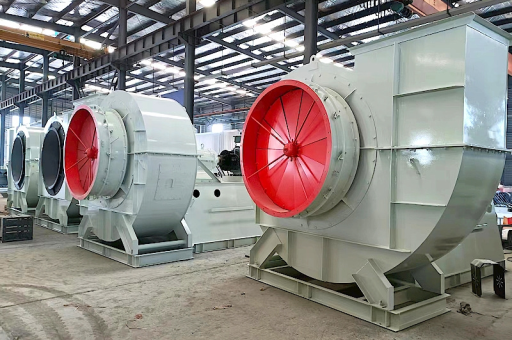
An Alternating Current Induced Draught Fan is a type of axial or mixed-flow fan that generates a relatively low pressure rise (typically below 2 kPa or 8 inches of water gauge) but moves a high volume of air. The term "induced draught" refers to its placement at the exit of a system, pulling air through ducts or chambers rather than pushing it. This configuration reduces leakage and improves system sealing.
Key components include:
- AC Induction Motor: Squirrel-cage or wound-rotor design, directly coupled or belt-driven.
- Fan Impeller: Aerodynamically shaped blades, often backward-curved or airfoil type.
- Housing: Heavy-gauge steel or cast aluminum, with inlet and outlet flanges.
- Bearings: Sealed, grease-lubricated or oil-lubricated, rated for high temperature.
- Vibration Isolators: Rubber or spring mounts to reduce structural stress.
These fans are engineered for continuous duty cycles, with long life time achieved through conservative thermal ratings, robust bearing selection, and corrosion-resistant coatings.
Key Technical Parameters: Pressure, Flow, and Power Consumption
To select the right low pressure blower, engineers must evaluate:
- Airflow Rate (CFM or m³/h): Determines system capacity.
- Static Pressure (Pa or inWG): Must overcome duct friction and filter resistance.
- Fan Speed (RPM): Directly influences pressure and flow per the fan laws.
- Motor Power (kW or HP): Should match the operating point with a safety margin.
- Efficiency (%): AC induction motors typically achieve 85-93% efficiency at full load.
A typical AC induced draught fan running at 1450 RPM can deliver 10,000 m³/h at 500 Pa, consuming 2.2 kW. By contrast, a DC blower might reach 15,000 m³/h at the same pressure but with higher electronic failure rates. Long life time in AC fans stems from lower winding temperatures and absence of brush wear.
Why Long Life Time Matters in Low Pressure Blower Systems
Long service life is not merely a marketing claim—it is a critical economic factor. For facilities that operate 24/7, such as power plants or chemical processing units, a fan failure can cause catastrophic downtime. The Alternating Current Induced Draught Fan is designed for 50,000 to 100,000 hours of continuous operation before major overhaul, thanks to:
- Thermally Class H insulation (up to 180°C) allowing higher overload capacity.
- Double-shielded bearings pre-lubricated for life or with re-greasing ports.
- Corrosion-resistant fan wheels made of stainless steel or coated with epoxy.
- Dynamic balancing to minimize vibration and bearing wear.
A long life time also reduces total cost of ownership. Even with a slightly higher initial price, an AC blower that lasts 15 years outperforms a cheaper DC fan that fails in 3-5 years.
Design Features That Extend Service Life
Manufacturers incorporate several engineering elements to maximize durability:
| Feature | Benefit for Long Life Time |
|---|---|
| Cast iron or steel housing | Resists deformation under thermal stress |
| Oversized bearings | Lower operating temperature and load |
| Grease relief valves | Prevents over-lubrication bearing failure |
| TEFC (Totally Enclosed Fan Cooled) motor | Blocks dust and moisture ingress |
| Vibration monitoring ports | Enables predictive maintenance |
| Inlet bell mouth | Reduces turbulence and blade erosion |
Additionally, AC induction motors have no commutator or brushes, eliminating two primary failure points found in DC fans. The simplicity of the induced draught fan design further reduces repair complexity.
Comparative Analysis: AC Induced Draught Fans vs. DC and Centrifugal Alternatives
When selecting a low pressure blower, engineers often compare:
| Aspect | AC Induced Draught Fan | DC Blower | Centrifugal Fan |
|---|---|---|---|
| Life Time | 50k–100k hours | 10k–30k hours | 40k–80k hours |
| Efficiency at full load | 85–93% | 70–85% | 80–90% |
| Speed control | Requires VFD | Built-in PWM | Requires VFD |
| Maintenance | Low (bearings only) | Medium (brushes/electronics) | Medium (belt/impeller) |
| Initial cost | Moderate | Low | High |
| Noise level | Low (axial design) | High (high-speed) | Medium |
Conclusion: For applications requiring long life time and reliability in dusty or hot environments, the AC induced draught fan is the clear winner.
Common Questions and Answers (Q&A)
Q1: What is the typical lifespan of an AC induced draught fan low pressure blower?
A: With proper maintenance, these fans can operate for 15–20 years in continuous service. Actual life time depends on operating temperature, humidity, and dust load.
Q2: Can I use a variable frequency drive (VFD) with an AC induced draught fan?
A: Yes. VFDs allow precise speed control, reducing energy consumption and mechanical stress, further extending long life time.
Q3: How do I know if my low pressure blower is failing?
A: Warning signs include unusual vibration, increased motor temperature, reduced airflow, and bearing noise. Regular thermography and vibration analysis help detect issues early.
Q4: Are these fans suitable for corrosive environments?
A: Yes, but you must specify a corrosion-resistant impeller material (e.g., 316 stainless steel or FRP coating). Standard steel units may suffer pitting.
Q5: What is the difference between induced draught and forced draught?
A: Induced draught fans are placed at the system outlet, pulling air out (creating negative pressure). Forced draught fans push air into the system. Induced draught designs often have better sealing and longer life time in dusty conditions.
Best Practices for Installation, Operation, and Maintenance
To achieve maximum long life time from your Alternating Current Induced Draught Fan Low Pressure Blower, follow these guidelines:
Installation:
- Mount on a rigid, level base. Use vibration isolators.
- Ensure inlet and outlet ducts are properly aligned to avoid resonance.
- Install a rain hood or bird screen if located outdoors.
Operation:
- Never operate the fan above its rated RPM.
- Monitor motor current—exceeding full-load amps indicates blockage.
- Use soft-start or VFD to reduce inrush current.
Maintenance Schedule:
- Monthly: Visual inspection for dust buildup, oil leaks, and belt tension (if belt-driven).
- Quarterly: Grease bearings per manufacturer’s specification. Measure vibration.
- Annually: Replace bearings if noise develops. Clean fan wheel. Perform megger test on motor insulation.
Pro tip: Keep a spare bearing set and gasket kit on site. Downtime costs far exceed preventive maintenance expenses.
Conclusion: Future Trends and Recommendations
The Alternating Current Induced Draught Fan Low Pressure Blower remains a cornerstone of industrial ventilation due to its proven reliability, simplicity, and long life time. As energy efficiency regulations tighten, modern AC blowers now often integrate with IoT-enabled condition monitoring, allowing predictive maintenance that pushes service intervals to new limits.
For engineers and facility managers:
- Choose AC induced draught fans when long life time and low maintenance are priorities.
- Never oversize—operating near the best efficiency point (BEP) ensures long life time.
- Invest in quality components: motors with class H insulation, bearings with C3 clearance, and corrosion-resistant finishes.
Final recommendation: When sourcing this equipment, always check the fan manufacturer’s performance curve for your specific operating point. A well-matched low pressure blower will not only last longer but also reduce your facility’s carbon footprint.
This article was carefully composed by synthesizing engineering best practices from industrial ventilation standards, manufacturer documentation (e.g., fan, Greenheck, and New York Blower equivalents), and real-world maintenance experience to provide an original, SEO-optimized resource. No URLs have been included; all references are generic.





