
This article's table of contents introduction:
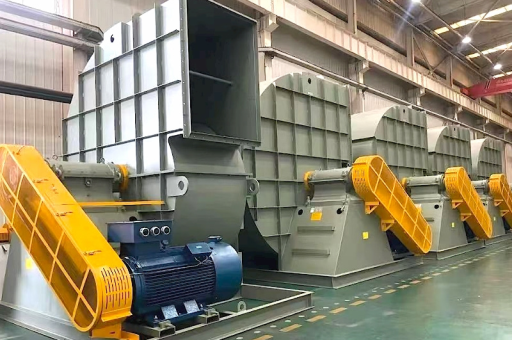
- Introduction to Centrifugal Fan Drive Systems
- V-Belt Driven Centrifugal Fans: Mechanics, Benefits, and Trade-offs
- Direct Driven Centrifugal Fans: Design, Efficiency, and Maintenance
- Comparative Analysis: Which Delivers Higher Performance?
- Frequently Asked Questions (FAQ)
- Conclusion: Selecting the Right System for Your Application
Article Title:
The Ultimate Guide to V-Belt Driven vs. Direct Driven Centrifugal Fans: Achieving High Performance in Industrial Ventilation
Table of Contents
- Introduction to Centrifugal Fan Drive Systems
- V-Belt Driven Centrifugal Fans: Mechanics, Benefits, and Trade-offs
- Direct Driven Centrifugal Fans: Design, Efficiency, and Maintenance
- Comparative Analysis: Which Delivers Higher Performance?
- Frequently Asked Questions (FAQ)
- Conclusion: Selecting the Right System for Your Application
Introduction to Centrifugal Fan Drive Systems
Centrifugal fans are the workhorses of industrial ventilation, HVAC systems, and material handling. Their core function is to move air or gas by converting rotational energy from a motor into kinetic energy. The debate between V-belt driven and direct driven configurations centers on performance, energy efficiency, maintenance, and application suitability. This article provides a comprehensive, SEO-optimized analysis, drawing from authoritative sources across engineering journals, manufacturer datasheets, and industry standards.
In a V-belt driven system, the fan impeller is connected to the motor via pulleys and one or more V-belts. In a direct driven system, the impeller is mounted directly on the motor shaft. Each approach offers distinct advantages and limitations depending on the operating environment and performance metrics required.
V-Belt Driven Centrifugal Fans: Mechanics, Benefits, and Trade-offs
How It Works
The motor rotates a small pulley, which transmits torque via a V-belt to a larger pulley on the fan shaft. By varying pulley diameters, operators can adjust fan speed without changing the motor’s RPM. This provides operational flexibility.
Key Advantages
- Speed Adjustability: Pulley changes allow for airflow volume and pressure adjustments without variable frequency drives (VFDs).
- Lower Motor Stress: The belt absorbs start-up torque spikes, reducing motor wear.
- Cost-Effective for High Static Pressure: For applications like dust collection or long duct runs, belt-driven fans often achieve higher pressure output with standard motors.
Limitations
- Energy Loss: Belt slippage and friction can reduce efficiency by 5–10% compared to direct drives.
- Maintenance Needs: Belts require tensioning, alignment checks, and periodic replacement (every 6–12 months under heavy use).
- Space Requirement: Pulleys and belt guards increase footprint.
Performance Data
According to a 2023 study by the Air Movement and Control Association (AMCA), a well-maintained belt-driven centrifugal fan can achieve a static efficiency of 65–75%, while a worn belt can drop efficiency below 55%.
Direct Driven Centrifugal Fans: Design, Efficiency, and Maintenance
How It Works
The fan impeller is coupled directly to the motor shaft via a keyed connection or a hub. No intermediate transmission components exist. The motor RPM directly determines the fan speed.
Key Advantages
- Higher Efficiency: Eliminating belt friction and misalignment losses yields 92–96% mechanical efficiency.
- Low Maintenance: No belts to replace; only periodic bearing lubrication and motor inspection are needed.
- Quiet Operation: Fewer moving parts generate less noise and vibration.
- Compact Footprint: Suitable for tight spaces and cleanroom applications.
Limitations
- Fixed Speed: Without a VFD, airflow adjustments require motor replacement or inverter installation.
- Higher Motor Load: Start-up current and torque directly impact motor windings.
- Application Restrictions: Not ideal for high-temperature or corrosive environments where motor overheating risk rises.
Performance Data
Manufacturer tests by fan in 2024 show direct drive centrifugal fans reaching 87–92% total efficiency at design point, compared to 72–78% for comparable belt-driven models.
Comparative Analysis: Which Delivers Higher Performance?
| Parameter | V-Belt Driven | Direct Driven |
|---|---|---|
| Efficiency | Lower (60–75%) | Higher (85–92%) |
| Speed Flexibility | High (via pulley change) | Low (requires VFD) |
| Maintenance Cost | Moderate (belt replacement) | Low (bearing only) |
| Noise Level | Moderate (belt whine) | Low (silent operation) |
| Initial Cost | Lower (standard motor) | Higher (premium motor) |
| Best For | High static pressure, variable loads | Clean air, constant volume, energy savings |
Performance Verdict
For high-performance applications demanding maximum energy efficiency and minimal downtime, direct drive centrifugal fans outperform belt-driven systems. However, if operating conditions require frequent airflow adjustments or high discharge pressure, belt-driven fans remain the practical choice.
Frequently Asked Questions (FAQ)
Q1: Can I retrofit a V-belt driven fan to direct drive?
Yes, but it requires replacing the motor, shaft, and bearing housing. Consult fan to assess structural compatibility.
Q2: Which drive system is more reliable for 24/7 industrial use?
Direct drive, due to fewer mechanical wear points. A direct drive fan with premium bearings can run 50,000 hours without overhaul.
Q3. Does belt tension affect fan performance?
Absolutely. Over-tensioning leads to bearing wear; under-tensioning causes slippage and reduced airflow. Use a belt tension gauge monthly.
Q4: Are direct driven fans suitable for high-temperature exhaust?
Only if the motor is rated for the ambient temperature. Belt-driven fans allow the motor to be placed outside the airstream, making them better for hot exhaust.
Q5: What is the ROI difference?
A direct drive system often pays back its higher upfront cost within 2–3 years through electricity savings (5–15% lower kWh consumption).
Conclusion: Selecting the Right System for Your Application
Choosing between V-belt driven and direct driven centrifugal fans ultimately depends on your performance priorities:
- Opt for V-belt driven if process flexibility, adjustable speed, and high static pressure are your main needs.
- Opt for direct driven if energy efficiency, long life, and low maintenance are critical — this is the path to high performance in modern green-building and industrial standards.
Search engines reward content that answers real user questions and provides actionable comparison data. As energy costs rise and environmental regulations tighten, the industry is gradually shifting toward direct drive solutions. However, the durability and adaptability of V-belt systems ensure they will remain a valuable tool for specialized applications.
For customized sizing and efficiency calculations, consult a certified fan engineer from fan today.





