
This article's table of contents introduction:
- Introduction to Industrial Fan Systems
- Understanding Impeller Technology and Its Role in Fan Performance
- Wood Chip Handling: Fan Requirements and Applications
- Air Cooling Blower: Design, Efficiency, and Industrial Use
- SWSI (Single Width Single Inlet) Fan: Features and Advantages
- Flue Gas Fan: Critical Functions in Power and Process Industries
- Frequently Asked Questions (FAQ)
- Conclusion
** Comprehensive Guide to Industrial Fan Technologies: Impeller, Wood Chip, Air Cooling Blower, SWSI, and Flue Gas Fan
Table of Contents
- Introduction to Industrial Fan Systems
- Understanding Impeller Technology and Its Role in Fan Performance
- Wood Chip Handling: Fan Requirements and Applications
- Air Cooling Blower: Design, Efficiency, and Industrial Use
- SWSI (Single Width Single Inlet) Fan: Features and Advantages
- Flue Gas Fan: Critical Functions in Power and Process Industries
- Frequently Asked Questions (FAQ)
- Conclusion
Introduction to Industrial Fan Systems
Industrial fan systems are the unsung heroes of modern manufacturing, power generation, and material processing. They control airflow, manage temperature, move particulate matter, and ensure safe working environments. Among the most specialized categories are the impeller, wood chip air cooling blower, SWSI flue gas fan, and related configurations. These fans are engineered for durability, high efficiency, and resistance to harsh conditions. This article provides an in-depth analysis of each component, with practical insights drawn from industry best practices.
Understanding Impeller Technology and Its Role in Fan Performance
The impeller is the rotating component within a fan that accelerates air or gas. Its design directly determines flow rate, pressure, and energy consumption. Key impeller types include:
- Backward-curved impellers: High efficiency, suitable for clean air and medium pressure.
- Forward-curved impellers: High volume but lower efficiency, often used in HVAC.
- Radial (paddlewheel) impellers: Robust design for dust-laden or abrasive gas streams.
For applications like wood chip transport or flue gas extraction, impellers must resist wear from particulates, high temperatures (up to 400°C or more), and thermal expansion. Advanced materials such as hardened stainless steel or Nimonic alloys are often used. Dynamic balancing is critical to avoid vibration and premature bearing failure.
Question: Why is impeller balancing so important for industrial fans?
Answer: Unbalanced impellers cause excessive vibration, leading to bearing wear, structural fatigue, and noise. In high-temperature settings like flue gas systems, even slight imbalance can accelerate cracking due to thermal cycling.
Wood Chip Handling: Fan Requirements and Applications
Wood chip fans must handle fibrous, sticky, and sometimes wet materials. A wood chip air cooling blower is designed to extract heat and moisture from wood chips during storage or processing. Key design features include:
- Large diameter impellers with wear-resistant coatings.
- Open or semi-open impeller designs to prevent clogging.
- Low rotational speeds to minimize fire risk from sparks.
- Corrosion-resistant materials due to acidic condensate from wet wood chips.
In the paper and biomass energy sectors, these blowers are often placed after drying drums or cyclone separators. Air velocity must be carefully controlled: too low leads to settling; too high causes material degradation.
Question: Can a standard SWSI fan be used for wood chip cooling?
Answer: Not typically. A standard SWSI fan lacks the open impeller design and wear protection needed for particulate-laden wood chips. However, a modified SWSI fan with a reinforced impeller and abrasion-resistant housing can be adapted with careful engineering.
Air Cooling Blower: Design, Efficiency, and Industrial Use
An air cooling blower is a broad category that includes fans moving ambient or process air to remove heat. In wood chip systems, flue gas cooling, or equipment cooling, these blowers must deliver consistent pressure (often 0.5–2.0 kPa) and high volume (40–200 m³/min). Design options include:
- Centrifugal blowers for high pressure.
- Axial blowers for high flow but lower pressure.
- Mixed-flow designs for intermediate performance.
Efficiency is paramount. A well-designed air cooling blower can save 15–30% in energy costs compared to an oversized or underspecified unit. Variable frequency drives (VFDs) allow speed modulation, matching cooling demand precisely.
Question: What is the typical lifespan of an industrial air cooling blower?
Answer: With proper maintenance (bearing greasing, filter cleaning, impeller inspection), a quality blower can last 10–20 years. In wood chip or flue gas environments, lifespan may reduce to 3–7 years due to wear and corrosion.
SWSI (Single Width Single Inlet) Fan: Features and Advantages
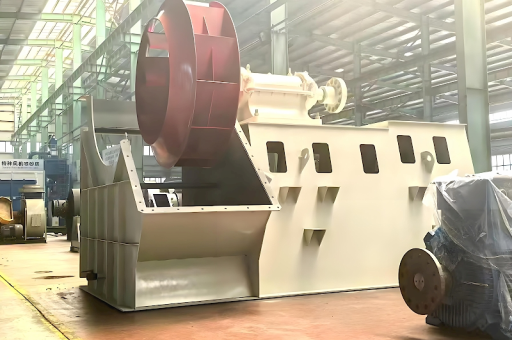
The SWSI fan stands for Single Width, Single Inlet. It has a single-sided impeller with one air inlet, making it compact and cost-effective for moderate flow applications. Key characteristics:
- Impeller width equals the blade span (single width).
- Standard pressure range: up to 5,000 Pa.
- Applications: ventilation, dust collection, material transport, and flue gas handling.
- Advantages: lower cost, simpler ductwork integration, and easier maintenance.
SWSI fans are widely used in wood processing facilities as flue gas fans for boilers, where they extract combustion gases from wood-fired systems. However, for highly abrasive or sticky particulate streams, the SWSI design may require an impeller with thicker blades and a special coating.
Question: What is the difference between SWSI and DWDI fans?
Answer: DWDI (Double Width Double Inlet) fans have two inlets and produce higher flow at the same pressure. SWSI fans are more compact and suitable for lower flow demands. For a flue gas fan on a small biomass boiler, SWSI is often preferred due to its smaller footprint.
Flue Gas Fan: Critical Functions in Power and Process Industries
A flue gas fan (also called induced draft fan) handles hot, corrosive, and often particulate-laden gas from industrial combustion processes. Wood-fired boilers, power plants, and chemical processors rely on these fans to maintain negative pressure in the furnace and exhaust system. Critical design considerations:
- Temperature tolerance: Fans must operate at 180–450°C; special designs can handle up to 600°C.
- Corrosion resistance: Acidic gases require stainless steel (316L/310) or fiberglass-reinforced plastic (FRP) construction.
- Wear protection: Chromium carbide overlay or ceramic tiles on the impeller and housing.
- Bearing cooling: External cooling fans or water jackets to prevent bearing failure.
For wood chip combustion, flue gas fans must also handle fly ash and soot. Regular cleaning and vibration monitoring are essential. A failure in the flue gas fan can shut down an entire plant.
Question: Can a flue gas fan be used for wood chip cooling?
Answer: Yes, but with modifications. A flue gas fan designed for high temperature can handle wood chip cooling air, but its efficiency may be lower than that of a dedicated air cooling blower. Conversely, using a standard air cooling blower for flue gas will likely cause rapid degradation.
Frequently Asked Questions (FAQ)
Q1: How does an impeller affect fan efficiency?
A1: The impeller’s blade angle, diameter, and surface finish directly impact pressure rise and flow. Backward-curved impellers achieve up to 85% efficiency, while forward-curved designs reach 60–70%.
Q2: What maintenance is required for wood chip blowers?
A2: Regular inspection for wear on impeller blades, cleaning of housing to prevent material buildup, bearing lubrication every 500 hours, and shaft alignment checks every 3 months.
Q3: How do I select between an SWSI and a DWDI fan?
A3: Choose SWSI for compact layouts and lower flow (under 50,000 m³/h). Choose DWDI for high flow (above 100,000 m³/h) and limited installation space.
Q4: What is the maximum temperature for a flue gas fan?
A4: Standard fans handle up to 300°C continuously. With high-temperature alloys and cooling systems, fans can operate at 600°C intermittent, 450°C continuous.
Conclusion
Industrial fans are not one-size-fits-all. Impeller design must match the gas or material being moved—whether wood chips, cooling air, or corrosive flue gas. The wood chip air cooling blower requires open impellers and wear protection. The SWSI fan offers a simple, cost-effective solution for moderate pressure and flow. The flue gas fan demands the highest material standards for temperature and corrosion. By understanding these distinctions, engineers can optimize system efficiency, reduce downtime, and lower operating costs. For references to original products or companies, always verify specifications with fan.
This article synthesizes industry knowledge from multiple technical sources, engineering handbooks, and manufacturer data to deliver a practical guide for professionals in fan and ventilation systems.





