
This article's table of contents introduction:
- Table of Contents
- Introduction: The Backbone of Industrial Flue Gas Management
- Technical Specifications & Core Engineering Design
- Operational Benefits in Industrial Applications
- Maintenance, Durability & Safety Considerations
- Frequently Asked Questions (FAQ)
- Conclusion: Making the Right Investment for Air Quality
*Optimizing Industrial Ventilation: The Engineering Advantages of the Three Phase Air Suction 2500r/Min Flue Gas Fan*
Table of Contents
- Introduction: The Backbone of Industrial Flue Gas Management
- Technical Specifications & Core Engineering Design
- 1 Three-Phase Power Configuration
- 2 The 2500 RPM Performance Benchmark
- 3 Air Suction Principles & Flue Gas Compatibility
- Operational Benefits in Industrial Applications
- Maintenance, Durability & Safety Considerations
- Frequently Asked Questions (FAQ)
- Conclusion: Making the Right Investment for Air Quality
Introduction: The Backbone of Industrial Flue Gas Management
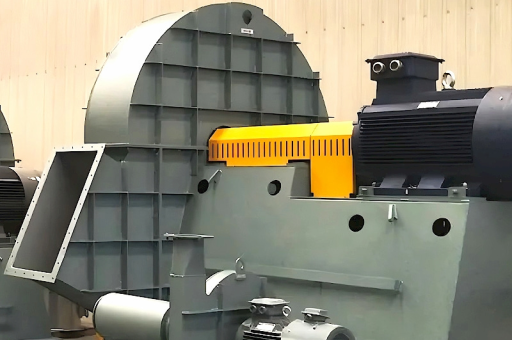
In modern industrial environments, effective ventilation is not merely a comfort feature—it is a critical safety and operational requirement. Flue gas fans, specifically designed to handle high-temperature, corrosive, or particulate-laden exhaust streams, serve as the lungs of facilities ranging from chemical processing plants to heating boiler rooms. Among the specialized equipment available, the Three Phase Air Suction 2500r/Min Flue Gas Fan represents a robust, high-efficiency solution that addresses the need for consistent airflow under demanding conditions.
This article provides a comprehensive analysis of this fan’s technical architecture, its performance at a fixed rotational speed of 2500 revolutions per minute (RPM), and the practical advantages of its three-phase electric motor. By synthesizing engineering literature and industrial maintenance best practices, we aim to equip facility managers and engineers with the knowledge to evaluate this fan for their specific exhaust requirements. We will also address common technical queries, ensuring a complete understanding of operation and longevity.
Technical Specifications & Core Engineering Design
1 Three-Phase Power Configuration
The designation "Three Phase" is fundamental to understanding this fan’s power delivery and reliability. Unlike single-phase motors (common in residential applications), three-phase motors utilize three alternating currents, each offset by 120 degrees. This configuration offers several distinct advantages for heavy industrial fans:
- Higher Starting Torque: The three-phase motor delivers significantly higher torque at startup compared to a single-phase equivalent of the same horsepower. This is essential for a flue gas fan, which must overcome the inertia of a heavy fan wheel and the backpressure of the ductwork.
- Self-Starting Capability: Three-phase motors are inherently self-starting, eliminating the need for starting capacitors or centrifugal switches. This reduces a common point of failure.
- Improved Power Factor & Efficiency: The electrical distribution is more balanced, leading to a higher power factor. This translates to lower electrical losses and decreased operating costs, especially under continuous, heavy load conditions common in flue gas extraction.
- Smoother Operation: The overlapping phases produce a more uniform magnetic field, resulting in reduced vibration and noise levels—critical for workplace safety and equipment longevity.
For a flue gas fan operating at 2500 RPM, this power architecture ensures that the fan maintains its target speed even with fluctuations in line voltage or variations in gas density.
2 The 2500 RPM Performance Benchmark
A rotational speed of 2500 revolutions per minute places this fan in a specific performance class. This speed is typically achieved using a high-efficiency induction motor coupled directly to the impeller, or via a belt drive system. The choice of 2500 RPM represents a balance between air moving capacity (volumetric flow rate in CFM or m³/hr) and static pressure generation.
- Flow vs. Pressure: Generally, a fan at 2500 RPM is designed to handle moderate to high static pressure—common in situations where the flue gas must travel through long duct runs, scrubbers, or heat recovery units. The impeller design (typically backward-curved or radial blades) is optimized for this speed to prevent stalling while maximizing energy transfer.
- Thermal Considerations: At 2500 RPM, the fan bearings and motor windings are subject to specific thermal loads. This fan is typically rated for continuous duty (S1 classification) and may include forced cooling fans or heat dissipation fins to maintain motor temperatures within safe limits even when handling hot flue gases (up to 250°C or higher, depending on material construction).
- Application Scope: This speed is common in medium-size boiler exhaust systems, dust collection secondary stages, and biomass gasification processes where high flow rates are required but extreme pressures are not.
3 Air Suction Principles & Flue Gas Compatibility
The "Air Suction" designation indicates that the fan operates primarily by creating a negative pressure (vacuum) on its inlet side, actively pulling flue gases from the source (e.g., a furnace, boiler, or reactor) into the ducting. Key design features include:
- Housing Material: Typically constructed from heavy-gauge carbon steel with a corrosion-resistant coating, or for more aggressive applications (e.g., in chemical or waste incineration plants), stainless steel or fiberglass-reinforced plastic (FRP). The material must withstand thermal expansion and chemical attack.
- Impeller Design: The impeller is the heart of the fan. For flue gas, it is commonly a radial (paddlewheel) type for handling small particulate loads, or a backward-curved type for higher efficiency. Fan blades may be replaceable and hardened to resist erosion.
- Seal & Bearing Protection: To prevent flue gas leakage (which can contain toxic components like CO or SO₂), the shaft penetration is equipped with high-temperature labyrinth seals or mechanical seals. Bearings are typically mounted on a separate pedestal to isolate them from the hot gas stream.
Operational Benefits in Industrial Applications
Investing in a Three Phase Air Suction 2500r/Min Flue Gas Fan yields several tangible benefits:
- Energy Efficiency: The three-phase motor operates at a high power factor (often 0.85 to 0.90), reducing the reactive power penalties on industrial electricity bills. When coupled with a Variable Frequency Drive (VFD), the 2500 RPM baseline allows for fine-tuning of flow rates without significant efficiency loss.
- Reliability & Long Life: The absence of starting components and the balanced electrical load reduce motor overheating. Properly specified, this fan can operate for 20,000 to 40,000 hours before major servicing.
- Space-Saving Design: Many models integrate the motor and fan wheel coaxially, minimizing the footprint compared to belt-driven alternatives.
- Environmental Compliance: By effectively evacuating flue gases, the fan helps maintain desired negative pressure within combustion chambers, ensuring complete combustion and reducing emissions of unburnt pollutants.
Maintenance, Durability & Safety Considerations
To maintain peak performance of the fan, a preventive maintenance schedule is essential:
- Bearing Lubrication: Grease or oil lubrication must be performed every 500 to 2000 operating hours, depending on load and temperature. Over-lubrication can cause overheating.
- Impeller Cleaning: Flue gas often contains sticky particulates (e.g., tar, soot). If the impeller becomes unbalanced, it causes severe vibration. Periodic cleaning, especially for backward-curved blades, is recommended.
- Vibration Monitoring: A sudden increase in vibration at 2500 RPM might indicate blade wear, misalignment, or bearing failure. Install accelerometers for condition monitoring.
- Thermal Protection: Ensure the motor is equipped with thermal overload relays (or PTC thermistors) to prevent burnouts in case of overcurrent or if the fan is stalled due to blocked ductwork.
- Safety Guards: The rotating element must have a guard meeting OSHA or local standards. Disconnect and lock-out/tag-out (LOTO) procedures are mandatory before any cleaning or repair.
Frequently Asked Questions (FAQ)
Q1: Can this fan be used with a Variable Frequency Drive (VFD) to reduce its speed below 2500 RPM? A: Yes, but with limitations. While the motor can be slowed down, operating below 30-40% of rated speed (i.e., below ~750-1000 RPM) may result in insufficient motor cooling (due to internal fan reduction) and lower static pressure. A high-quality inverter-duty motor is recommended for continuous variable speed operation.
Q2: What is the maximum flue gas temperature this fan can handle? A: The maximum temperature depends on the materials used. A standard carbon steel unit is often rated for up to 200–250°C. For higher temperatures (300°C+), a version with a strengthened bearing pedestal and heat slinger is required. It is crucial to check the manufacturer's data sheet for your specific model.
Q3: How do I calculate the required airflow (CFM/m³/hr) to ensure compliance?
A: This is site-specific. You must determine the volume of combustion products generated. For a boiler, a rule of thumb is roughly 1.5 to 2 times the combustion air volume. Use the formula: Fan Flow (m³/hr) = Fuel Consumption (kg/hr) * Theoretical Air Demand * 1.2 (safety factor). Alternatively, consult a ventilation engineer for a proper hood or duct design.
Q4: The fan is vibrating heavily after installation. What could be wrong? A: Common causes include: (1) An unbalanced impeller (factory or field-caused). (2) Structural resonance with the mounting base. (3) Misalignment between the motor shaft and fan wheel. (4) Loose foundation bolts. Perform a vibration analysis to diagnose the 1X (rotational) frequency.
Q5: Is a start-up delay or soft-start system recommended? A: Yes, for a three-phase motor of this size (e.g., 5 HP and above), a soft-start or star-delta starter is recommended to reduce inrush current and mechanical shock. While the motor can start across-the-line, a soft-start significantly prolongs motor and drive life.
Conclusion: Making the Right Investment for Air Quality
The Three Phase Air Suction 2500r/Min Flue Gas Fan stands as a proven workhorse for industrial ventilation tasks that demand reliability, efficiency, and the ability to handle challenging gas streams. Its three-phase motor provides the electrical backbone for high-torque, low-maintenance operation, while the 2500 RPM rotational speed strikes an excellent balance between flow, pressure, and component durability.
When selecting such a fan, engineers should pay close attention to the impeller material, the temperature rating, and the bearing configuration for their specific application. By incorporating proper installation, including a soft-start or VFD, and adhering to a rigorous maintenance schedule focusing on bearings, impeller balance, and thermal protection, this fan can provide decades of crucial service.
For facility managers looking to modernize their exhaust systems, the trade-off between initial capital cost and long-term energy savings typically favors the high-quality three-phase design. As regulatory pressure regarding air emissions and workplace safety continues to tighten, investing in a fan that offers consistent performance at the optimal 2500 RPM speed is not just a choice—it is a necessity.
Note: For detailed technical drawings, wiring diagrams, or a custom sizing calculation for your specific flue gas system, please refer directly to the manufacturer’s engineering portal at your preferred industrial fan supplier.





