
This article's table of contents introduction:
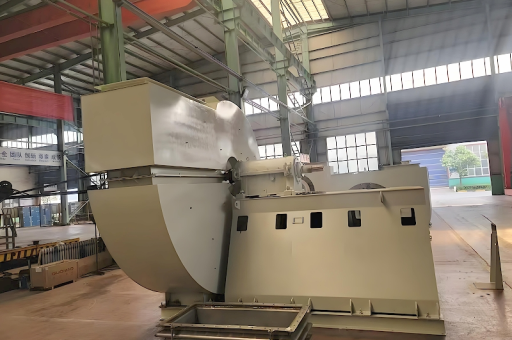
- Table of Contents / Directory Guide
- Introduction: The Nexus of Voltage and Metallurgy
- Understanding 660V Power Systems in Industrial Environments
- Metallurgical Couplings: Design, Materials, and Durability
- Coupling-Driven Centrifugal Fans: Mechanics and Performance
- Operational Advantages in Steel, Cement, and Mining
- Common Challenges and Troubleshooting Q&A
- Maintenance Best Practices for Extended Service Life
- Conclusion: Why This Triad Defines Modern Industrial Ventilation
** The Critical Role of 660V Metallurgy Coupling Driven Industrial Centrifugal Fans in Heavy-Duty Ventilation Systems
Table of Contents / Directory Guide
- Introduction: The Nexus of Voltage and Metallurgy
- Understanding 660V Power Systems in Industrial Environments
- Metallurgical Couplings: Design, Materials, and Durability
- Coupling-Driven Centrifugal Fans: Mechanics and Performance
- Operational Advantages in Steel, Cement, and Mining
- Common Challenges and Troubleshooting Q&A
- Maintenance Best Practices for Extended Service Life
- Conclusion: Why This Triad Defines Modern Industrial Ventilation
Introduction: The Nexus of Voltage and Metallurgy
In the world of heavy industrial ventilation, few configurations are as robust and specialized as the 660V metallurgy coupling driven industrial centrifugal fan. This system represents a convergence of three critical engineering domains: high-voltage electrical distribution, advanced metallurgical coupling technology, and high-pressure aerodynamic design. Unlike standard low-voltage fans, the 660V architecture allows for higher power transmission with lower current, reducing copper losses and enabling the operation of massive impellers in harsh environments such as steel smelters, foundries, and mineral processing plants.
The coupling—often a flexible or grid-type design made from heat-treated alloy steel—serves as the mechanical bridge between the motor and the fan rotor. Because these fans must withstand thermal expansion, dust, and vibration, the metallurgy of the coupling is not an afterthought; it is a core factor in system reliability. This article explores why the 660V metallurgy coupling driven industrial centrifugal fan has become the gold standard for heavy-duty applications, and how engineers can optimize its performance.
Understanding 660V Power Systems in Industrial Environments
The choice of 660V (often referred to as 660VAC or 690V in some IEC standards) is deliberate in heavy industry. Many traditional industrial motors in regions such as China, India, and parts of Europe use 660V as a medium-voltage alternative to 380V or 400V systems. The primary benefit is reduced current draw for the same power output. For example, a 250 kW fan motor operating at 660V draws approximately 218 A, whereas the same motor at 380V would draw about 380 A. Lower current means smaller cable sizes, reduced switchgear costs, and lower resistive losses.
Furthermore, 660V systems are often directly fed from mine or plant distribution networks without requiring step-down transformers. This is especially important for metallurgy coupling driven industrial centrifugal fans installed in remote or high-temperature zones where transformer placement is impractical. The voltage level also aligns with the insulation ratings of standard IEC motors, making replacement and maintenance straightforward.
Key Takeaway: The 660V system enables efficient power delivery for large centrifugal fans while reducing infrastructure costs. It is particularly suited for continuous-duty applications with high starting torque requirements.
Metallurgical Couplings: Design, Materials, and Durability
The coupling is the mechanical heart of the drivetrain. In a 660V metallurgy coupling driven industrial centrifugal fan, the coupling must tolerate misalignment, dampen torsional vibration, and withstand extreme temperatures—often exceeding 120°C near the fan shaft. Common coupling types include:
- Grid Couplings: Use a spring-steel grid that flexes under load. These are excellent for shock absorption and are widely used in crushers and fans.
- Gear Couplings: Offer high torque density and are suitable for very large fans, but require precise lubrication.
- Disc Couplings: Provide high torsional stiffness and are ideal for high-speed applications.
The term "metallurgy" here refers to the use of alloy steels such as 42CrMo, 40Cr, or 17-4PH stainless steel for coupling components. These materials undergo heat treatment (quenching and tempering) to achieve tensile strengths above 1000 MPa while maintaining ductility. Surface hardening processes like nitriding are often applied to gear teeth grid elements to resist wear from dust and intermittently poor lubrication. In corrosive environments (e.g., wet gas scrubbers), couplings may be coated with ceramic or zinc-rich primers to prevent pitting.
Question: Why can't standard cast iron couplings be used in these fans?
Answer: Cast iron has low impact resistance and poor elongation. Under the cyclic loads and thermal expansion typical in metallurgy coupling driven industrial centrifugal fans, cast iron can crack catastrophically. Alloy steel couplings provide the necessary fracture toughness and fatigue life.
Coupling-Driven Centrifugal Fans: Mechanics and Performance
A centrifugal fan operates on the principle of converting rotational kinetic energy into pressure. In a coupling-driven configuration, the electric motor (usually a squirrel-cage induction motor rated at 660V) transmits torque through the coupling to the fan shaft. The fan impeller—often backward-curved or airfoil-bladed—spins at speeds ranging from 600 to 1500 RPM, depending on the required pressure and flow.
The coupling plays a critical role in torque transmission efficiency. A properly selected coupling minimizes energy loss due to misalignment. For example, a misalignment of just 0.5 mm can increase bearing loads by 30%, leading to premature failure. Furthermore, the coupling acts as a fuse—if the fan suddenly seizes (e.g., due to a foreign object), the coupling's shear pin or grid can fail first, protecting the motor and shaft from damage.
Key Performance Metrics:
- Flow Rate: 50,000 – 500,000 m³/h
- Static Pressure: 2000 – 8000 Pa
- Operating Temperature: Up to 250°C (with high-temperature seals)
- Efficiency: 75% – 85% at design point
Operational Advantages in Steel, Cement, and Mining
The 660V metallurgy coupling driven industrial centrifugal fan excels in three primary sectors:
A. Steel Smelting
In steel plants, fans are used for furnace ventilation, fume extraction, and cooling of continuous casting machines. The 660V system allows installation near arc furnaces without complex transformer vaults. The metallurgical coupling handles the thermal expansion of shafts that heat up to 150°C during operation. For example, a 315 kW fan extracting fumes from an electric arc furnace (EAF) can operate for over 50,000 hours without coupling replacement when using a properly lubricated grid coupling.
B. Cement Production
Cement plants require fans for raw mill ventilation, kiln induced draft, and clinker cooling. Dust loads are extreme—often exceeding 50 g/m³. Here, the coupling's sealed design (with O-rings and labyrinth seals) prevents abrasive dust from entering the grid or gear teeth. The 660V motor can be located in a cleaner area, with the shaft extending to the fan through a wall, reducing motor exposure to dust.
C. Mining and Mineral Processing
Underground mines frequently use 660V networks for safety (lower voltage drop over long distances). Metallurgy coupling driven industrial centrifugal fans are used for primary ventilation shafts, where reliability is life-critical. A failure could lead to gas accumulation. The high torque capacity of the grid coupling allows the fan to start under a closed damper, reducing inrush current.
Common Challenges and Troubleshooting Q&A
Q1: What causes excessive vibration in a 660V metallurgy coupling driven industrial centrifugal fan?
A: Common causes include: (a) Misalignment beyond 0.1 mm parallel offset; (b) Worn coupling grid or gear teeth due to lack of lubrication; (c) Imbalance from dust buildup on impeller blades (especially in cement and mining); (d) Foundation looseness. Always check the coupling first—it is the most accessible mechanical component and often the root cause.
Q2: How do I select the correct coupling size for my fan?
A: Use the fan's rated torque and service factor. For a metallurgy coupling driven industrial centrifugal fan, a service factor of 1.5 to 2.0 is recommended due to thermal and shock loads. For example, a 200 kW fan at 1500 RPM requires a coupling rated for at least 1900 Nm (continuous) and 3800 Nm (peak). Always consult the manufacturer's torque-speed curves.
Q3: Can I use a VFD with a 660V fan motor?
A: Yes, but the coupling must be rated for the variable speed range. Some grid couplings have resonance frequencies that can be excited by VFDs. Use disc or gear couplings with high torsional stiffness when using VFDs below 30 Hz. Additionally, ensure the 660V motor's insulation is VFD-rated (typically Class H or better).
Q4: How often should the coupling be lubricated?
A: For grid couplings, every 500 operating hours or monthly, whichever comes first. For gear couplings, every 1000 hours. Use high-temperature lithium-based grease (NLGI Grade 2) with anti-wear additives. Over-lubrication can cause seal damage, so follow the manufacturer's grease quantity specifications.
Maintenance Best Practices for Extended Service Life
To maximize the lifespan of a 660V metallurgy coupling driven industrial centrifugal fan, adopt the following preventive maintenance schedule:
- Weekly: Inspect coupling for visible wear, grease leakage, or heat discoloration. Use a thermal camera to check bearing temperatures (should be below 80°C).
- Monthly: Measure vibration velocity (mm/s RMS) at the motor and fan bearings using an ISO 10816-3 rating. A reading above 4.5 mm/s indicates misalignment or imbalance.
- Quarterly: Disassemble and visually inspect the coupling grid or gear teeth for pitting, cracking, or plastic deformation. Replace if any tooth is worn >10% of original thickness.
- Annually: Perform a full alignment check using laser alignment tools. Acceptable alignment for most couplings is within 0.05 mm angular and 0.10 mm parallel offset.
- As Needed: Replace shaft seals on the fan housing if dust ingress is detected. Check motor winding insulation resistance (minimum 1 MΩ per kV, i.e., >0.66 MΩ for 660V).
Important Note on Spare Parts: Always stock a spare coupling set (grid, gaskets, and lubricant) on site. Lead times for forged alloy steel couplings can exceed 12 weeks. For critical ventilation systems, consider a "hot standby" fan unit.
Conclusion: Why This Triad Defines Modern Industrial Ventilation
The 660V metallurgy coupling driven industrial centrifugal fan is not merely a product—it is an engineered system that solves the fundamental tension between power demand and environmental harshness. The 660V voltage level provides efficient energy distribution, the metallurgical coupling delivers mechanical resilience under thermal and dynamic stress, and the centrifugal fan design supplies the necessary pressure and flow for industrial processes. Together, they form a configuration that has proven itself in steel mills, cement plants, and mines where downtime is measured in millions of dollars per hour.
Future trends point toward smart monitoring of these fans—embedding vibration and temperature sensors in the coupling itself, and using IoT platforms to predict failures. However, the core principles of proper voltage selection, coupling metallurgy, and alignment maintenance will remain critical. For any engineer specifying or maintaining heavy-duty ventilation systems, understanding the interplay between these three elements is the key to achieving both reliability and energy efficiency.
Final Thought: Never underestimate the coupling. In a 660V metallurgy coupling driven industrial centrifugal fan, the coupling is the weakest link—but with the right material and maintenance, it becomes the most reliable one.





