
This article's table of contents introduction:
- Introduction to Overhang Industrial Centrifugal Fans
- The Role of AC Dynamic Balancing in Fan Performance
- Key Structural Features of Overhang Fan Designs
- Applications and Industry Use Cases
- Common Performance Challenges and Troubleshooting
- Frequently Asked Questions (FAQs)
- Conclusion
** Mastering AC Dynamic Balanced Overhang Industrial Centrifugal Fans: Design, Performance, and Common FAQs
Table of Contents
- Introduction to Overhang Industrial Centrifugal Fans
- The Role of AC Dynamic Balancing in Fan Performance
- Key Structural Features of Overhang Fan Designs
- Applications and Industry Use Cases
- Common Performance Challenges and Troubleshooting
- Frequently Asked Questions (FAQs)
- Conclusion
Introduction to Overhang Industrial Centrifugal Fans
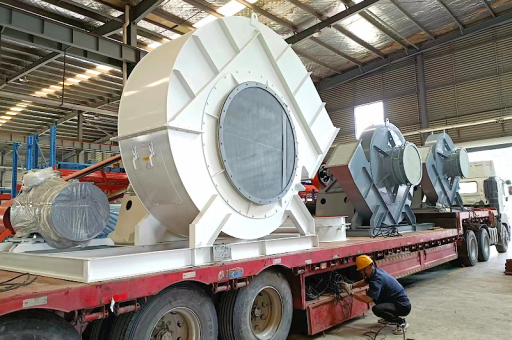
Industrial centrifugal fans are the workhorses of ventilation, material handling, and process air systems. Among them, the AC Dynamic Balanced Overhang Industrial Centrifugal Fan represents a specialized design where the fan impeller is mounted on an extended shaft, supported on one side only—hence the term “overhang.” This configuration is widely adopted in applications requiring high airflow rates, moderate pressure, and space-saving installations. The AC drive ensures stable, adjustable speed control, while dynamic balancing minimizes vibration, noise, and mechanical stress. Understanding the interplay between AC motor dynamics, balancing techniques, and overhang geometry is essential for engineers, maintenance teams, and procurement professionals.
The Role of AC Dynamic Balancing in Fan Performance
Dynamic balancing is the process of correcting mass distribution in a rotating assembly so that vibration levels are minimized. For an AC Dynamic Balanced Overhang Industrial Centrifugal Fan, this is critical because the overhang design inherently creates a cantilever load on the bearing and shaft. An unbalanced impeller can cause excessive vibration, premature bearing failure, shaft fatigue, and inefficient energy consumption.
The AC motor’s variable frequency drive (VFD) adds another layer of complexity. At different rotational speeds, the natural frequencies of the fan assembly may shift. Dynamic balancing must account for operating speeds across the entire range to avoid resonance. Modern balancing techniques use precision instruments to measure unbalance in two planes, then correct it by adding or removing material from the impeller. This ensures smooth operation, longer equipment life, and lower energy costs.
Important: Always balance the fan assembly after any impeller repair, replacement, or cleaning to maintain performance and safety.
Key Structural Features of Overhang Fan Designs
Overhang centrifugal fans are distinct from inline or pedestal-mounted fans. Their defining characteristics include:
- Single-sided support: The impeller overhangs beyond the bearing housing, reducing footprint and simplifying duct connection.
- Heavy-duty shaft and bearing: To handle the cantilever load, shafts are typically oversized and bearings are selected for high radial and axial loads.
- Housing construction: Often fabricated from carbon steel, stainless steel, or aluminum, with reinforced scrolls to withstand pressure fluctuations.
- AC motor integration: Motors are directly coupled or belt-driven, with VFD compatibility for variable airflow control.
- Dynamic balancing features: Many manufacturers include balancing rings or adjustable counterweights to facilitate field balancing.
This design is particularly favorable for dusty or hot gas applications where the motor must be isolated from the airstream. The overhang arrangement allows the motor to be positioned outside the duct, keeping it cool and clean.
Applications and Industry Use Cases
AC Dynamic Balanced Overhang Industrial Centrifugal Fans are used across diverse sectors:
- Cement and mining: For dust collection and pneumatic conveying.
- Power generation: Induced draft and forced draft applications.
- Chemical processing: Handling corrosive or toxic fumes.
- HVAC: Large-scale building ventilation and exhaust.
- Woodworking: Chip extraction and dust control.
- Steel mills: Cooling and fume extraction.
In each case, the fan must be precisely sized for airflow, static pressure, and operating temperature. The AC dynamic balancing ensures reliable, quiet operation even under variable load.
Common Performance Challenges and Troubleshooting
Even with robust design, operators may face issues. The most frequent problems include:
- Excessive vibration: Often due to unbalance from dust buildup, impeller damage, or worn bearings. Re-balance the fan and verify mounting rigidity.
- Motor overheating: Caused by overloading, restricted airflow, or VFD harmonics. Check motor current, ambient temperature, and fan speed settings.
- Bearing noise or failure: Overhang loads accelerate bearing wear. Use proper lubrication and inspect seals regularly.
- Reduced airflow: Check for duct blockages, damper misadjustment, or belt tension loss.
A systematic troubleshooting approach: measure vibration levels, inspect impeller condition, verify motor parameters, and re-balance if needed.
Frequently Asked Questions (FAQs)
Q1: What does “dynamic balanced” mean for an AC overhang fan?
A: It means the rotating assembly (impeller + shaft) has been tested and corrected to minimize vibration at operational speeds. For overhang designs, two-plane balancing is standard.
Q2: Can an overhang fan be used for high-pressure applications?
A: Overhang fans are typically optimized for medium to high flow, moderate pressure (up to about 2 kPa). For very high pressures, inline or double-suction fans are better.
Q3: How often should dynamic balancing be performed?
A: After any impeller repair, imbalance event, or at least every 12–18 months during preventive maintenance. Continuous monitoring via vibration sensors is recommended.
Q4: Is my fan compatible with a VFD?
A: Most modern AC fans with inverter-duty motors are compatible. Check motor insulation class and bearing design—some older fans may require derating.
Q5: What is the lifespan of a well-maintained overhang centrifugal fan?
A: With proper dynamic balancing and regular maintenance, you can expect 15–20 years of service. Bearing and seal replacements are typical interim tasks.
Q6: Can I replace a belt-driven overhang fan with a direct-drive AC balanced version?
A: Yes, but you must recalculate speed, torque, and motor power. Direct drive eliminates belt losses and improves balance stability but requires more careful sizing.
Conclusion
The AC Dynamic Balanced Overhang Industrial Centrifugal Fan is a proven solution for demanding air movement tasks in heavy industry. Its cantilevered design saves space and isolates the motor from harsh environments, while AC motor drives offer flexible speed control. Dynamic balancing is not a luxury but a necessity—it directly impacts efficiency, noise, component life, and safety. By understanding the design principles, common issues, and maintenance best practices, operators can maximize uptime and reduce total cost of ownership. Always consult the fan’s technical manual and a qualified dynamic balancing service for site-specific needs.
For more guidance on selecting, installing, or maintaining your fan, visit fan for industry resources and expert support.





